Inclusive of all taxes
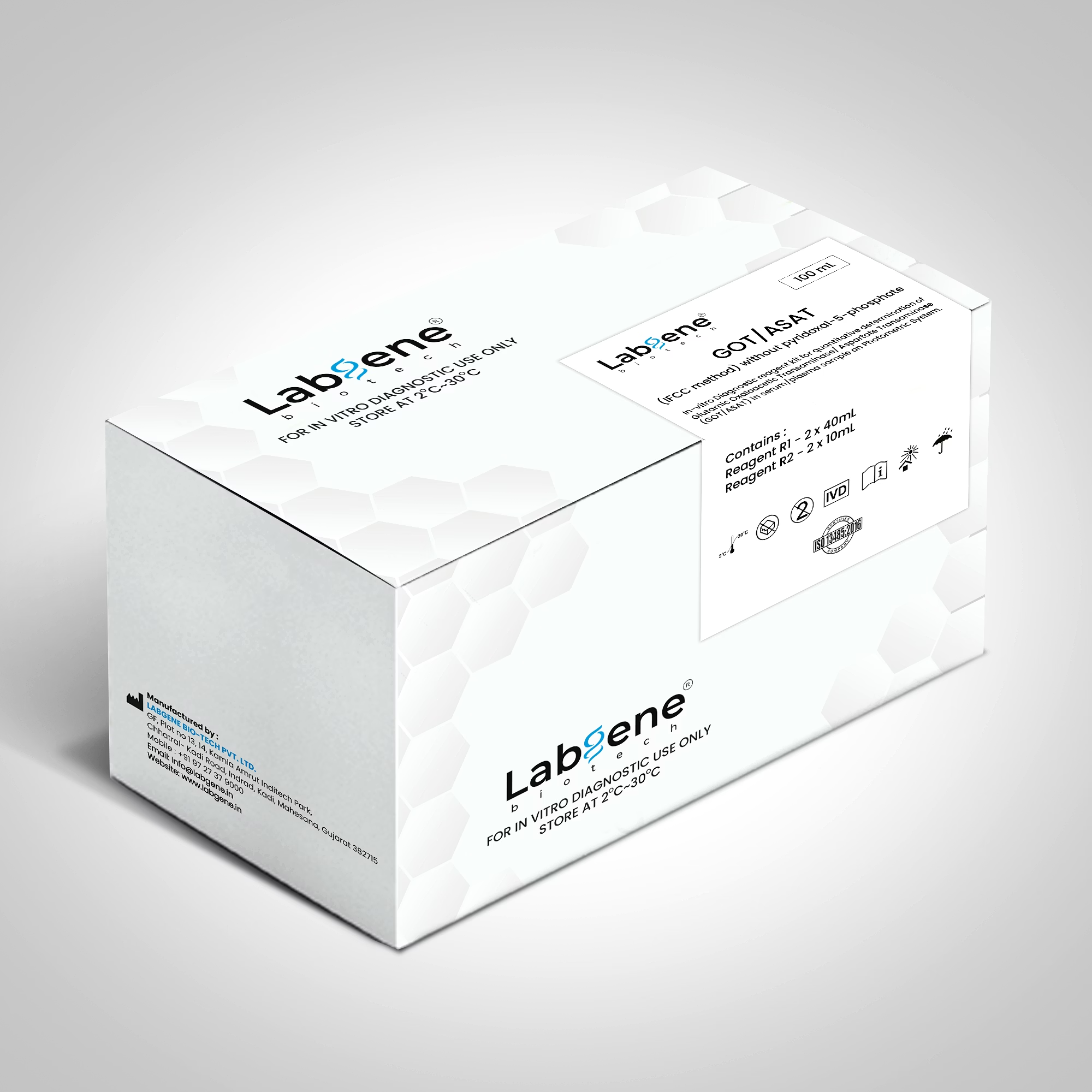
The GOT/ASAT Reagent Kit (IFCC Method) provides an advanced, reliable solution for the quantitative determination of Glutamic Oxaloacetic Transaminase (GOT), also known as Aspartate Transaminase (ASAT), in human serum and plasma. Utilizing the IFCC recommended kinetic photometric method, this kit allows medical laboratories, hospitals, and diagnostic centers to precisely measure ASAT levels, a critical enzyme indicative of liver function and potential liver damage. The assay operates by coupling the enzymatic activity of ASAT with the reduction of Oxaloacetate by Malate dehydrogenase (MDH), which consumes NADH; the consumption rate of NADH is quantitated photometrically at 340 nm, directly correlating to ASAT concentration. This reagent kit is specifically optimized for high sensitivity and specificity in detecting elevated ASAT levels, allowing clinicians to effectively screen, monitor, and diagnose liver diseases. Ideal for use in clinical chemistry analyzers, this kit ensures rapid turnaround with reproducible and accurate results, making it indispensable in liver function testing panels. Its compliance with IFCC standards guarantees methodical consistency and inter-laboratory comparability.
Key Features
| Features | Description |
|---|---|
| Methodology | Kinetic photometric method based on IFCC recommendations |
| Target Analyte | Glutamic Oxaloacetic Transaminase (GOT) / Aspartate Transaminase (ASAT) |
| Sample Type | Human serum and plasma |
| Assay Principle | Enzymatic reaction measuring NADH consumption at 340 nm |
| Detection Wavelength | 340 nm |
| Use Case | Quantitative determination for liver function assessment |
| Applications | Screening and monitoring liver diseases |
| Reaction Coupling | ASAT catalyzes amino group transfer; MDH reduces oxaloacetate |
| Compliance | IFCC method standardized |
| Turnaround Time | Rapid, suitable for high-throughput clinical labs |
| Attributes | Description |
|---|---|
| Reagent Type | In-vitro diagnostic reagent kit |
| Enzyme Measured | Aspartate Aminotransferase (ASAT/GOT) |
| Measurement Units | U/L (Units per liter) |
| Sample Volume Required | As per analyzer specification, typically minimal volume |
| Storage Conditions | Refrigerated at 2–8°C |
| Shelf Life | Refer to product packaging, typically 12 months unopened |
| Assay Range | Suitable for clinical ranges of ASAT concentration |
| Assay Type | Kinetic enzymatic assay |
| Compatibility | Automated clinical chemistry analyzers |
| Precautions | Avoid hemolyzed samples; follow standard lab safety protocols |
*Disclaimer: The above description has been AI-generated and has not been audited or verified for accuracy. It is recommended to verify product details independently before making any purchasing decisions.
The kit uses the IFCC recommended kinetic photometric method that measures NADH consumption at 340 nm, providing precise enzymatic activity correlation to ASAT concentration, ensuring high specificity and reproducibility.
The reagent kit is compatible with most automated clinical chemistry analyzers that support kinetic enzymatic assays at 340 nm; however, users should verify analyzer compatibility for optimized results.
The kit is validated for use with human serum and plasma samples, but hemolyzed samples should be avoided to prevent interference in assay results.
Because elevated ASAT is a key biomarker for liver damage, the kit provides accurate quantification to monitor disease progression or response to treatment, making it ideal for serial liver function assessment.
Reagents should be stored refrigerated at 2–8°C and used before the expiration date indicated on the packaging to ensure stability and assay performance.
Brand: labgene
Country Of Origin: India
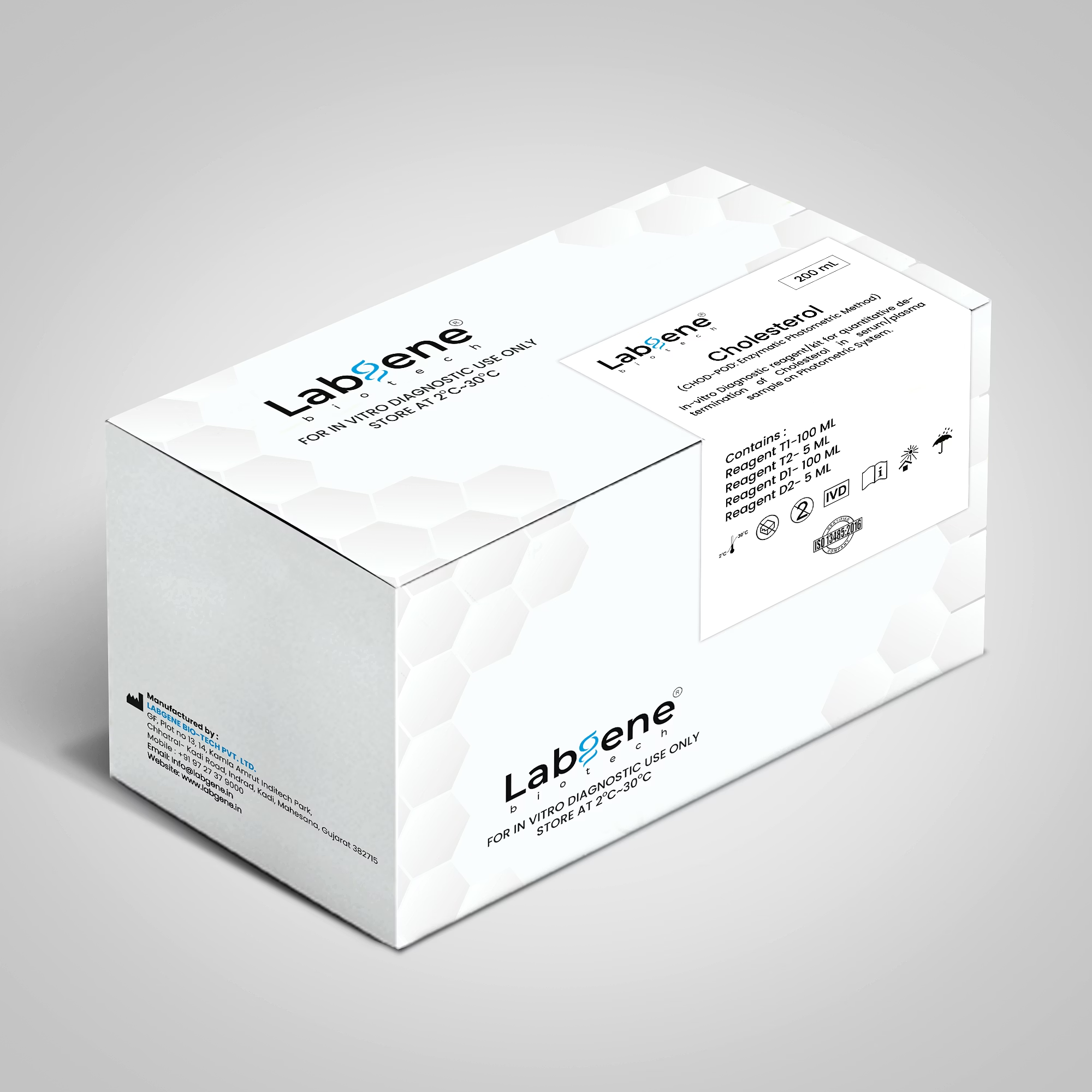
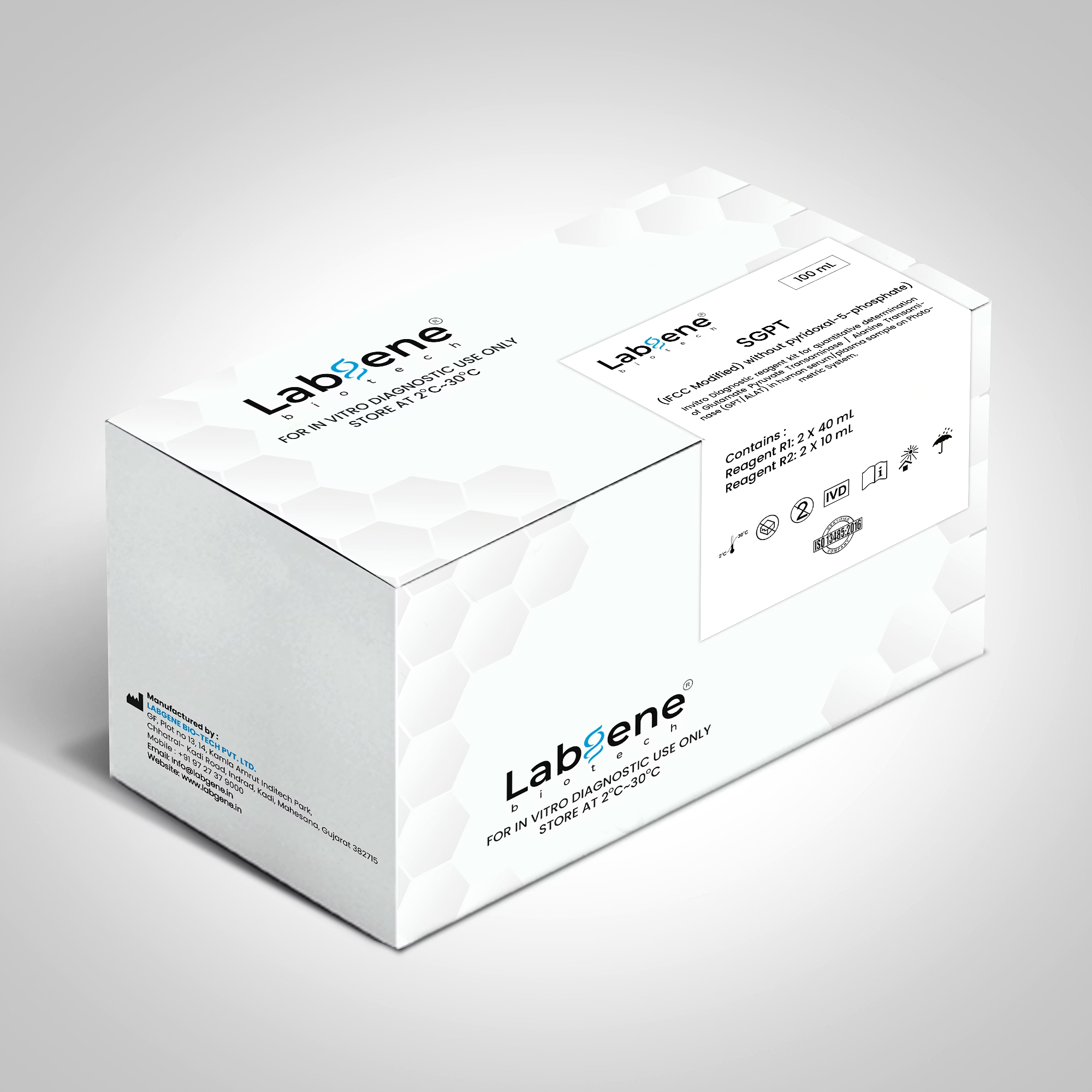
This is an in-vitro diagnostic (IVD) reagent kit designed for the quantitative determination of Glutamic Oxaloacetic Transaminase (GOT), also known as Aspartate Transaminase (ASAT), in human serum and plasma samples. Using a kinetic photometric method based on IFCC recommendations, this kit is an essential tool for screening for and monitoring liver disease, as elevated ASAT levels indicate liver damage.
Aspartate aminotransferase (ASAT), formerly known as SGOT , is an enzyme primarily located in the liver and kidney. In healthy individuals, ASAT exists at a low level in the serum. However, an increase in ASAT is a significant indicator of liver damage and is routinely measured as part of a liver function panel, often concurrently with ALAT, to determine the source of organ damage.
This reagent kit employs a kinetic enzymatic method that measures the rate of NADH consumption. The principle of the assay is based on two coupled reactions: first, the enzyme ASAT catalyzes the transfer of an amino group from L-Aspartate to 2-Oxoglutarate, producing Oxaloacetate and L-Glutamate. In the second reaction, Malate dehydrogenase (MDH) reduces the Oxaloacetate to L-Malate, using NADH as a coenzyme. The rate of NADH consumption, which is directly proportional to the ASAT concentration, is measured photometrically at 340 nm. This precise and rapid method makes the kit highly valuable for hospitals, clinics, and diagnostic laboratories seeking to accurately assess liver health.
Inclusive of all taxes
You Save: 0