Inclusive of all taxes
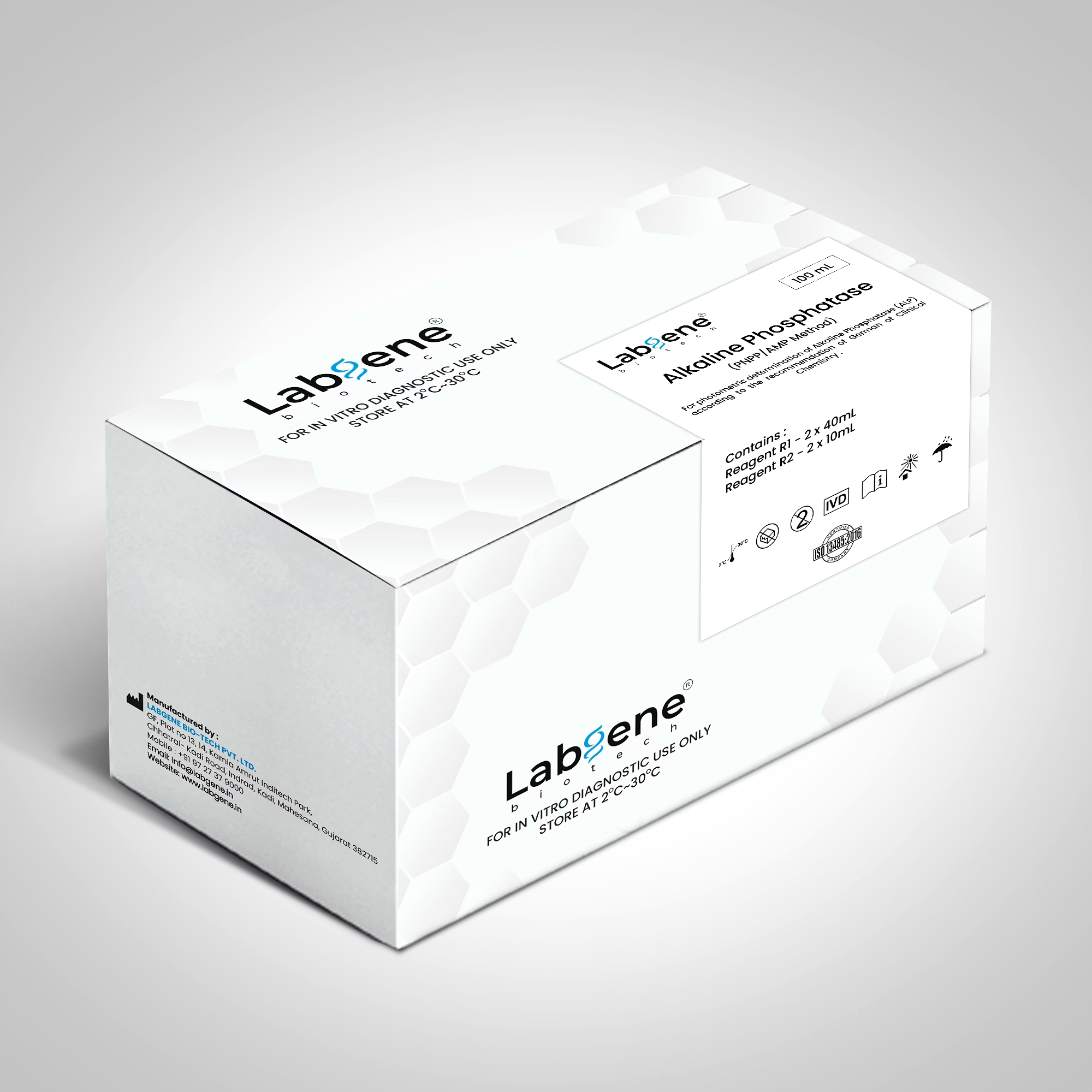
The Alkaline Phosphatase Reagent Kit (PNPP/AMP Method) is specifically designed for the precise photometric determination of Alkaline Phosphatase (ALP) activity in serum and plasma samples, adhering to the guidelines established by the German Society of Clinical Chemistry. This in-vitro diagnostic reagent employs the PNPP/AMP method where ALP catalyzes the hydrolysis of p-nitrophenylphosphate into p-nitrophenol, with the absorbance of the resulting 4-nitrophenolate ion measured photometrically to yield quantitative ALP activity. Essential for clinical laboratories and hospitals, this kit provides a reliable, kinetic, and ready-to-use reagent system (upon mixing R1 and R2) to support the diagnosis and monitoring of hepatobiliary and bone diseases, including bile duct obstruction, Paget's disease, rickets, bone metastases, and hyperparathyroidism. This reagent kit enhances diagnostic accuracy, optimizes workflow with its straightforward procedure, and is calibrated for high sensitivity and reproducibility specific to ALP activity measurement in clinical samples.
Key Features
| Features | Description |
|---|---|
| Measurement Method | Photometric determination using PNPP/AMP kinetic method |
| Application | Quantitative measurement of ALP activity in serum and plasma |
| Clinical Significance | Diagnosis and monitoring of hepatobiliary and bone diseases |
| Reagent Composition | Ready-to-use after mixing R1 and R2 reagents |
| Assay Principle | ALP hydrolyzes p-nitrophenylphosphate to p-nitrophenol and phosphate |
| Detection | Absorbance increase of 4-nitrophenolate measured photometrically |
| Standardization | Follows German Society of Clinical Chemistry recommendations |
| Sample Types | Serum and plasma |
| Reaction Kinetics | Kinetic assay for precise activity measurement |
| Intended Users | Clinical laboratories and hospital diagnostic sections |
| Attributes | Description |
|---|---|
| Analyte Detected | Alkaline Phosphatase (ALP) |
| Sample Requirements | Serum or plasma samples |
| Reaction Temperature | 37°C (typical for enzymatic assays) |
| Reagent Formulation | Two-component system (R1 and R2) |
| Measurement Wavelength | Around 405 nm (photometric absorbance) |
| Assay Time | Kinetic measurement period as per protocol |
| Storage Condition | Store reagents at 2-8°C |
| Shelf Life | Refer to product packaging or datasheet |
| Compatibility | Suitable for automated and manual photometric analyzers |
| Regulatory Status | In vitro diagnostic (IVD) reagent kit |
*Disclaimer: The above description has been AI-generated and has not been audited or verified for accuracy. It is recommended to verify product details independently before making any purchasing decisions.
The PNPP/AMP method is based on alkaline phosphatase catalyzing the hydrolysis of p-nitrophenylphosphate (PNPP) to produce p-nitrophenol and phosphate. The formation of 4-nitrophenolate ion increases absorbance at 405 nm, which is measured photometrically to quantify ALP activity in samples.
The kit comes with two reagents, R1 and R2, which must be mixed before use to create the working reagent, making it ready-to-use for photometric measurement.
This reagent kit is compatible with both serum and plasma samples for the determination of alkaline phosphatase activity.
Yes, the reagents and methodology are compatible with both manual and automated photometric analyzers commonly used in clinical laboratories.
Elevated ALP activity measured with this kit can assist in diagnosing hepatobiliary diseases such as bile duct obstruction, as well as bone diseases including Paget's disease, rickets, bone metastases, and hyperparathyroidism.
Brand: labgene
Country Of Origin: India
This in-vitro diagnostic (IVD) reagent kit is designed for the photometric determination of Alkaline Phosphatase (ALP) activity in serum and plasma samples. Following the recommendations of the German Society of Clinical Chemistry, the kit uses the PNPP/AMP method to provide quantitative results. It is crucial for the diagnosis of hepatobiliary and bone diseases, offering a reliable tool for clinical laboratories and hospitals.
The Alkaline Phosphatase (ALP) Reagent Kit provides a quantitative method for measuring ALP activity in patient samples. ALP is a hydrolytic enzyme present in various tissues, with high concentrations in the liver, bone, kidney, and placenta. Pathological increases in ALP activity are commonly linked to hepatobiliary and bone diseases. In hepatobiliary disorders, elevated ALP levels can indicate bile duct obstruction due to gallstones, tumors, or inflammation. For bone diseases, increased ALP activity signifies heightened osteoblastic activity, as seen in conditions like Paget's disease, rickets (osteomalacia), bone metastases, and hyperparathyroidism.
The kit employs the PNPP/AMP method, where ALP catalyzes the hydrolysis of p-nitrophenylphosphate into p-nitrophenol and phosphate. The resulting increase in absorbance due to the formation of 4-nitrophenolate is measured photometrically and is directly proportional to the ALP activity in the sample. This precise kinetic method, with its ready-to-use reagents (after mixing R1 and R2) and clear procedure, makes it an efficient and valuable tool for hospitals and diagnostic labs to aid in the diagnosis and monitoring of a wide range of diseases.
Inclusive of all taxes
You Save: 0