Inclusive of all taxes
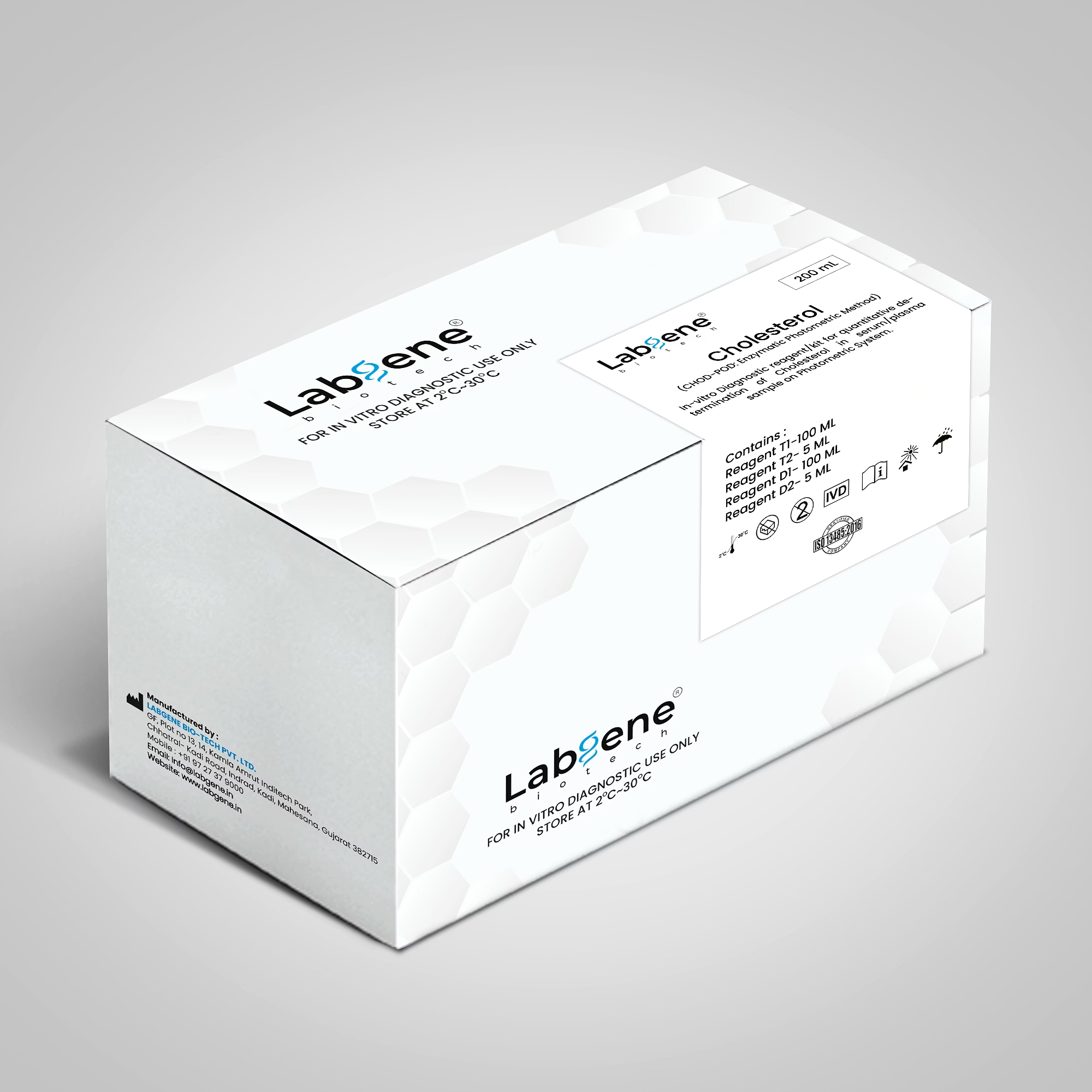
The Cholesterol Reagent Kit (CHOD-POD Method) is a precision-engineered in-vitro diagnostic reagent designed specifically for the quantitative measurement of total cholesterol in human serum and plasma samples. Using the enzymatic photometric CHOD-POD method, this reagent kit provides highly accurate and reproducible results essential for clinical evaluation of cardiovascular health. The kit operates through a two-step enzymatic process where cholesterol esters are first hydrolyzed by cholesterol esterase into free cholesterol and fatty acids. Subsequently, cholesterol oxidase catalyzes the oxidation of free cholesterol, generating hydrogen peroxide, which in a Trinder’s reaction with peroxidase interacts with 4-aminoantipyrine and phenol to form a colored quinoneimine compound. The intensity of this color change, measured photometrically, directly corresponds to the total cholesterol concentration in the sample. By offering a reliable method consistent with clinical laboratory standards, this reagent kit supports robust lipid profile analysis and aids in the assessment of coronary heart disease risk through precise cholesterol quantification. Ideal for use in hospitals, diagnostic labs, and medical research institutions, it ensures dependable cardiovascular risk monitoring based on biochemical markers.
Key Features
| Features | Description |
|---|---|
| Methodology | Enzymatic photometric CHOD-POD method |
| Type of Analysis | Quantitative determination of total cholesterol |
| Sample Type | Human serum and plasma |
| Enzymes Used | Cholesterol esterase (CHE), Cholesterol oxidase (CHOD), Peroxidase (POD) |
| Reaction Principle | Trinder’s reaction forming a colored quinoneimine |
| Output Measurement | Photometric intensity proportional to cholesterol concentration |
| Clinical Application | Cardiovascular risk assessment and lipid profile testing |
| Accuracy & Specificity | High accuracy and reproducibility for clinical diagnostics |
| Packaging | Complete reagent kit designed for in-vitro diagnostic use |
| Regulatory Status | Intended for in-vitro diagnostic (IVD) use |
| Attributes | Description |
|---|---|
| Assay Type | Enzymatic Colorimetric |
| Detection Method | Photometry |
| Sample Volume | Typically 10-100 µL per test depending on lab protocols |
| Reaction Temperature | Room temperature or 37°C incubation depending on protocol |
| Reagent Stability | Stable under recommended storage conditions (check kit label) |
| Storage Conditions | Store at 2-8°C, avoid freezing |
| Test Time | Approximate assay time 5-15 minutes |
| Measurement Wavelength | Approximately 500 nm (depends on photometer calibration) |
| Cholesterol Ester Hydrolysis | Catalyzed by cholesterol esterase present in kit |
| Enzymatic Oxidation | Cholesterol oxidase oxidizes cholesterol releasing H2O2 |
*Disclaimer: The above description has been AI-generated and has not been audited or verified for accuracy. It is recommended to verify product details independently before making any purchasing decisions.
The kit hydrolyzes cholesterol esters to free cholesterol using cholesterol esterase, then oxidizes free cholesterol with cholesterol oxidase producing hydrogen peroxide which reacts in a Trinder’s reaction catalyzed by peroxidase to form a colored quinoneimine compound, ensuring high specificity and accuracy.
Yes, the Cholesterol Reagent Kit is validated for quantitative determination of total cholesterol in both human serum and plasma samples.
The intensity of the colored quinoneimine produced during the enzymatic reaction is measured photometrically, and this intensity is directly proportional to the total cholesterol concentration present in the sample.
Yes, the Cholesterol Reagent Kit is compatible with most automated photometric analyzers commonly used in clinical diagnostic laboratories.
The kit reagents should be stored refrigerated at 2-8°C and protected from freezing to maintain stability and ensure consistent assay performance.
Country Of Origin: India
This is an in-vitro diagnostic (IVD) reagent kit designed for the quantitative determination of total cholesterol in human serum and plasma samples. It utilizes the enzymatic photometric CHOD-POD method to provide accurate and reproducible results. The kit is an essential diagnostic tool for assessing cardiovascular risk, as elevated cholesterol levels are a key indicator of coronary heart disease.
Cholesterol is a crucial component of cell membranes and a precursor for steroidal hormones and bile acids. It is transported in the blood by lipoproteins, including HDL and LDL. High levels of LDL are associated with the transport of cholesterol to peripheral cells, while HDL is responsible for cholesterol uptake from cells. An increase in total cholesterol concentration can indicate a risk of coronary heart disease.
The Cholesterol Reagent Kit employs the well-established CHOD-POD (Cholesterol Oxidase-Peroxidase) enzymatic method for precise and reliable results. The process involves two key steps : first, cholesterol esters are hydrolyzed by cholesterol esterase (CHE) into free cholesterol and fatty acids. Second, cholesterol oxidase (CHOD) oxidizes the free cholesterol, producing hydrogen peroxide (H2 O2). In a subsequent Trinder's reaction, peroxidase (POD) catalyzes the reaction between H2 O2, 4-aminoantipyrine, and phenol to form a colored quinoneimine. The intensity of this color is measured photometrically and is directly proportional to the total cholesterol concentration in the sample. This enzymatic method ensures high accuracy and specificity, making the kit an indispensable asset for clinical laboratories and hospitals for routine lipid profile testing and cardiovascular risk assessment.
Inclusive of all taxes
You Save: 0