Inclusive of all taxes
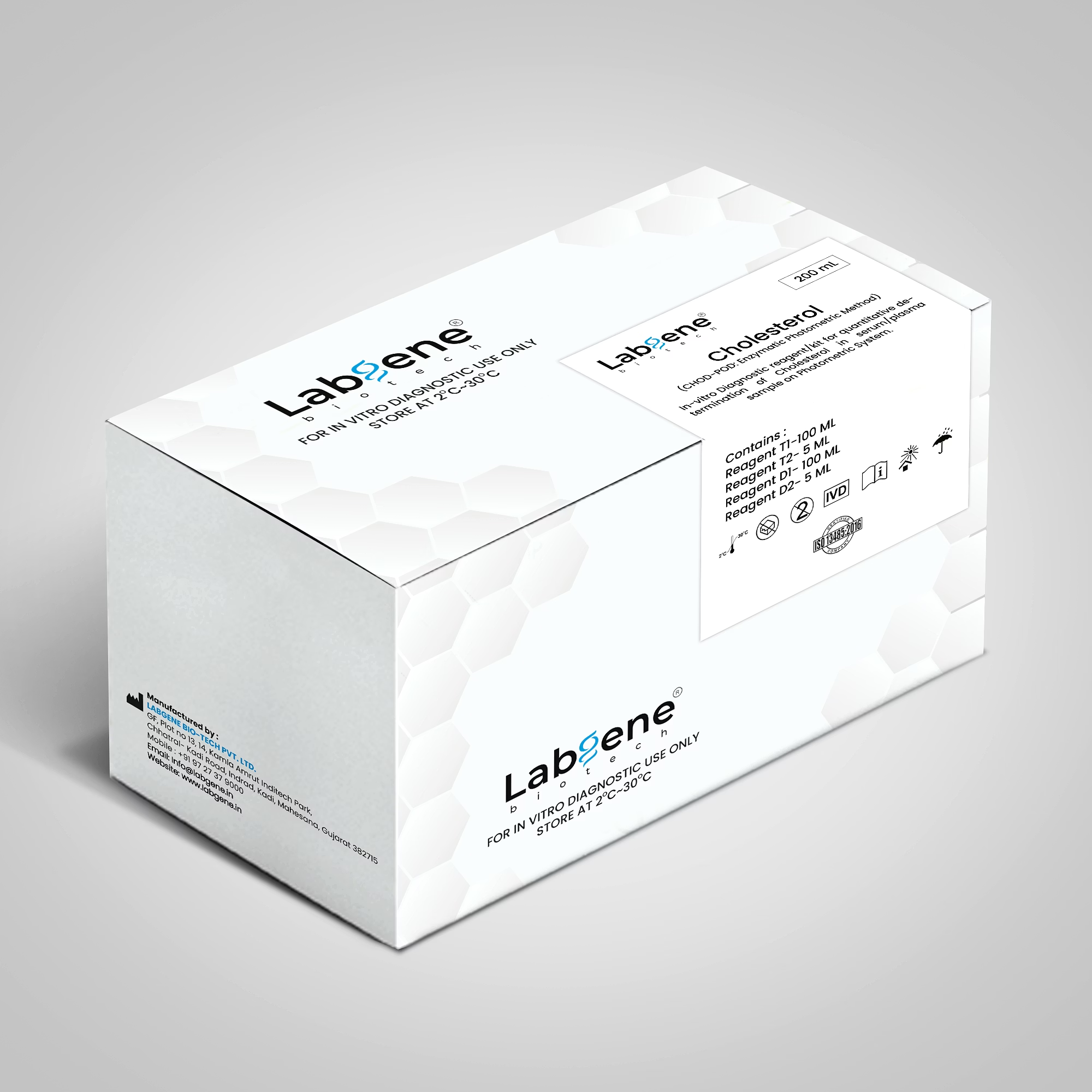
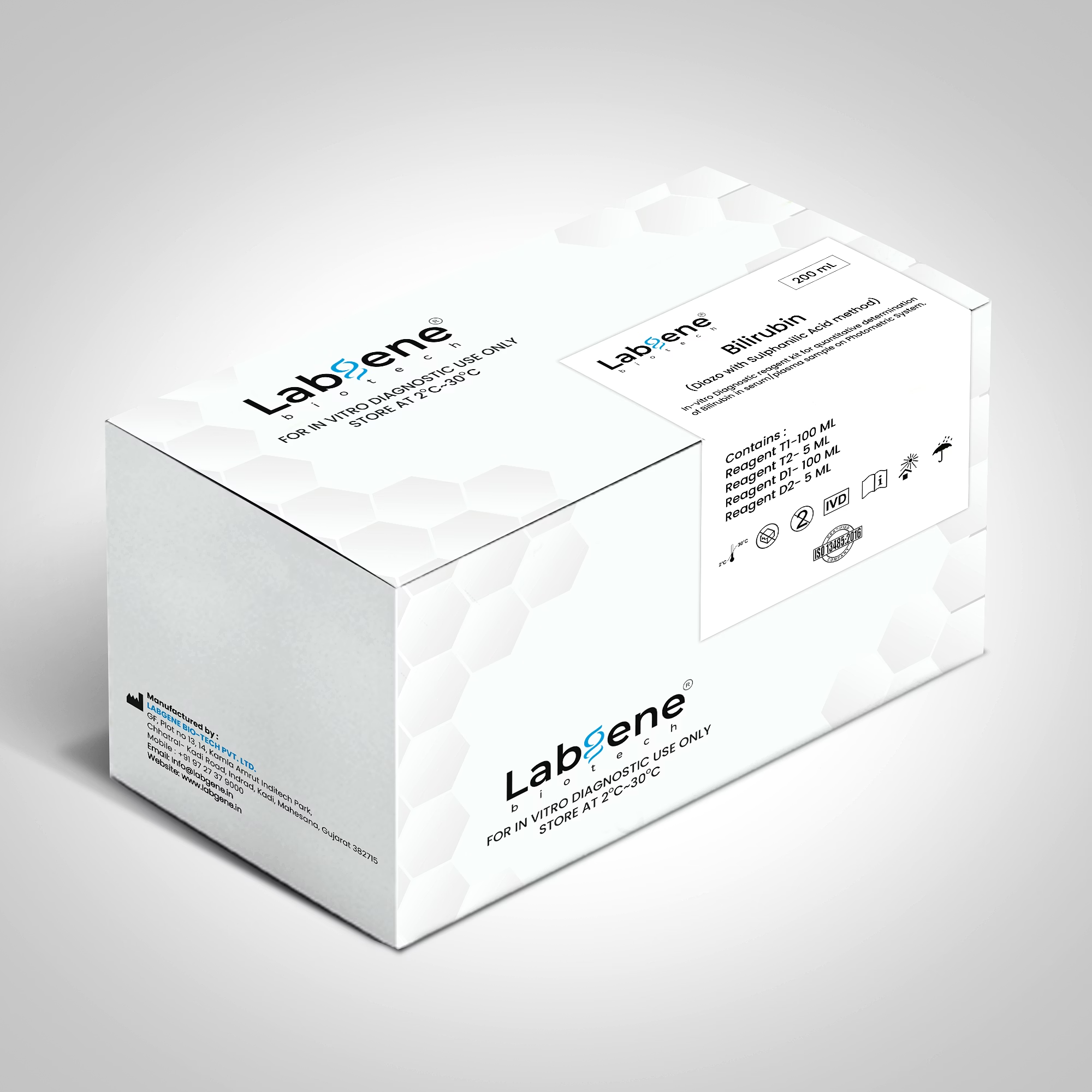
The Bilirubin Reagent Kit (Total & Direct) is a specialized in-vitro diagnostic (IVD) solution designed for the quantitative measurement of Total and Direct Bilirubin levels in human serum and plasma samples. Employing the Diazo with Sulphanilic Acid method, this reagent kit enables highly accurate and reliable photometric analysis suitable for clinical laboratory settings. The kit differentiates between unconjugated (indirect) and conjugated (direct) bilirubin, thus providing crucial insights into liver function and hematological health. By facilitating precise measurement of bilirubin concentrations at an absorbance of 546 nm, it supports diagnosis and monitoring of liver diseases, hemolytic anemias, and metabolic disorders such as Gilbert's and Crigler-Najjar syndromes. The use of an accelerator (cetrimide) in the reaction enables the total bilirubin detection by reacting with both forms of bilirubin, while the direct bilirubin is measured without the accelerator, ensuring diagnostic specificity. This reagent kit is an essential diagnostic tool for hospitals, clinical laboratories, and diagnostic centers aiming for dependable bilirubin quantification to aid in comprehensive hepatic and hematological evaluation.
Key Features
| Features | Description |
|---|---|
| Measurement Type | Quantitative determination of Total and Direct Bilirubin |
| Methodology | Diazo with Sulphanilic Acid method |
| Sample Type | Human serum and plasma |
| Reaction Principle | Azobilirubin formation with and without cetrimide accelerator |
| Detection Wavelength | 546 nm absorbance measurement |
| Accuracy | Highly precise and reliable photometric readings |
| Applications | Diagnosis of liver function, hemolytic anemia, and bilirubin metabolism disorders |
| Usage | Clinical laboratories, hospitals, diagnostic centers |
| Storage Conditions | Stable under recommended temperature conditions (refer to product insert) |
| Packaging | Kit includes reagents for Total and Direct bilirubin testing |
| Attributes | Description |
|---|---|
| Analytes Measured | Total Bilirubin, Direct (Conjugated) Bilirubin |
| Assay Type | Photometric assay |
| Method Specificity | Differentiates Total and Direct Bilirubin via accelerator use |
| Reaction Time | As per kit instructions (typically minutes) |
| Sample Volume Required | Milliliters/microliters range (specified in kit manual) |
| Shelf Life | Typically 12-24 months (consult product datasheet) |
| Storage Temperature | 2-8°C (standard reagent storage) |
| Interference | Minimized by specific reagent formulation; see product insert for details |
| Regulatory Approval | CE marked/In-vitro diagnostic certified |
| Compatibility | Compatible with standard clinical photometric analyzers |
*Disclaimer: The above description has been AI-generated and has not been audited or verified for accuracy. It is recommended to verify product details independently before making any purchasing decisions.
The method uses cetrimide as an accelerator that allows both conjugated and unconjugated bilirubin to react with diazotized sulfanilic acid forming azobilirubin for Total Bilirubin measurement. Without the accelerator, only conjugated (Direct) bilirubin reacts, enabling differentiation.
The kit is designed for human serum and plasma samples, ensuring compatibility with standard clinical specimens.
It is suited for diagnosing and monitoring liver diseases, hemolytic anemias, and bilirubin metabolic disorders such as Gilbert’s syndrome and Crigler-Najjar syndrome.
Yes, the kit is compatible with conventional clinical photometric systems measuring absorbance at 546 nm.
The reagent formulation minimizes interference, but users are advised to consult the product insert for specific interfering substances and protocol adjustments.
Brand: labgene
Country Of Origin: India
This in-vitro diagnostic (IVD) reagent kit provides for the quantitative determination of both Total and Direct Bilirubin in human serum and plasma samples. Using the Diazo with Sulphanilic Acid method, this kit offers a reliable and precise way to measure bilirubin levels on photometric systems. It is an essential tool for diagnosing and monitoring various liver and hematological disorders.
Bilirubin is a waste product of hemoglobin breakdown, with 80-85% of it derived from aging red blood cells. This bilirubin is transported to the liver, where it is conjugated to increase solubility before being excreted. Unconjugated bilirubin levels increase in conditions like hemolytic anemias and disorders of bilirubin metabolism, such as Gilbert's syndrome or Crigler-Najjar syndrome. A significant increase in conjugated bilirubin, with a minor increase in unconjugated bilirubin, indicates reduced excretion due to hepatocellular damage or bile flow obstruction.
This kit utilizes the Diazo with Sulphanilic Acid method to differentiate between Total and Direct (conjugated) Bilirubin. In the presence of an accelerator (cetrimide), both conjugated and unconjugated bilirubin react with diazotized sulfanilic acid to form azobilirubin, which represents Total Bilirubin. In the absence of the accelerator, only conjugated bilirubin reacts, measuring Direct Bilirubin. The resulting increase in absorbance at 546 nm is proportional to the bilirubin concentration. This comprehensive and precise method makes the kit highly useful for clinical professionals in hospitals and diagnostic laboratories to accurately assess liver function and diagnose a range of related conditions.
Inclusive of all taxes
You Save: 0