
Our Products
Showing 1-24 of 36 products
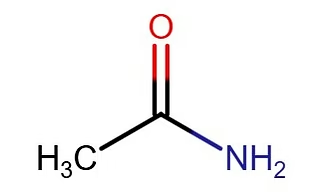
Acetamide
Acetamide (CH₃CONH₂) is a white, crystalline organic compound used primarily as a solvent and intermediate in organic synthesis. It is an amide derivative of acetic acid and exhibits mild hygroscopic properties. Acetamide is soluble in water, alcohol, and chloroform, and is known for its stability under normal conditions.
CAS no:60-35-5
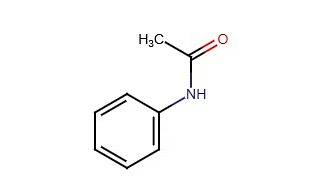
Acetanilide
Acetanilide is an aromatic amide compound derived from aniline and acetic acid. It appears as a white to slightly gray crystalline solid with a faint odor. Historically used as an analgesic and antipyretic, it is now primarily used as an intermediate in the synthesis of pharmaceuticals, dyes, and rubber accelerators. It is also useful in organic chemistry research and formulation studies.
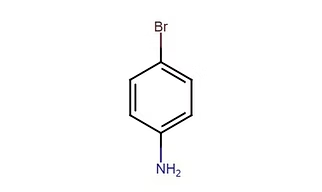
4-Bromoaniline
4-Bromoaniline is a pale to light brown crystalline compound belonging to the halogenated aniline family. It contains a bromine atom at the para position of the aniline ring. It is widely used as an intermediate in the synthesis of dyes, pharmaceuticals, and agrochemicals. 4-Bromoaniline is slightly soluble in water and readily soluble in organic solvents such as ethanol, ether, and acetone. It must be handled with care due to its toxic and irritant nature.
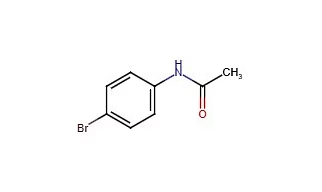
4-Bromo acetanilide
4-Bromoacetanilide is a halogenated aromatic amide derived from acetanilide, where a bromine atom is substituted at the para position. It appears as a white to pale yellow crystalline powder and is moderately soluble in organic solvents. It is used primarily as an intermediate in the synthesis of pharmaceuticals, dyes, and agrochemicals. The compound is stable under normal conditions but should be handled with care due to possible irritant effects.
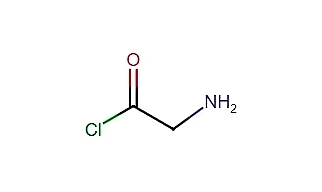
2-Chloro acetamide
2-Chloroacetamide is a white to off-white crystalline organic compound primarily used as an intermediate in the production of pharmaceuticals and agrochemicals. It is synthesized from chloroacetic acid and ammonia, forming a reactive amide functional group that readily participates in nucleophilic substitution and condensation reactions. Its utility lies in its ability to introduce both chloro and amide groups into molecular frameworks, making it a crucial reagent in synthesizing herbicides, fungicides, and biologically active molecules. It also finds application in laboratory research as a reagent for specialized organic transformations. Due to its irritant nature, careful handling and appropriate protective measures are recommended during use and storage.
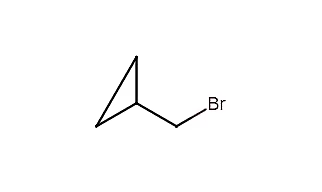
Cyclopropyl methyl bromide
Cyclopropyl methyl bromide is a reactive halogenated compound characterized by the presence of a strained three-membered cyclopropane ring and a bromomethyl substituent. This clear to pale yellow liquid is widely used as an alkylating agent in the synthesis of active pharmaceutical ingredients (APIs), fine chemicals, and intermediates. The bromine atom imparts high reactivity, allowing for selective substitution reactions in a variety of synthetic applications. Cyclopropyl groups are increasingly valued in medicinal chemistry for their ability to modify biological activity, metabolic stability, and binding affinity. Due to its volatility and flammability, it must be handled under controlled, ventilated conditions.
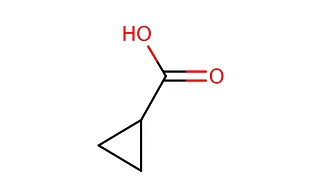
Cyclopropane carboxylic acid
Cyclopropane carboxylic acid is a colorless to pale yellow liquid organic acid known for its utility in the agrochemical industry, particularly in the synthesis of pyrethroid insecticides. It features a strained cyclopropane ring that imparts chemical rigidity and reactivity to its molecular structure. This structural motif is significant in modifying the biological profile of active molecules, contributing to the efficacy of crop protection agents. Additionally, it serves as a building block in the synthesis of pharmaceutical intermediates. It is miscible with organic solvents and should be stored in tightly closed containers to avoid moisture absorption and degradation.
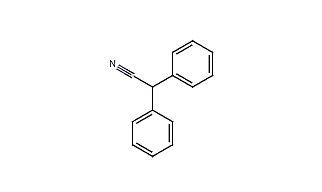
DPAN (Diphenyl acetonitrile)
Diphenylacetonitrile, also known as DPAN, is a white to beige crystalline compound that serves as a vital intermediate in pharmaceutical synthesis. With its aromatic nitrile structure, DPAN is commonly employed in the production of antihistamines, tranquilizers, and other central nervous system (CNS)-active drugs. It is also used in the synthesis of specialty chemicals and as a building block in organic chemistry. Its stable carbon–nitrile bond and biphenyl backbone allow for further functionalization, enhancing its synthetic flexibility. Owing to its moderate toxicity, it should be handled with standard laboratory safety precautions, including gloves and protective eyewear.
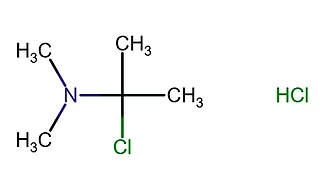
2-Dimethylamino isopropyl chloride
2-Dimethylamino isopropyl chloride is a colorless to pale yellow liquid widely used as an intermediate in the synthesis of active pharmaceutical ingredients (APIs). This compound features both an amino group and a reactive alkyl chloride moiety, making it highly suitable for nucleophilic substitution reactions. It serves as a building block in the preparation of various antihistamines, antidepressants, and other therapeutic compounds. Its reactivity and solubility in organic solvents make it an efficient reagent in industrial-scale synthesis.
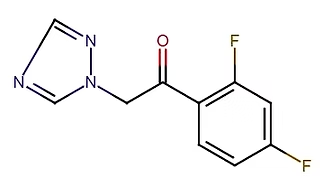
DFTA (Fluconazole Intermediate)
Description:
DFTA, or 2,4-Difluoro-2-(1H-1,2,4-triazol-1-yl)acetophenone, is a key intermediate in the synthesis of the antifungal drug Fluconazole. This compound is crucial in constructing the pharmacophore responsible for Fluconazole's antifungal activity. It possesses a triazole ring and fluorinated aromatic structure, which contribute to its high reactivity and selectivity in targeted synthesis pathways. DFTA is primarily used in API production under controlled environments due to its chemical sensitivity.
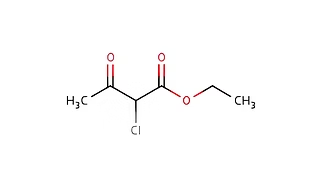
Ethyl-2-Chloro acetoacetate
Description:
Ethyl-2-chloroacetoacetate is a versatile ester compound used in the preparation of pharmaceuticals, agrochemicals, and dyes. The presence of a chloroacetyl group and an ester functionality makes it a reactive intermediate for enolate chemistry and nucleophilic substitution. It is used in the synthesis of barbiturates, antimalarials, and in heterocyclic chemistry. Its good solubility and reactivity under mild conditions make it an essential synthetic reagent.
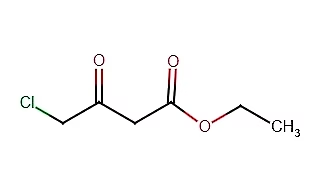
Ethyl-4-Chloro acetoacetate
Ethyl-4-chloroacetoacetate is a chlorinated derivative of acetoacetic acid ester and serves as an important building block in the synthesis of heterocycles and pharmaceuticals. The compound offers selective reactivity due to the presence of a chloro substituent at the γ-position, facilitating ring-forming reactions and nucleophilic substitutions. It finds wide application in the synthesis of pyrazoles, pyridines, and other biologically active scaffolds.
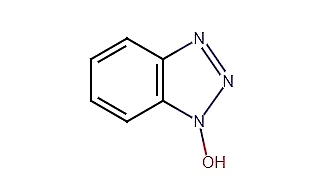
1-Hydroxy benzotriazole monohydrate (HOBT)
Description:
1-Hydroxybenzotriazole monohydrate is a white crystalline solid commonly used as a coupling reagent in peptide synthesis and other organic transformations. It enhances the efficiency of amide bond formation by suppressing racemization and stabilizing active esters. This hydrated form is particularly favored for its better handling characteristics and ease of dissolution. It is used extensively in pharmaceutical R&D and industrial peptide manufacturing. Due to its potential for explosive decomposition under heat or friction, it must be handled with strict safety precautions.
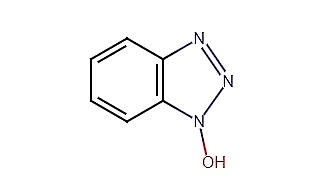
1- Hydroxy benzotriazole anhydrous (HOBT)
1-Hydroxybenzotriazole anhydrous is a potent acylation catalyst and condensation agent used primarily in peptide bond formation. It prevents racemization and improves yields in carbodiimide-mediated coupling reactions. The anhydrous form is highly reactive and moisture-sensitive, often used in strictly anhydrous conditions for high-purity synthesis. It is valuable in the synthesis of pharmaceutical peptides, esters, and complex small molecules.
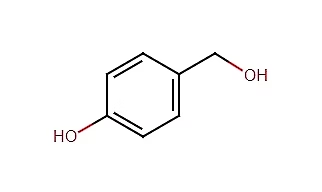
4-Hydroxy benzyl alcohol
4-Hydroxybenzyl alcohol, also known as p-hydroxybenzyl alcohol, is a white to off-white crystalline solid derived from phenolic compounds. It possesses both hydroxyl and benzyl functional groups, making it a valuable intermediate in the synthesis of various APIs, cosmetic actives, and flavors. It is often used in antioxidant formulations and as a stabilizing agent in drug products. Its mild reactivity and good solubility make it suitable for both lab-scale and industrial use.
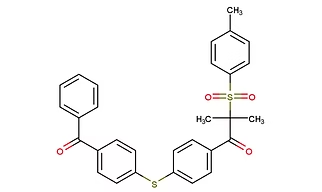
Ketosulfone- Intermediate for Etoricoxib
Ketosulfone is a key pharmaceutical intermediate used in the synthesis of Etoricoxib, a selective COX-2 inhibitor. This compound contains both a ketone and sulfone functional group, allowing for versatile synthetic transformations, especially in cyclization and ring-closing reactions. It is a high-purity intermediate, manufactured under GMP-like conditions to ensure suitability for final drug production. Its use is critical in ensuring the efficacy and safety profile of Etoricoxib.
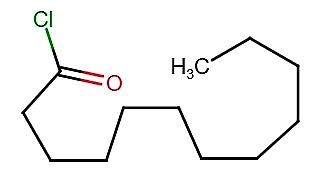
Lauroyl Chloride
Lauroyl chloride is a colorless to pale yellow liquid, classified as a fatty acid chloride derived from lauric acid. It is used extensively in the synthesis of surfactants, pharmaceutical intermediates, and cosmetic ingredients. It reacts readily with alcohols, amines, and hydroxyl-containing compounds to form esters and amides. Lauroyl chloride is highly moisture-sensitive and corrosive, requiring careful handling under controlled environments.
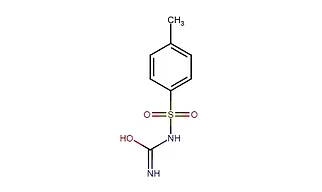
4-Methyl phenyl sulphonyl Urea
Description:
4-Methylphenylsulfonyl urea is a specialty intermediate used in the synthesis of sulfonylurea-based drugs, especially antidiabetic agents. This white to off-white crystalline compound features both sulfonyl and urea moieties, allowing it to participate in complex condensation and ring-forming reactions. It plays a critical role in the design of selective enzyme inhibitors and hypoglycemic agents.
Applications:
Synthesis of sulfonylurea drugs
Intermediate for herbicides and pesticides
Research on enzyme-modulating compounds
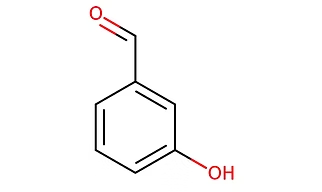
Metahydroxy benzaldehyde
Meta-hydroxybenzaldehyde (m-hydroxybenzaldehyde), also known as 3-hydroxybenzaldehyde, is an aromatic aldehyde used in pharmaceutical and fragrance chemistry. This compound is employed as a versatile intermediate for synthesizing APIs, agrochemicals, and specialty chemicals. Its phenolic and aldehyde groups make it reactive toward nucleophilic additions and oxidation-reduction reactions. It is widely used in manufacturing vanillin analogs and as a precursor for fine chemicals.
Applications:
Intermediate in API and fragrance synthesis
Fine chemical and agrochemical manufacturing
Precursor for flavor and aromatic compounds
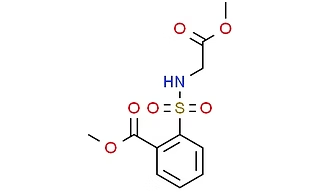
Methyl-2-Methoxy-5-sulfamoyl Benzoate (MSMB)
MSMB is a specialized benzoate ester featuring a methoxy and sulfamoyl group, contributing to its role in sulfonamide and carbonic anhydrase inhibitor synthesis. It is frequently used in the development of diuretics and anti-inflammatory drugs. The presence of both electron-donating and withdrawing groups on the aromatic ring makes it a versatile intermediate in complex pharmaceutical synthesis.
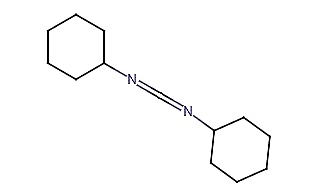
N’N’ Dicyclohexyl Carbodiimide (1,3 DCC)
N,N′-Dicyclohexylcarbodiimide is a widely used reagent in organic chemistry, especially for peptide synthesis, where it facilitates amide bond formation. It is a white crystalline solid and operates via activation of carboxylic acids to form stable intermediates. DCC is also used in esterification and dehydration reactions. Care is required as the byproduct, dicyclohexylurea, can be difficult to remove.
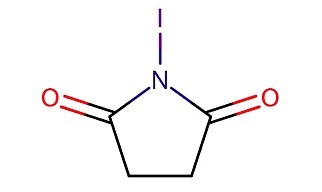
N-Iodosuccinimide
N-Iodosuccinimide is a powerful electrophilic iodinating agent used for selective iodination of aromatic compounds, alkenes, and alkynes. This crystalline compound also serves as an oxidizing and cyclizing agent in organic reactions. Its mildness and regioselectivity make it suitable for synthesizing fine chemicals and pharmaceutical intermediates.
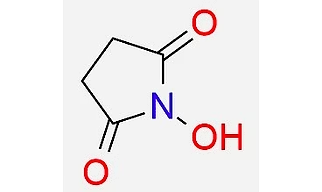
N-Hydroxysuccinimide
N-Hydroxysuccinimide (NHS) is a white crystalline compound used primarily in peptide coupling chemistry. It activates carboxyl groups for amide bond formation when used in conjunction with carbodiimides like DCC or EDC. NHS esters are also common in bioconjugation and protein labeling. NHS increases the efficiency and specificity of acylation reactions in both lab and industry.
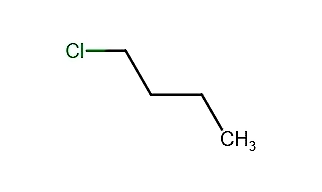
N-Butyl chloride
N-Butyl chloride is a colorless liquid used as an alkylating agent in organic synthesis. It is primarily applied in pharmaceuticals, agrochemicals, and polymer industries. With a reactive chloride group, it undergoes substitution and Grignard reactions readily. It is flammable and requires careful handling due to its volatile and irritating nature.


 GL Trustmark