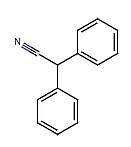
Diphenylacetonitrile (DPAN), a white to beige crystalline compound with the molecular formula C14H11N, is an essential intermediate widely utilized in pharmaceutical manufacturing. Featuring an aromatic nitrile structure with a robust carbon–nitrile bond and a biphenyl backbone, DPAN serves as a flexible building block in the synthesis of antihistamines, tranquilizers, and other central nervous system (CNS)-active drugs. This compound's unique chemical stability enables further functionalization, making it indispensable for specialty chemical synthesis and advanced organic chemistry applications. DPAN is supplied in 25 kg bags or drums, soluble in alcohol and ether solvents, requiring storage in cool, dry environments. Due to its moderate toxicity and irritant properties, proper handling with protective gloves and eyewear is crucial in industrial and laboratory settings. Its pivotal role in pharmaceutical intermediates underscores its value for businesses operating in drug formulation and chemical manufacturing sectors.
Key Features
| Features | Description |
|---|---|
| Chemical Name | Diphenylacetonitrile (DPAN) |
| Appearance | White to beige crystalline powder |
| Molecular Formula | C14H11N |
| Molecular Weight | 193.24 g/mol |
| Chemical Structure | Aromatic nitrile with biphenyl backbone |
| Primary Application | Intermediate for antihistamines, tranquilizers, CNS drugs |
| Additional Applications | Specialty chemical synthesis, organic chemistry building block |
| Solubility | Soluble in alcohol and ether |
| Packaging | 25 kg bags or drums |
| Safety Precautions | Moderate toxicity; handle with gloves and protective eyewear |
| Attributes | Description |
|---|---|
| CAS Number | 86-29-3 |
| Synonyms | Benzhydrylnitrile |
| Physical State | Crystalline solid |
| Color | White to beige |
| Storage Conditions | Store in cool, dry place |
| Toxicity | Irritant to skin and eyes |
| Handling Instructions | Use gloves and eye protection; avoid inhalation and contact |
| Applications | Pharmaceutical intermediate, CNS drug manufacturing |
*Disclaimer: The above description has been AI-generated and has not been audited or verified for accuracy. It is recommended to verify product details independently before making any purchasing decisions.
DPAN’s stable carbon-nitrile bond and biphenyl backbone allow for enhanced synthetic flexibility, making it an ideal precursor in manufacturing antihistamines, tranquilizers, and other central nervous system-active drugs.
DPAN should be stored in a cool, dry area away from moisture and heat exposure to preserve its chemical integrity and efficacy for pharmaceutical synthesis.
Due to its moderate toxicity and irritant nature, DPAN handling requires protective gloves and eyewear, along with proper ventilation to minimize inhalation risks.
DPAN is soluble in alcohol and ether which facilitates its use in various organic synthesis reactions and pharmaceutical preparation processes.
DPAN is typically available in bulk packaging such as 25 kg bags or drums suited for large scale pharmaceutical and chemical manufacturing.
Country Of Origin: India
Diphenylacetonitrile, also known as DPAN, is a white to beige crystalline compound that serves as a vital intermediate in pharmaceutical synthesis. With its aromatic nitrile structure, DPAN is commonly employed in the production of antihistamines, tranquilizers, and other central nervous system (CNS)-active drugs. It is also used in the synthesis of specialty chemicals and as a building block in organic chemistry. Its stable carbon–nitrile bond and biphenyl backbone allow for further functionalization, enhancing its synthetic flexibility. Owing to its moderate toxicity, it should be handled with standard laboratory safety precautions, including gloves and protective eyewear.
Description: Diphenylacetonitrile, also known as DPAN, is a white to beige crystalline compound that serves as a vital intermediate in pharmaceutical synthesis. With its aromatic nitrile structure, DPAN is commonly employed in the production of antihistamines, tranquilizers, and other central nervous system (CNS)-active drugs. It is also used in the synthesis of specialty chemicals and as a building block in organic chemistry. Its stable carbon–nitrile bond and biphenyl backbone allow for further functionalization, enhancing its synthetic flexibility. Owing to its moderate toxicity, it should be handled with standard laboratory safety precautions, including gloves and protective eyewear.
Product Summary: CAS Number: 86-29-3
Molecular Formula: C14H11N
Molecular Weight: 193.24 g/mol
Synonyms: Benzhydrylnitrile
Packaging: 25 kg bag or drum
Solubility: Soluble in alcohol, ether
Storage: Store in cool, dry area
Toxicity: Irritant to skin and eyes
Applications:
Pharma intermediate (antihistamines)
Used in CNS drugs
Inclusive of all taxes
You Save: 0
Pimpri-Chinchwad , India
Service Provider , Manufacturer, Distributor, Exporter, Startup