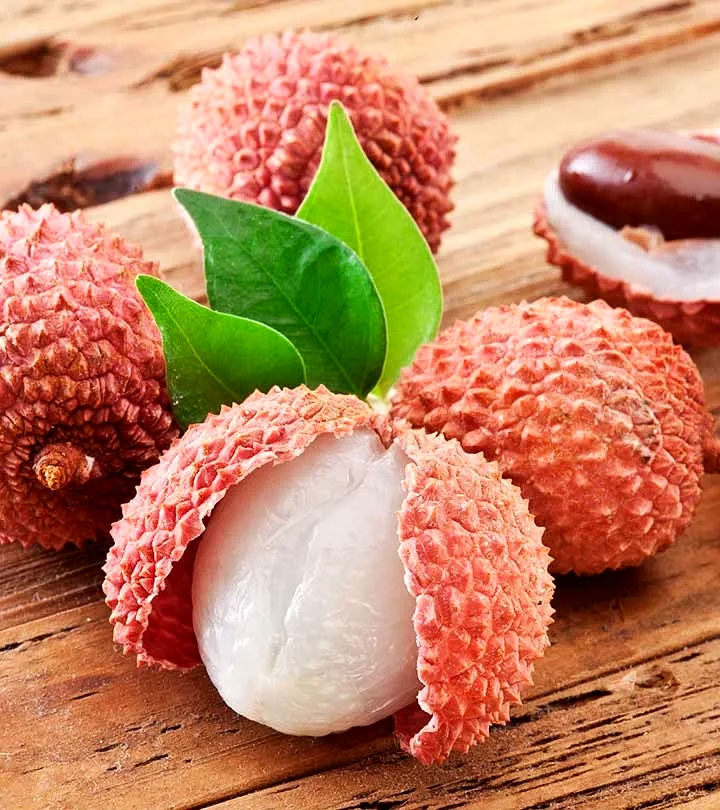
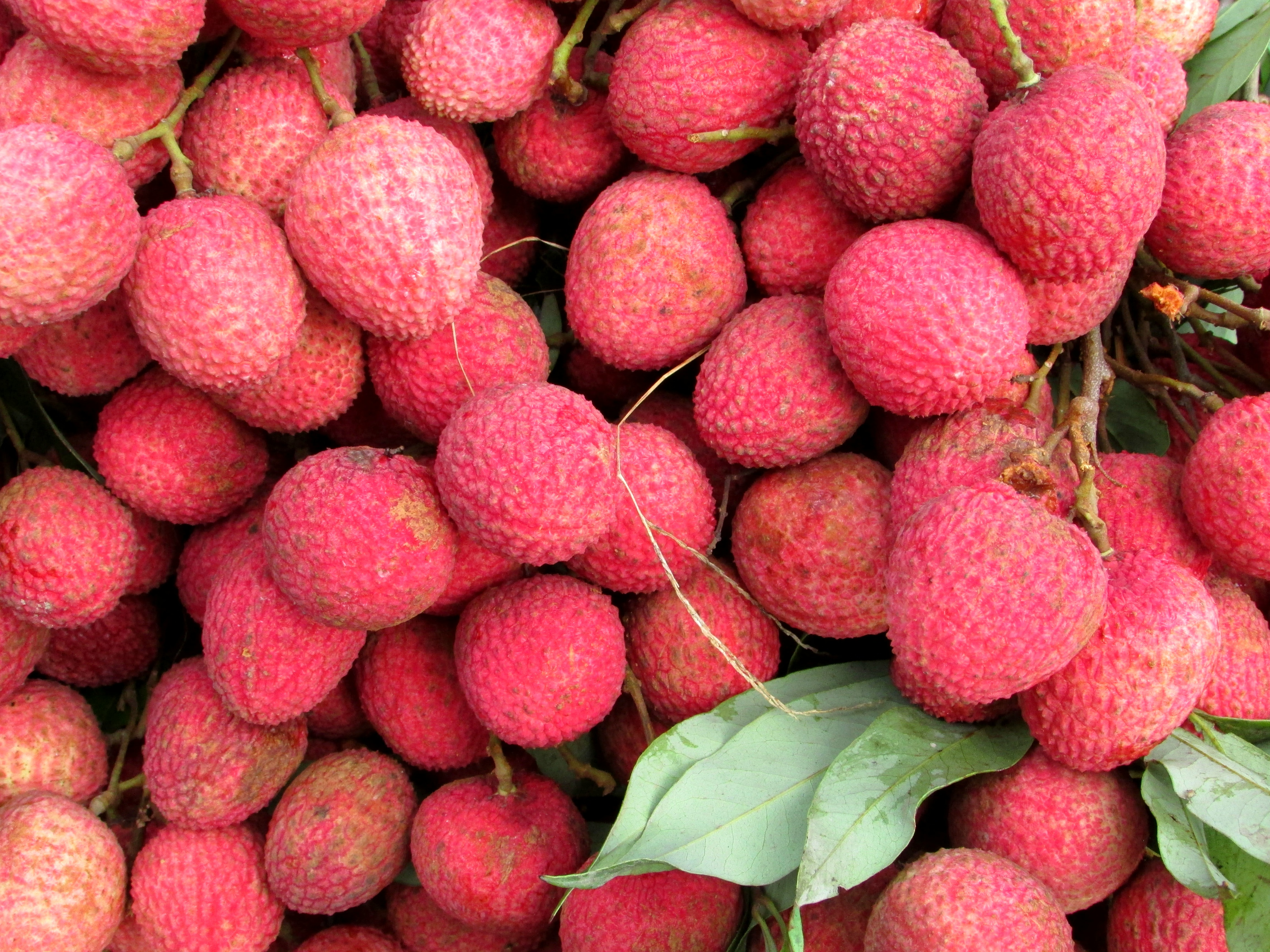
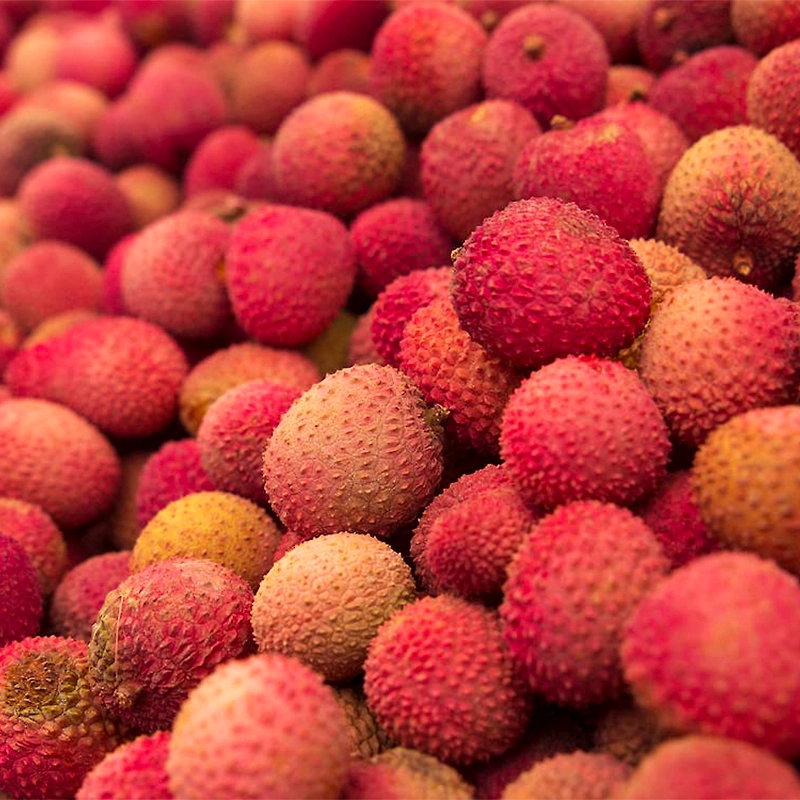
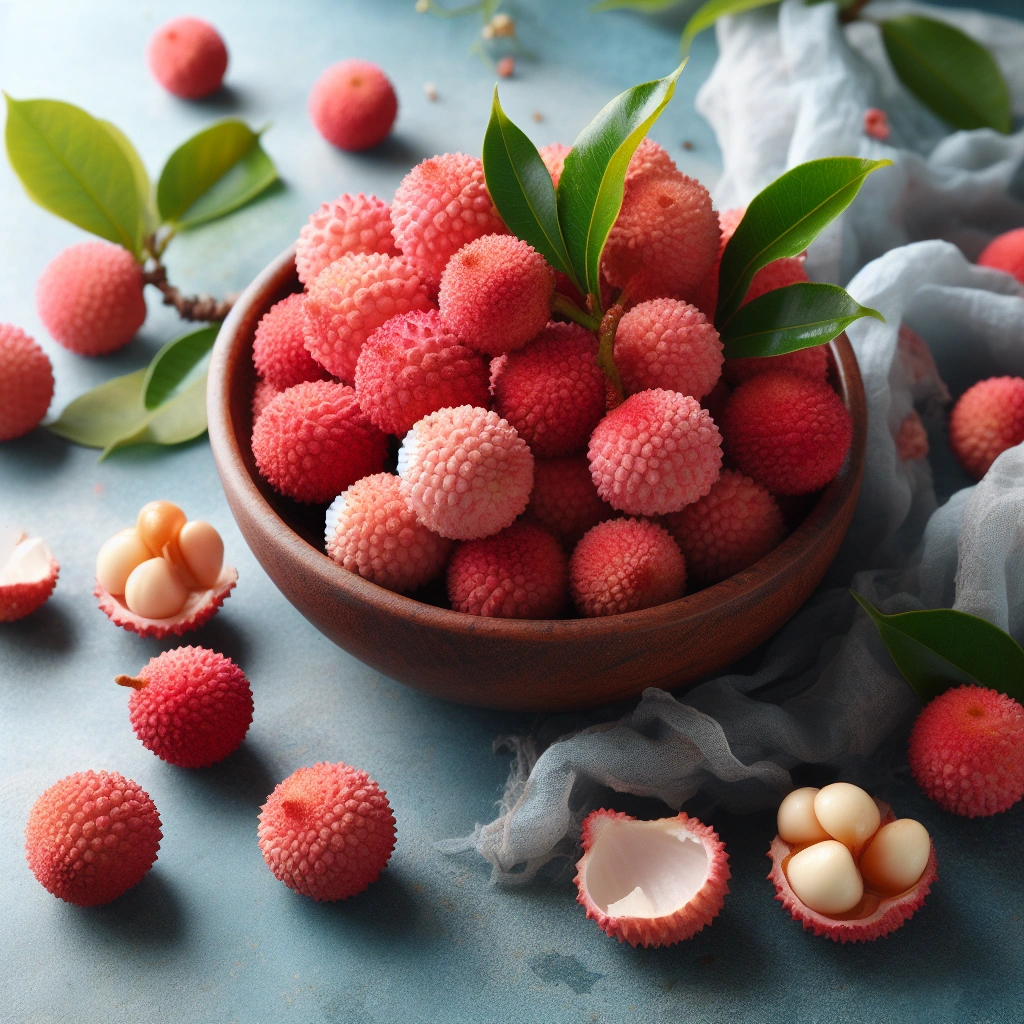
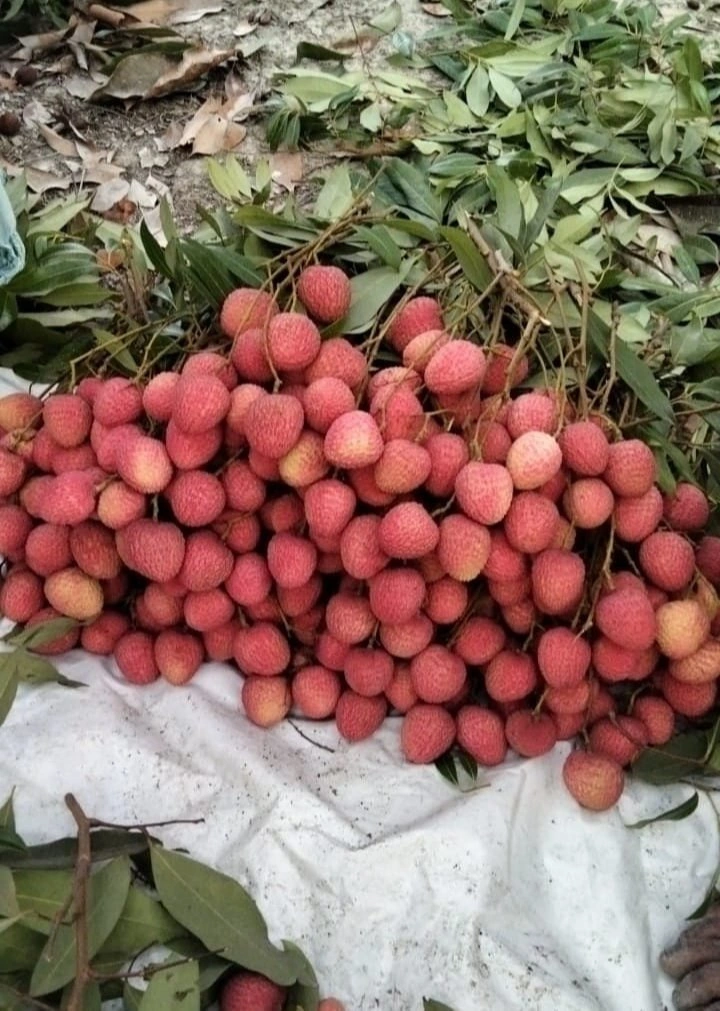
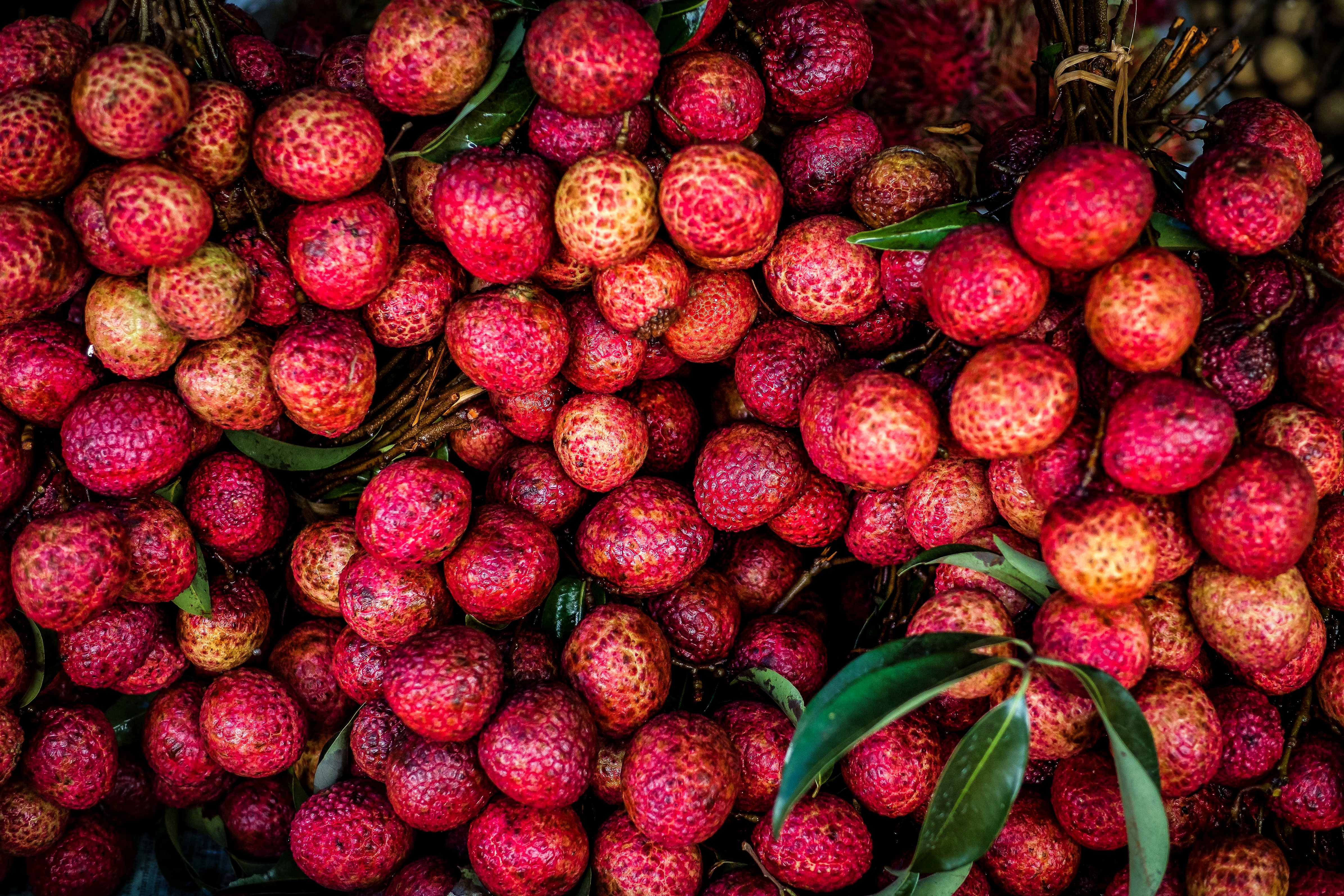
Lychee (Litchi chinensis) is a premium tropical fruit originating from Southeast Asia, highly favored for its unique sweet and floral flavor combined with a subtle tartness. Encased in a distinctive rough, pinkish-red to orange, inedible peel, lychee reveals a translucent, juicy white flesh surrounding a single large seed at its core. Renowned for its rich nutrient profile, lychee is an excellent natural source of vitamin C, vitamin B6, niacin, riboflavin, folate, and essential minerals such as copper, potassium, phosphorus, magnesium, and manganese. Its aromatic notes reminiscent of rose, grape, and pear make it an exquisite ingredient in culinary applications. Ideal for fresh consumption, lychee adds a refreshing sweetness to fruit salads, smoothies, desserts, and cocktails. Additionally, lychee is versatile in processed forms including canned, dried, jams, and jellies, with canned lychees being globally accessible. This high-quality tropical fruit is perfect for businesses specializing in fresh fruit supply, gourmet food production, and beverage manufacturing seeking a flavorful and nutrient-rich product to enhance their offerings.
Key Features
| Features | Description |
|---|---|
| Origin | Southeast Asia |
| Flavor Profile | Sweet, floral with a hint of tartness |
| Peel | Rough, pinkish-red to orange, inedible |
| Flesh | Translucent, juicy, white |
| Seed | Single large seed |
| Nutritional Benefits | Rich in Vitamin C, B6, niacin, riboflavin, folate, copper, potassium, phosphorus, magnesium, manganese, and antioxidants |
| Culinary Applications | Fresh consumption, fruit salads, smoothies, cocktails, desserts, ice creams, sorbets, sauces |
| Processing Options | Canned, dried, jams, jellies |
| Fragrance Notes | Combination of rose, grape, and pear |
| Attributes | Description |
|---|---|
| Scientific Name | Litchi chinensis |
| Family | Sapindaceae (Soapberry family) |
| Color | Pinkish-red to orange peel; white flesh |
| Shelf Life | Fresh lychee lasts up to 7 days under refrigeration; canned lychee shelf life varies by packaging |
| Packaging | Bulk, cartons, canned containers |
| Harvest Season | Typically from late spring to early summer |
| Taste | Sweet and floral with a subtle tartness |
| Usage Forms | Fresh, canned, dried, jams, sauces |
| Storage Conditions | Keep fresh lychee refrigerated at 1-4°C; canned lychee stored in a cool, dry place |
*Disclaimer: The above description has been AI-generated and has not been audited or verified for accuracy. It is recommended to verify product details independently before making any purchasing decisions.
This lychee originates from Southeast Asia, known for producing premium quality lychees with optimal flavor and freshness.
Lychees are available in bulk cartons for fresh fruit and canned containers for processed lychee, catering to different B2B needs.
Fresh lychee can be stored refrigerated at temperatures between 1-4°C for up to 7 days while maintaining optimum freshness.
Yes, canned lychees are processed from the same high-quality fresh lychees ensuring consistent flavor and quality.
This lychee is widely used in beverages, desserts, confectionery, and as ingredient in fruit blends for smoothies and cocktail preparations.
Country Of Origin: India
Lychee, also spelled as litchi, is a tropical fruit that belongs to the soapberry family (Sapindaceae). It is native to Southeast Asia and is known for its sweet and fragrant taste. Here are some key points about lychee:
Appearance: Lychee has a rough, pinkish-red or orange peel that is inedible. The flesh inside is translucent, juicy, and white. The fruit typically has a single large seed in the center.
Flavor and Aroma: Lychee has a sweet and floral flavor with a hint of tartness. Its aroma is often described as a combination of rose, grape, and pear.
Nutritional Content: Lychee is a good source of vitamin C, vitamin B6, niacin, riboflavin, folate, copper, potassium, phosphorus, magnesium, manganese, and antioxidants.
Culinary Uses: Lychee is commonly eaten fresh as a snack or dessert. It is also used in fruit salads, smoothies, cocktails, and various desserts like ice creams, sorbets, and sauces.
Processing: Lychees are often canned, dried, or made into jams and jellies. Canned lychees are widely available in many parts of the world.
Lychee, also spelled as litchi, is a tropical fruit that belongs to the soapberry family (Sapindaceae). It is native to Southeast Asia and is known for its sweet and fragrant taste. Here are some key points about lychee:
Appearance: Lychee has a rough, pinkish-red or orange peel that is inedible. The flesh inside is translucent, juicy, and white. The fruit typically has a single large seed in the center.
Flavor and Aroma: Lychee has a sweet and floral flavor with a hint of tartness. Its aroma is often described as a combination of rose, grape, and pear.
Nutritional Content: Lychee is a good source of vitamin C, vitamin B6, niacin, riboflavin, folate, copper, potassium, phosphorus, magnesium, manganese, and antioxidants.
Culinary Uses: Lychee is commonly eaten fresh as a snack or dessert. It is also used in fruit salads, smoothies, cocktails, and various desserts like ice creams, sorbets, and sauces.
Processing: Lychees are often canned, dried, or made into jams and jellies. Canned lychees are widely available in many parts of the world.
Inclusive of all taxes
You Save: 0
Mumbai , India
Service Provider , Brand Owner, Distributor, Exporter, Importer, Wholesaler, Startup