Inclusive of all taxes
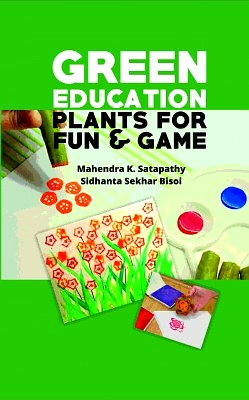
In 'Green Education: Plants for Fun and Games,' authors Mahendra K. Satapath and Sidhanta Sekhar Bisoi delve deep into a vibrant world where children once thrived through outdoor play linked to natural resources and plant components. With a growing concern over children’s decreasing engagement with nature due to the rise of electronic entertainment, the authors have carried out a comprehensive survey focused on the traditional uses of 90 plant species across rural and tribal communities. This hardback edition encapsulates critical insights into how fruits, flowers, leaves, seeds, and stems were integrated into games, educational activities, and social learning. The book effectively documents these traditional practices, offering rich visual aids like pictures and diagrams that cater to environmentalists, educators, and plant enthusiasts, aiming to rekindle the connection between children and nature through games using these plant species.
Key Features
| Features | Description |
|---|---|
| Authors | Mahendra K. Satapath & Sidhanta Sekhar Bisoi |
| Publication Type | Hardback |
| Focus | Traditional outdoor games using natural plant resources |
| Number of Plant Species Documented | 90 |
| Use of Visual Aids | Pictures, diagrams, and photographs enhancing understanding |
| Cultural Significance | Highlights indigenous knowledge of play and learning |
| Target Audience | Environmentalists, educators, plant enthusiasts, and children |
| Attributes | Description |
|---|---|
| Book Title | Green Education: Plants for Fun and Games |
| Authors | Mahendra K. Satapath & Sidhanta Sekhar Bisoi |
| ISBN | 978-XXX-XXXX-XX-X |
| Publisher | Your Publishing House |
| Publication Year | 2023 |
| Language | English |
| Pages | 250 |
*Disclaimer: The above description has been AI-generated and has not been audited or verified for accuracy. It is recommended to verify product details independently before making any purchasing decisions.
The book focuses on traditional outdoor games using plant resources, aiming to reconnect children with nature.
A total of 90 plant species are documented through comprehensive surveys in rural and tribal communities.
Educators, environmentalists, plant enthusiasts, and anyone interested in rediscovering nature-based play for children can benefit from the insights in this book.
Yes, the book includes pictures, diagrams, and photographs to help readers understand and visualize the plant species and their uses.
With the decline of outdoor play and increased screen time among children, this book offers a valuable perspective on rekindling their connection with nature through play.
Brand: nipa
Country Of Origin: India
In earlier times, children frequently engaged in outdoor games that utilized natural resources such as plant components (fruits, flowers, leaves, seeds, stems, etc.). These activities were deeply ingrained in the natural world. However, with the dwindling of open spaces and playgrounds, contemporary children often spend their leisure time with electronic devices like computers, mobile phones, and video games. This shift has resulted in the loss of indigenous knowledge related to playing in nature and has negatively impacted their social attitudes. To address this issue, the authors conducted a comprehensive survey of rural and tribal communities and documented 90 plant species, along with their fruits, flowers, leaves, seeds, stems, etc., that were traditionally used for entertainment and educational purposes. The book includes pictures, diagrams, and photographs to provide a visual aid for readers, especially plant enthusiasts and environmentalists.
1. Abelmoschus esculentus (L.) Moench 2. Abrus precatorius L. 3. Abutilon indicum (L.) Sweet 4. Acalypha hispida Burm.f. 5. Achyranthes aspera L. 6. Adenanthera pavonina L. 7. Aeschynomene aspera L. 8. Aegle marmelos (L.) Correa 9. Albizia saman (Jacq.) Merr. 10 .Allium cepa L. 11. Areca catechu L. 12. Aristida setacea Retz. 13. Artocarpus heterophyllus Lam. 14. Azadirachta indica A. Juss: 15. Dendrocalamus strictus (Roxb.) Nees 16. Barleria prionitis L. 17. Basella Alba L. 18. Bauhinia purpurea L. 19. Bixa orellana L. 20. Bombax ceiba L. 21. Borassus flabellier L. 22. Bryophyllum pinnatum (Lam.) Oken 23. Butea monosperma (Lam.) Taub. 24. Caesalpinia bonduc (L.) Roxb. 25. Caesalpinia pulcherrima (L.) Sw. 26. Calotropis gigantea R. Br 27. Calotropis procera (Aiton) Dryand 28C arica papaya L. 29. Cassia fistula L. 30. Citrus aurantium L. 31. Clerodendrum infortunatum L. 32. Cocos nucifera L. 34. Coix lacryma-jobi L. 35. Colocasia esculenta (L.) Schott 36. Corchorus capsularis L. 37. Cordia dichotoma G.Forst. 38. Crotalaria pallida Aiton. 39. Cucumis sativus L. var. hardwickii (Royle) Gabaev 40. Cuscuta reflexa Roxb. 41. Cynodon dactylon (L.) Pers. 42. Datura metel L. 43. Dalbergia sissoo DC. 44. Delonix regia (Hook.) Raf. 45. Dillenia indica L. 46. Drypetes roxburghii (Wall.) Hurus. 47. Erythrina variegata L. 48. Eucalyptus globulus Labill. 49. Ficus benghalensis L. 50F icus racemosa L. 51. Ficus religiosa L. 52. Impatiens balsamina L. 53. Ipomoea hederifolia L. 54. Ipomoea parasitica (Kunth) G. Don 55. Jasminum arborescens Roxb. 56. Jatropha gossypiifolia L. 57. Jatropha integerrima Jacq. 58. Lagenaria siceraria (Molina) Standl. 59. Lantana camara L. 60. Luffa acutangula (L.) Roxb. 61. Mangifera indica L. 62. Martynia annua L. 63. Mimosa pudica L. 64. Mimusops elengi L. 65. Musa paradisiaca L. 66. Neolamarckia cadamba (Roxb.) Bosser. 67. Nicandra physalodes (L.) Gaertner 68. Nymphaea pubescens Willd. 70. Oryza sativa L. 71. Pandanus odorifer (Forssk.) Kuntze 72. Peltophorum pterocarpum (DC.) K. Heyne 73. Phoenix sylvestris (L.) Roxb. 74. Plumbago zeylanica L. 75. Polyalthia longifolia (Sonn). Thwaites 76. Pseudobombax ellipticum (Kunth) Dugand 77. Ricinus communis L. 78. Rosa indica L. 79. Ruellia tuberosa L. 80. Saccharum officinarum L. 81. Solanum viarum Dunal 82. Tagetes erecta L. 83. Tamarindus indica L. 84. Tectona grandis L.f. 85. Tinospora cordifolia (Willd.) Miers. 86. Trewia nudiflora L. 87. Tridax procumbens (L.) 88. Triumfetta rhomboidea Jacq. 89. Combretum indicum (L.) Defilipps 90. Xanthium strumarium L.
Inclusive of all taxes
You Save: 0
North Delhi , India
Service Provider , Manufacturer, Professional Services, Brand Owner, Distributor, Exporter, Importer, Wholesaler, Startup