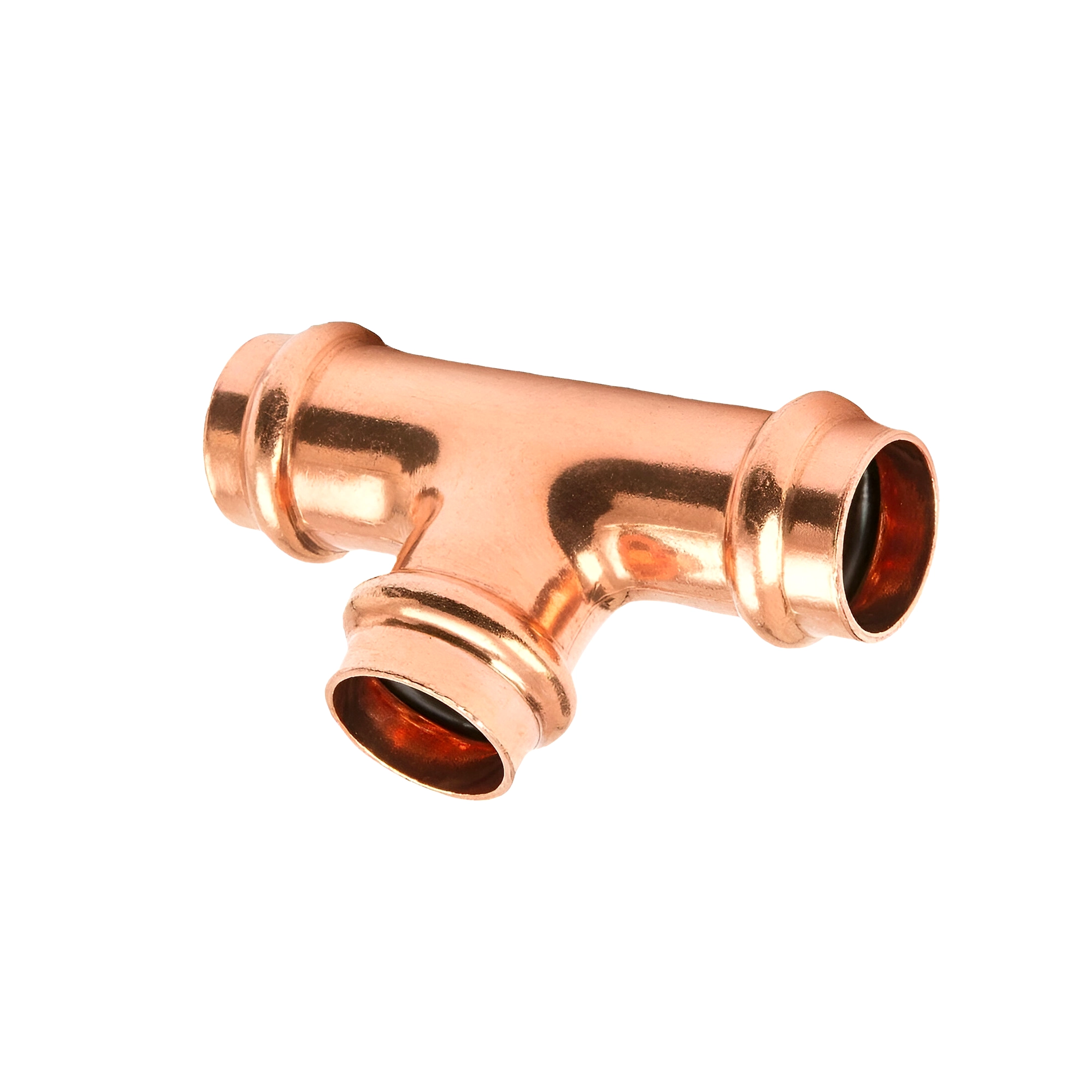
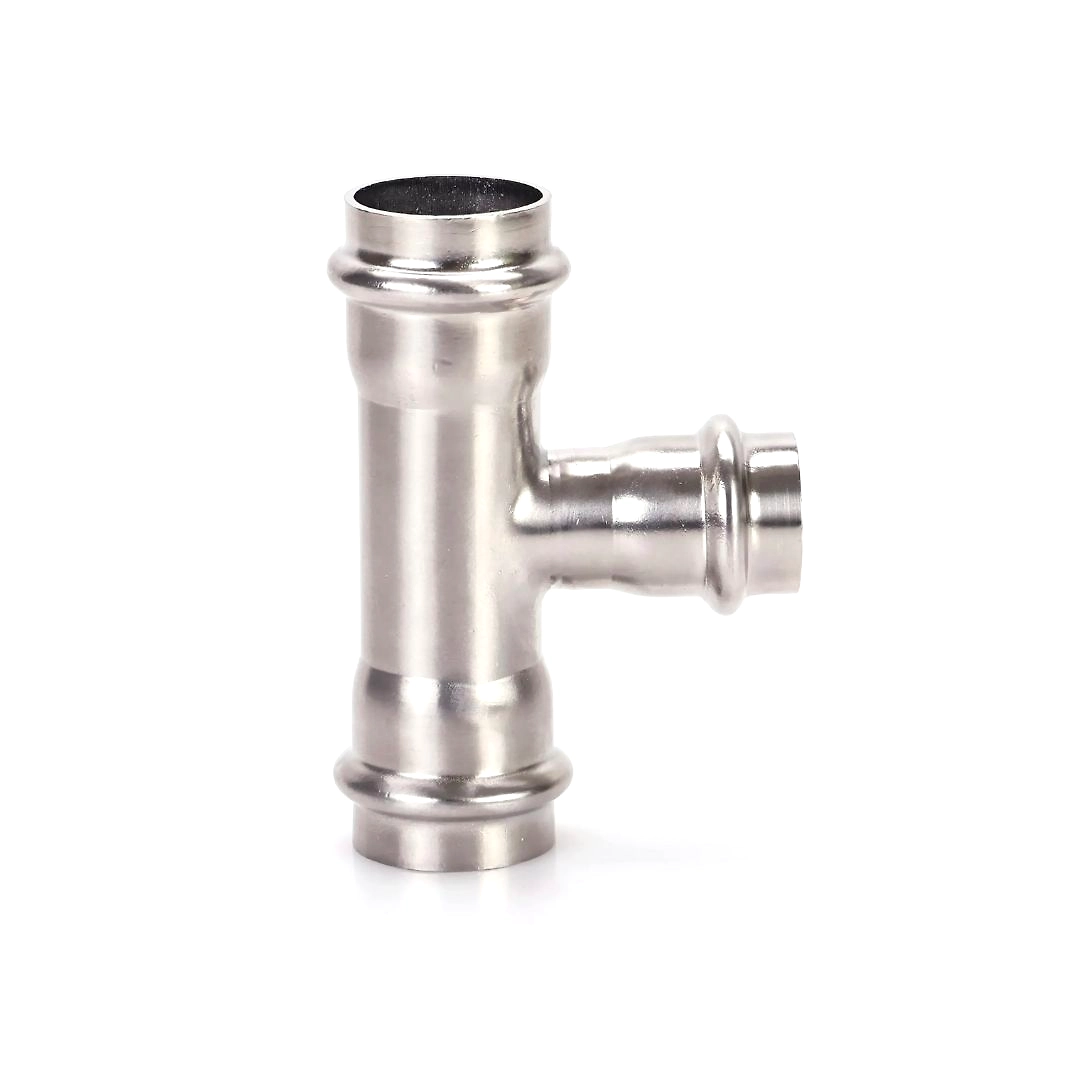
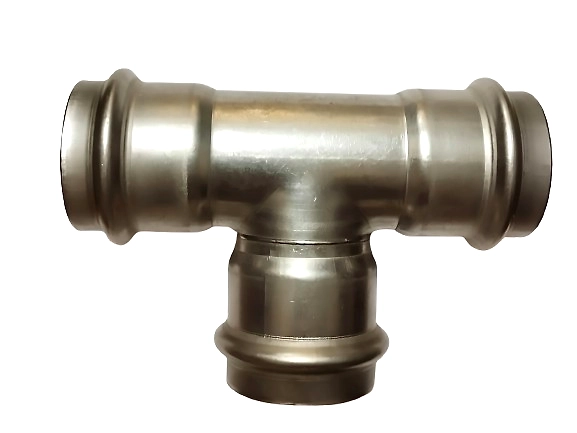
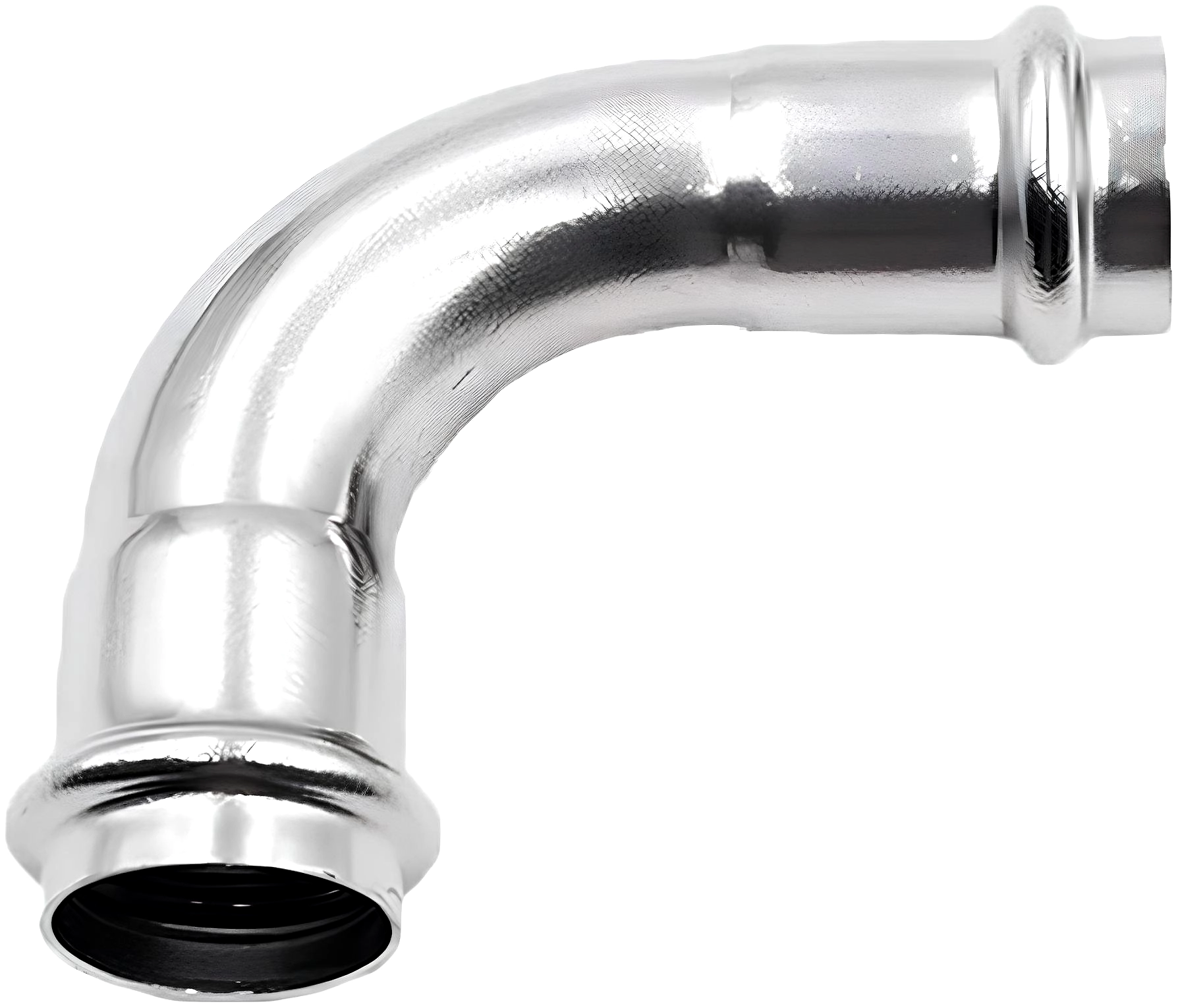
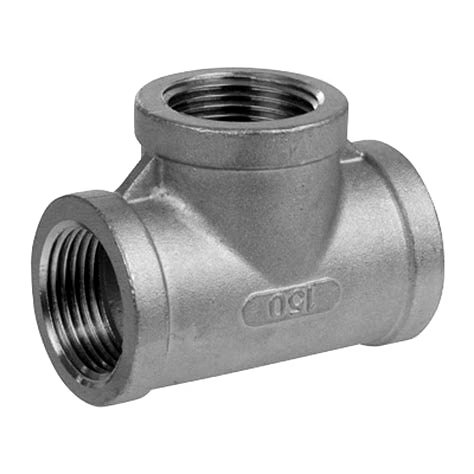
A tee fitting is a crucial component in piping systems designed in the shape of the letter 'T' to enable the combination or splitting of fluid or gas flow. It features three openings with two outlets positioned at a 90-degree angle relative to the main inlet, facilitating redirection, branching, or mixing of fluids. Available in multiple types such as Equal Tee, Reducing Tee, and Branch Tee, these fittings cater to various pipeline design requirements. Constructed from a variety of durable materials including stainless steel, copper, brass, PVC, and galvanized steel, tee fittings are selected based on the chemical compatibility and mechanical strength required for the specific application. They are extensively used across plumbing, irrigation, gas distribution, and industrial piping sectors for efficient flow management and system integration.
Key Features
| Features | Description |
|---|---|
| Design | T-shaped pipe fitting with three openings |
| Outlet Configuration | Two outlets at 90-degree angle from the main inlet |
| Types Available | Equal Tee, Reducing Tee, Branch Tee |
| Material Options | Stainless steel, copper, brass, PVC, galvanized steel |
| Flow Control | Used to combine, split, or redirect fluid/gas flow |
| Applications | Plumbing, irrigation, gas distribution, industrial piping |
| Attributes | Description |
|---|---|
| Opening Diameter | Equal or varying depending on type (equal or reducing) |
| Angle Between Main and Branch Outlets | 90 degrees |
| Material Grades | Grades vary based on material type, e.g., stainless steel 304/316 |
| Pressure Rating | Depends on material and piping system standards (commonly rated for medium to high pressure) |
| Connection Type | Threaded, welded, or socket depending on application |
| Compliance Standards | Manufactured as per applicable Indian and international piping codes |
*Disclaimer: The above description has been AI-generated and has not been audited or verified for accuracy. It is recommended to verify product details independently before making any purchasing decisions.
Yes, reducing tee fittings are specifically designed with one outlet smaller in diameter to safely connect pipes of different sizes while maintaining proper flow dynamics.
For corrosive fluid systems, stainless steel or brass tee fittings are recommended due to their superior corrosion resistance compared to PVC or galvanized steel.
Yes, tee fittings come with different connection types including threaded, welded, or socket, allowing use with various piping installation methods based on application requirements.
A branch tee typically diverts flow at a 90-degree angle but often features a smaller branch outlet, while an equal tee has all three outlets of the same diameter designed for splitting or combining flows evenly.
Tee fittings comply with Indian standards such as IS codes related to piping fittings as well as relevant international standards ensuring safety, pressure rating, and material quality.
Country Of Origin: India
A tee fitting is a pipe fitting shaped like the letter "T" that is used to combine or split fluid or gas flow in a piping system. It has three openings, with two outlets positioned at a 90-degree angle from the main line. Tee fittings allow the redirection of flow, the addition of branches, or the mixing of fluids.
Types of Tee Fittings:
1. Equal Tee: All three outlets have the same diameter, used to split or combine flow evenly.
2. Reducing Tee: One outlet is smaller in diameter, used to connect pipes of different sizes.
3. Branch Tee: Diverts flow from the main pipe to a branch at a 90-degree angle.
Materials: Common materials include stainless steel, copper, brass, PVC, and galvanized steel, selected based on the system’s requirements and the type of fluid being transported.
Applications: Tee fittings are widely used in plumbing, irrigation, gas distribution, and industrial piping systems for creating branches, distributing flow to multiple points, or integrating additional equipment.