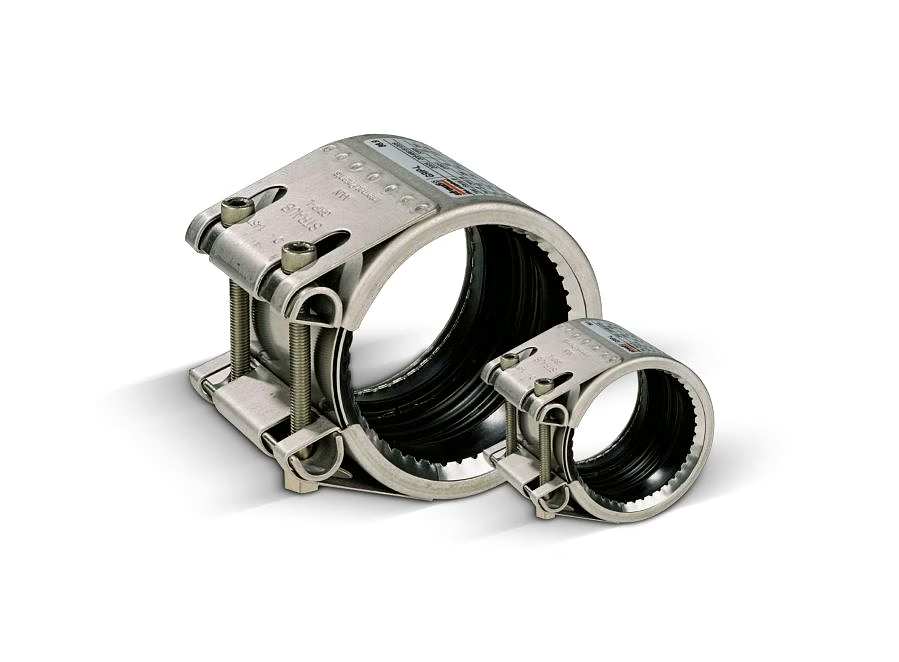
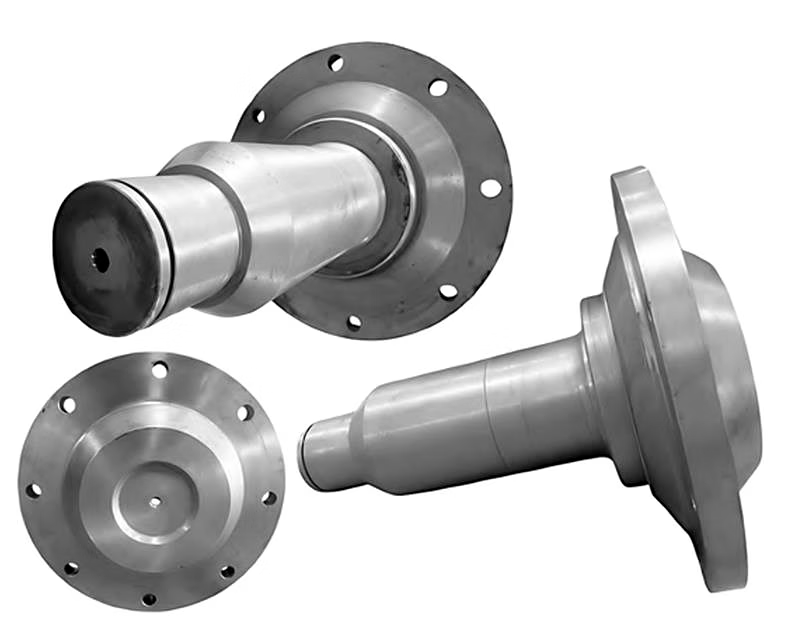
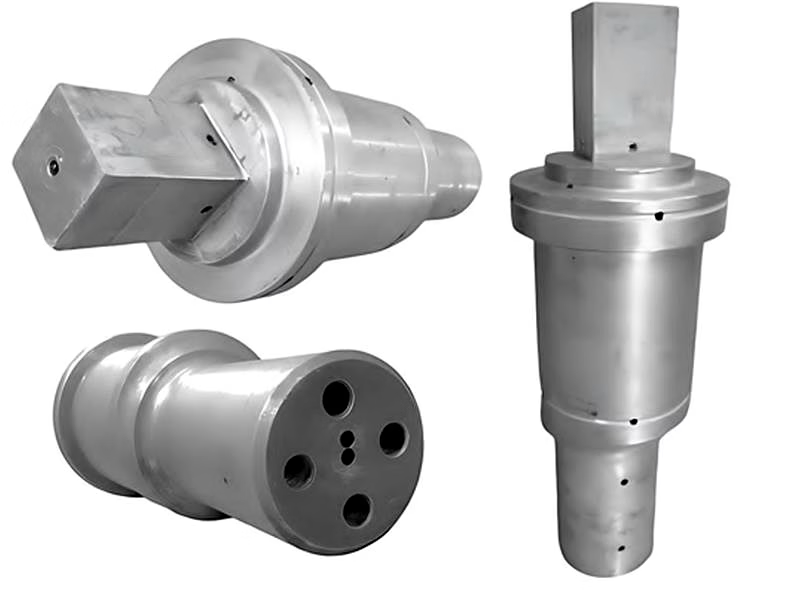
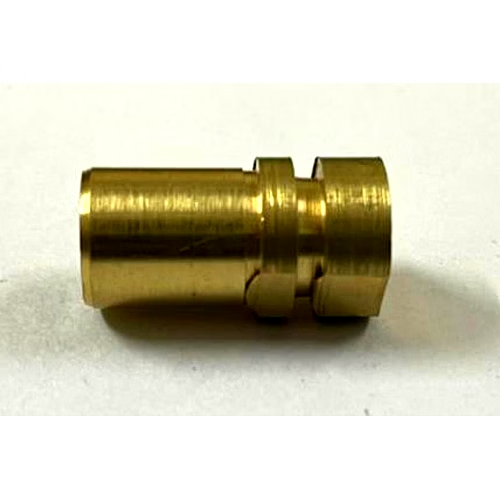
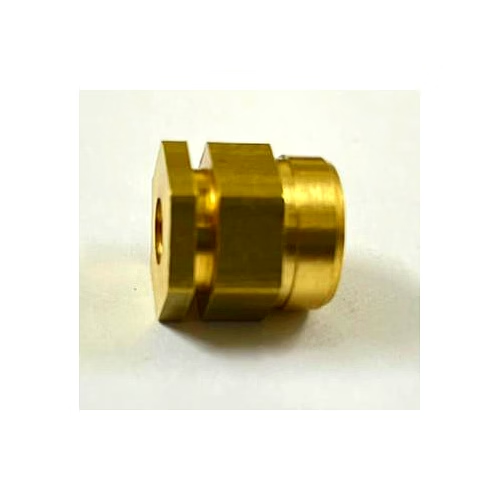
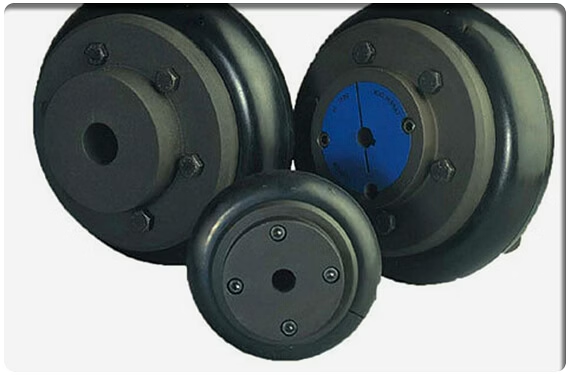
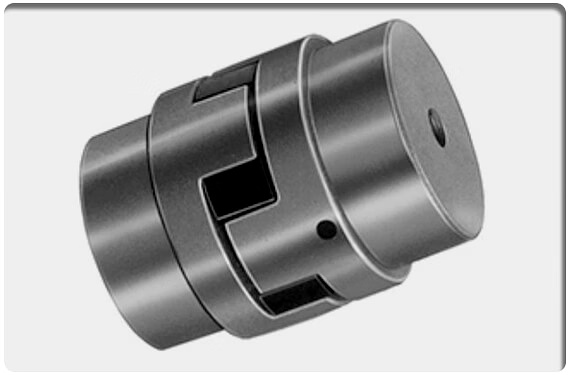
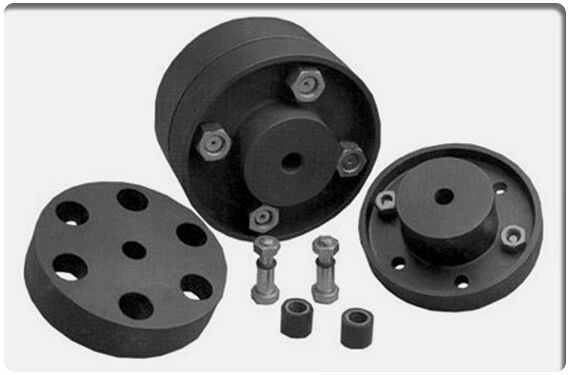
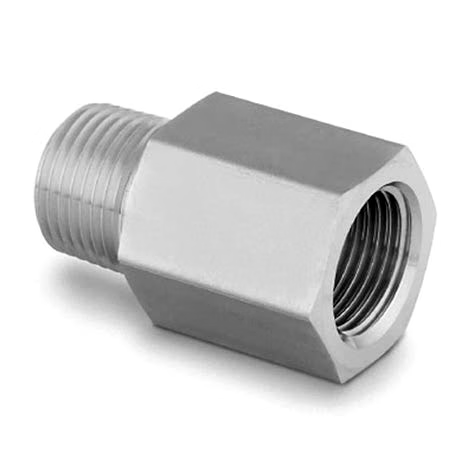
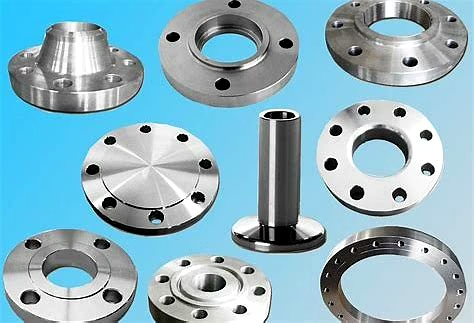
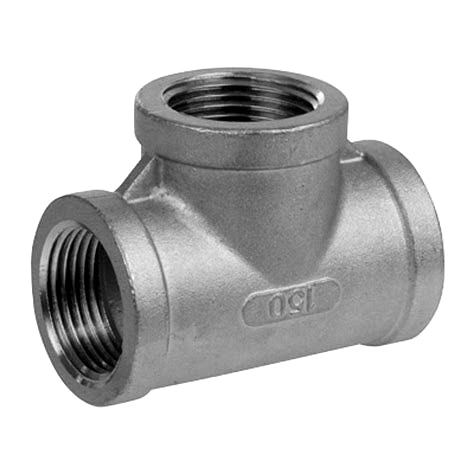
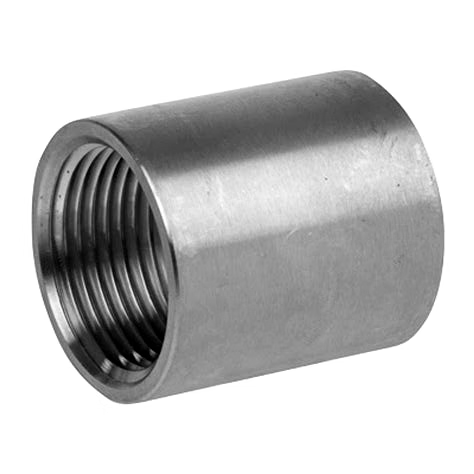
A pipe coupling is an essential plumbing and piping fitting designed to connect two pipe sections securely. This product enables the extension, repair, or modification of fluid and gas pipelines by providing a robust, leak-proof joint. Available in various types—including full coupling to join identical pipe sizes, half coupling to connect a pipe to equipment, reducer coupling for different pipe diameters, slip coupling for easy joining without threading, and compression coupling using rubber gaskets for secure sealing—this pipe coupling caters to diverse industrial needs. Constructed from durable materials such as steel, brass, copper, PVC, or stainless steel, it ensures compatibility with multiple piping systems and fluid types. Its versatile design supports efficient installation and maintenance, making it indispensable for maintaining system integrity and flow consistency in plumbing, gas, and industrial piping networks.
Key Features
| Features | Description |
|---|---|
| Type Variants | Full Coupling, Half Coupling, Reducer Coupling, Slip Coupling, Compression Coupling |
| Material Options | Steel, Brass, Copper, PVC, Stainless Steel |
| Connection Type | Threaded, Slip-fit, Compression Seal |
| Purpose | Connect, extend, or repair pipe sections |
| Leak-proof Design | Ensures secure, leak-free pipeline connections |
| Application | Suitable for plumbing, gas systems, industrial piping |
| Compatibility | Works with pipes of same or different diameters based on coupling type |
| Ease of Installation | Slip and compression types enable quick joining without threading |
| Attributes | Description |
|---|---|
| Material | Steel, Brass, Copper, PVC, Stainless Steel |
| Types | Full, Half, Reducer, Slip, Compression |
| Size Range | Varies depending on pipe diameter specifications |
| Connection Method | Threaded, Slip-fit, Compression Seal |
| Temperature Resistance | Dependent on material, e.g., Steel and Stainless Steel suitable for high temperatures |
| Pressure Rating | Varies by material and coupling type, designed for secure pressurized flow |
| Use Case | Pipeline extension, repair, connection in fluid and gas transport systems |
*Disclaimer: The above description has been AI-generated and has not been audited or verified for accuracy. It is recommended to verify product details independently before making any purchasing decisions.
This pipe coupling is compatible with pipes made from steel, brass, copper, PVC, and stainless steel, depending on the chosen coupling material.
Yes, the reducer coupling type is specifically designed to connect pipes of different diameters securely.
The compression coupling with its rubber gasket seal is ideal for quick, leak-proof repairs without threading.
Slip couplings are generally used for ease of installation and may be suitable for moderate pressure systems; for high-pressure applications, material and design specifications should be reviewed.
Material choice depends on the fluid or gas being transported, system temperature, pressure conditions, and compatibility with pipe material.
Country Of Origin: India
A pipe coupling is a short fitting used to connect two pipes in a plumbing, piping, or gas system, allowing for the extension or repair of pipelines. It provides a secure, leak-proof connection between pipes, ensuring fluid or gas can flow smoothly through the system.
Types of Pipe Couplings:
1. Full Coupling: Connects two pipes of the same size.
2. Half Coupling: Connects a pipe to a fitting or piece of equipment.
3. Reducer Coupling: Joins pipes of different diameters.
4. Slip Coupling: Allows pipe sections to be joined without needing to thread the ends.
5. Compression Coupling: Uses a rubber gasket or seal to compress and secure the connection, often used for repairs.
Materials: Pipe couplings can be made from materials such as steel, brass, copper, PVC, or stainless steel, depending on the system's requirements and the fluids being transported.
Pipe couplings are vital in maintaining the integrity of piping systems, allowing for flexibility in installation, repair, and extension of pipe networks.