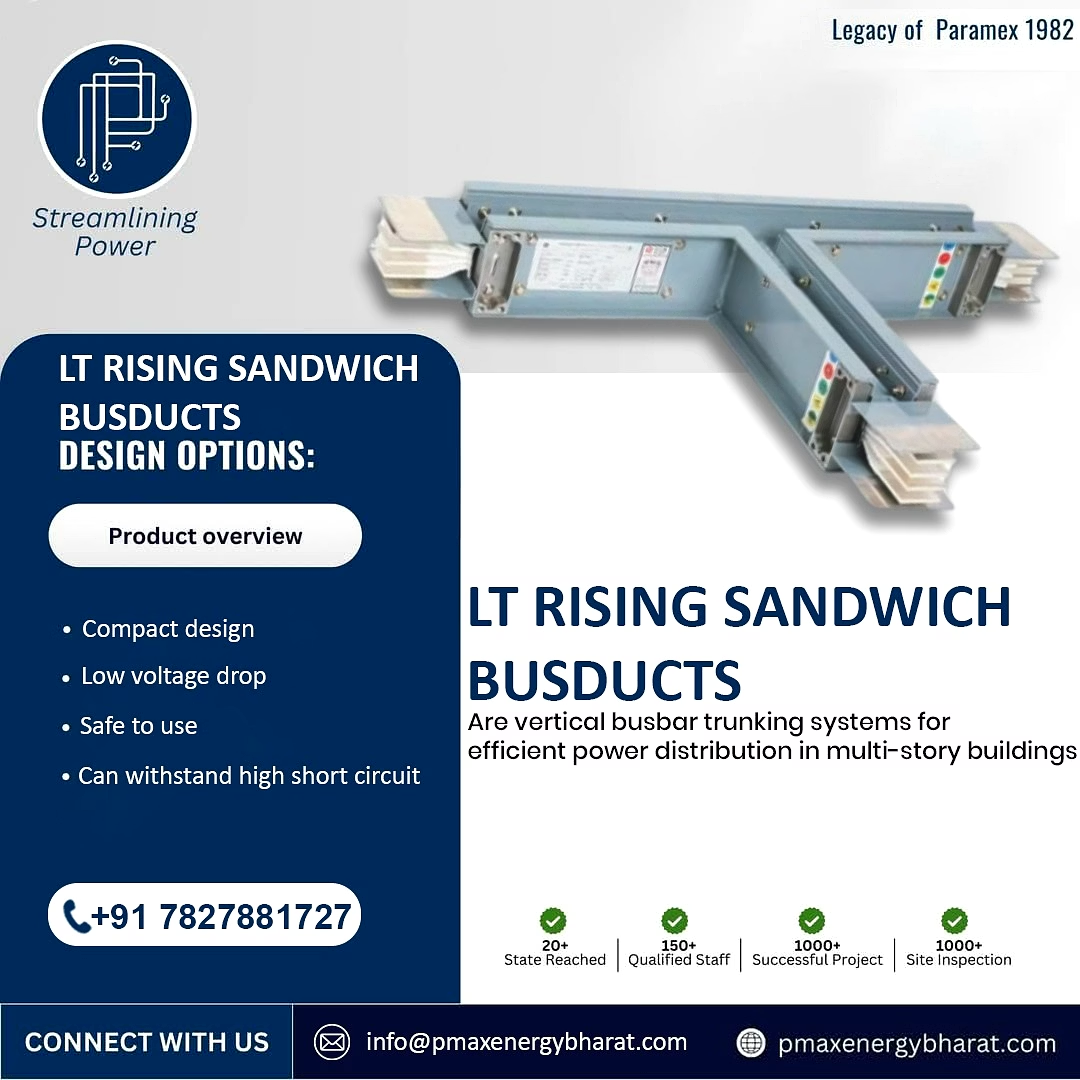
LT Rising Sandwich Busducts are advanced low tension power distribution systems designed for efficient and safe current transmission in commercial, industrial, and institutional buildings. Featuring an innovative sandwich structure with copper or aluminum busbars insulated between insulating panels, these busducts offer superior space-saving benefits compared to conventional cabling solutions. Their enclosed design ensures high safety standards by protecting conductors from external environmental factors, minimizing electrical hazards, and enhancing durability. Ideal for rising mains and vertical electrical distribution, LT Rising Sandwich Busducts support high current carrying capacity with improved heat dissipation and simple modular installation, significantly reducing setup time and maintenance requirements. These busducts provide a reliable, scalable, and flexible solution for modern electrical infrastructure demanding high performance and compact design.
Key Features
| Features | Description |
|---|---|
| Busduct Type | LT (Low Tension) Rising Sandwich Busduct |
| Conductor Material | Copper or Aluminum Busbars |
| Configuration | Sandwich structure with insulated busbars |
| Application | Rising mains and vertical power distribution in buildings and industrial facilities |
| Current Capacity | High current carrying capacity suitable for low tension systems |
| Safety | Enclosed design providing electrical insulation and protection against environmental factors |
| Installation | Modular design for ease of installation and maintenance |
| Space Efficiency | Compact design reducing space requirements compared to traditional cabling |
| Maintenance | Reduced maintenance due to robust construction and effective insulation |
| Heat Dissipation | Optimized thermal management due to sandwich configuration |
| Attributes | Description |
|---|---|
| Voltage Rating | Up to 1000V AC |
| Current Rating | Varies based on busbar size and material, typically from 400A to 4000A |
| Insulation Material | High-grade insulating panels (epoxy or similar) |
| Busbar Material Options | Copper or Aluminium |
| Enclosure Material | Sheet steel or aluminum alloy with powder coating |
| Mounting Type | Rising (Vertical) installation |
| Standards Compliance | IS/IEC standards for busducts and electrical safety |
| Dimensions | Customizable based on current and installation requirements |
| Operating Temperature Range | -25°C to +70°C |
| Protection Class | IP40 or higher depending on enclosure design |
*Disclaimer: The above description has been AI-generated and has not been audited or verified for accuracy. It is recommended to verify product details independently before making any purchasing decisions.
The busbars are typically made from high-conductivity copper or aluminum, selected based on application requirements.
Yes, the busducts are customizable in terms of busbar size and configuration to handle current ratings typically ranging from 400A up to 4000A.
The sandwich configuration insulates the busbars between layers, providing superior electrical insulation, reducing heat buildup, and protecting against environmental contaminants.
Yes, these busducts are specifically designed for rising mains and vertical power distribution applications in buildings and industrial setups.
They comply with international and Indian standards such as IS/IEC related to busducts and electrical safety.
Due to their enclosed and insulated design, these busducts require minimal maintenance, mostly periodic visual inspections and cleaning.
Country Of Origin: India
LT (Low Tension) sandwich busducts, also known as busway or bus duct, are a type of electrical power distribution system used for carrying substantial electrical current in buildings and industrial facilities. They consist of a compact, enclosed structure with copper or aluminum busbars, insulated and arranged in a "sandwich" configuration for enhanced safety and efficiency. These systems are a reliable alternative to traditional cabling, offering advantages in terms of space saving, ease of installation, and reduced maintenance.