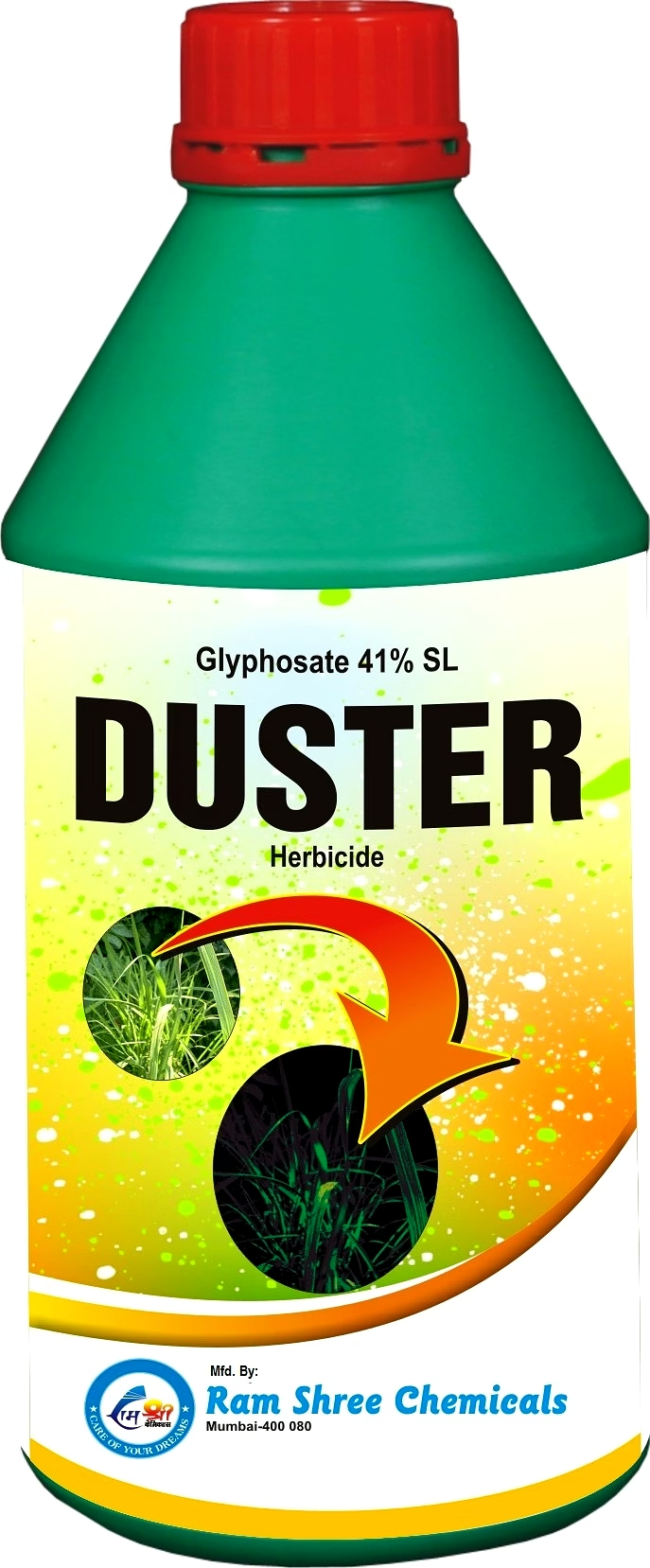
Glyphosate is a highly effective broad-spectrum, non-selective systemic herbicide designed specifically for comprehensive weed control in various agricultural and non-crop applications. Absorbed through the foliage and translocated throughout the plant, Glyphosate effectively eliminates annual and perennial grasses, broadleaf weeds, and woody plants by targeting their root systems to ensure complete eradication. This herbicide is particularly suitable for use in non-crop areas, plantation crops, industrial sites, and prior to crop sowing, making it an invaluable tool for farmers and land managers seeking reliable and cost-effective weed management. Glyphosate's systemic post-emergent action ensures weeds are controlled from root to tip, supporting zero-tillage farming practices and enabling safe use without residual soil effects, protecting subsequent plantings and improving crop rotation flexibility.
Key Features
| Features | Description |
|---|---|
| Herbicide Type | Broad-spectrum, non-selective systemic herbicide |
| Mode of Action | Post-emergent systemic absorption through foliage with translocation to roots |
| Target Weeds | Annual and perennial grasses, broadleaf weeds, woody plants |
| Application Areas | Non-crop areas, plantation crops, industrial sites, pre-sowing crop fields |
| Residue Profile | No residual soil effect, safe for follow-up crops |
| Benefits | Effective root-to-tip weed control, supports zero-tillage, cost-effective |
| Usage Timing | Ideal for post-emergent application and pre-planting usage |
| Formulation | Systemic liquid herbicide solution (typically available in various concentrates) |
| Attributes | Description |
|---|---|
| Chemical Composition | Isopropylamine salt of Glyphosate |
| Concentration | Varies by formulation (e.g., 360 g/L active ingredient) |
| Physical Appearance | Clear to slightly amber liquid |
| pH Range | Typically 4.0 - 6.0 |
| Solubility | Soluble in water |
| Packaging | Available in 1L, 5L, 20L containers depending on supplier |
| Storage Conditions | Store in a cool, dry place away from direct sunlight |
| Shelf Life | Typically 2 years from manufacture date |
| Safety Precautions | Use with protective equipment; avoid contact with skin and eyes |
| Application Method | Foliar spray using calibrated equipment |
*Disclaimer: The above description has been AI-generated and has not been audited or verified for accuracy. It is recommended to verify product details independently before making any purchasing decisions.
Yes, Glyphosate is non-selective and systemically absorbed, but it has no residual soil activity, making it safe for use before sowing crops without damaging the subsequent seeds or seedlings.
Yes, Glyphosate’s systemic action allows it to translocate throughout the plant, including roots, making it highly effective against perennial grasses, broadleaf weeds, and woody plants.
Glyphosate should be applied post-emergence on actively growing weeds using calibrated foliar spray equipment. Avoid application during heavy rain or drought stress for optimal absorption.
Yes, Glyphosate’s systemic, non-residual characteristics make it ideal for zero-tillage systems by effectively controlling weeds before planting without disturbing the soil.
Glyphosate is approved for use in industrial sites and non-crop areas for weed control but must be applied according to local regulatory guidelines and safety standards.
Country Of Origin: India
Glyphosate is a broad-spectrum, non-selective systemic herbicide that is absorbed through foliage and translocated throughout the plant. It is highly effective for the control of annual and perennial grasses, broadleaf weeds, and woody plants. Ideal for use in non-crop areas, plantation crops, industrial sites, and before sowing crops.
✅ Key Features & Benefits:
Non-selective, post-emergent weed killer
Systemic action – kills from root to tip
Excellent for zero-tillage and pre-planting application
No residual effect – safe for follow-up crops
Cost-effective and reliable weed control