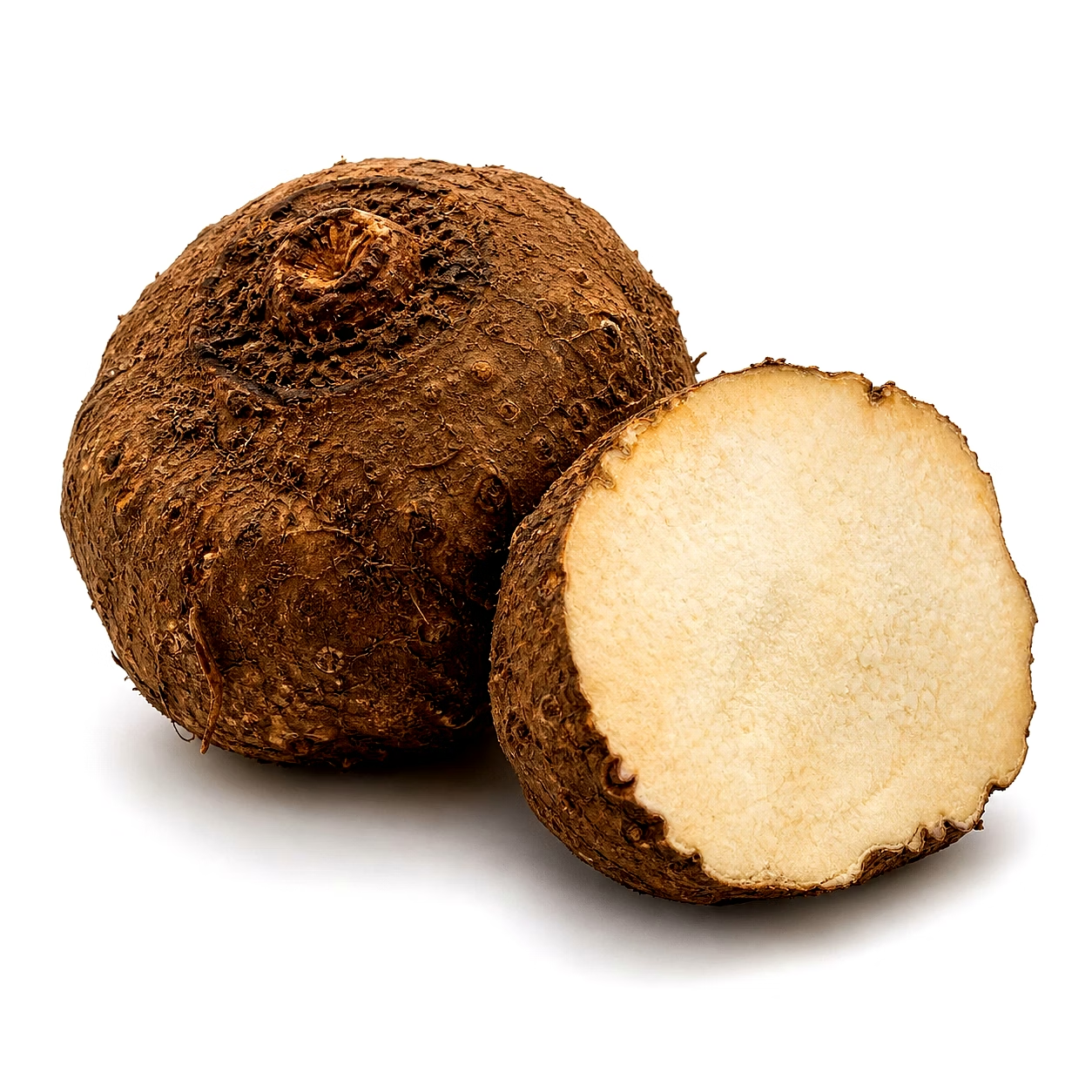
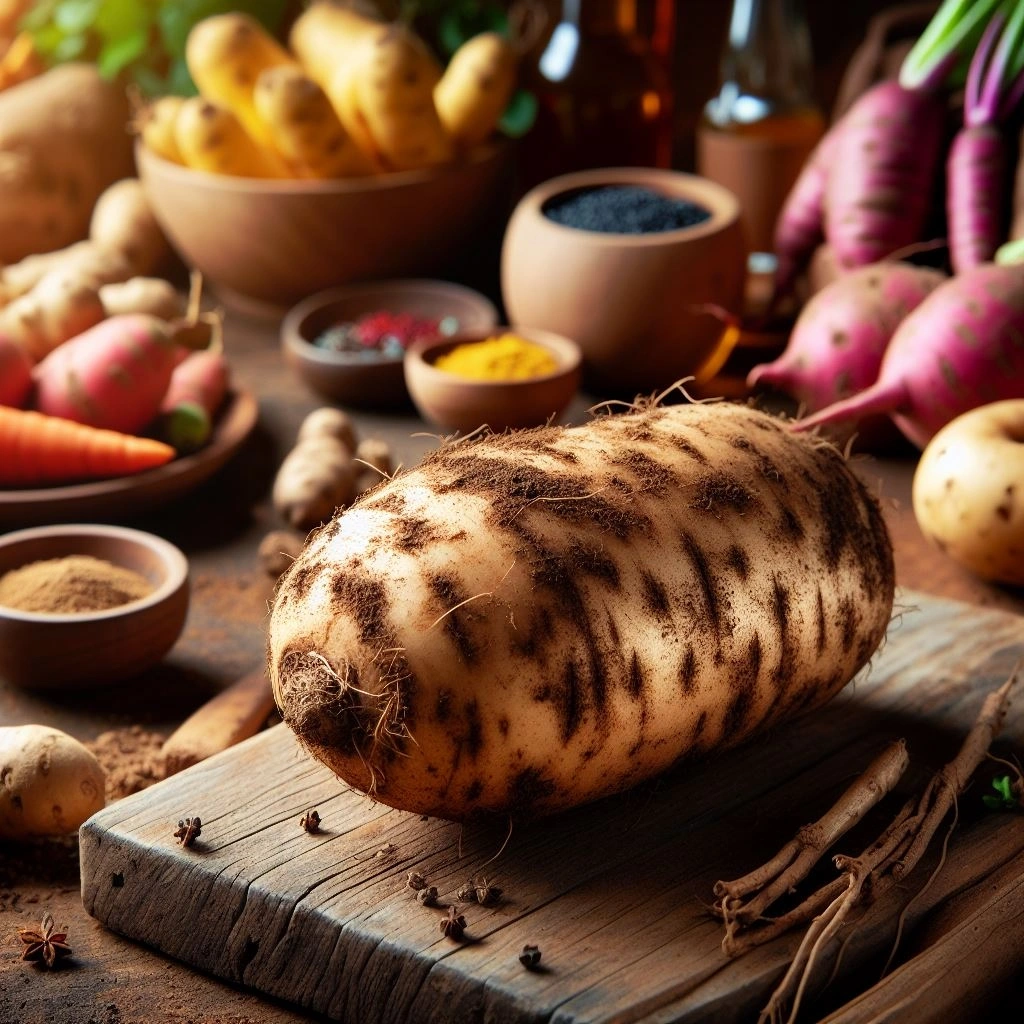
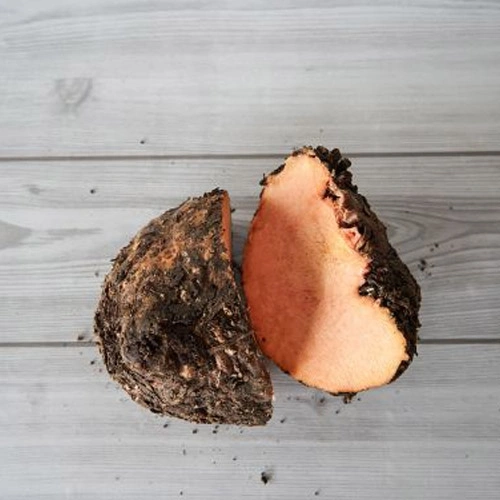
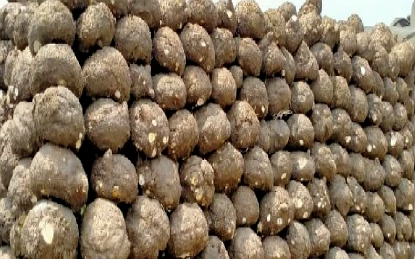
Elephant Foot Yam (Amorphophallus paeoniifolius) is a tropical root vegetable prized for its large, starchy tuber. Known for its rich fiber content and essential micronutrients including potassium, vitamin C, and antioxidants, this tuber is widely cultivated in tropical regions and extensively used in Asian culinary traditions. The yam’s unique texture and nutritional profile make it ideal for various culinary applications such as curries, fried snacks like tikkis, and other savory preparations. Its versatility combined with health benefits positions Elephant Foot Yam as an essential ingredient in both commercial food production and gourmet cuisine. Ideal for food processors, restaurants, and wholesalers focused on regional or ethnic cuisine ingredients, it offers a sustainable, nutrient-dense option to diversify menu offerings or product lines.
Key Features
| Features | Description |
|---|---|
| Scientific Name | Amorphophallus paeoniifolius |
| Tuber Size | Large, starchy, with rough brown skin |
| Nutritional Content | Rich in dietary fiber, potassium, vitamin C, antioxidants |
| Culinary Uses | Ideal for curries, tikkis, fried dishes, and other Asian recipes |
| Cultivation | Thrives in tropical climates, widely cultivated in Asia |
| Shelf Life | Moderate, requires proper storage to prevent spoilage |
| Texture | Firm, starchy, suitable for multiple cooking methods |
| Attributes | Description |
|---|---|
| Species | Amorphophallus paeoniifolius |
| Color | Brownish skin with white or cream flesh |
| Weight per Tuber | Varies between 1 to 5 kg |
| Storage Conditions | Cool, dry place; avoid moisture to prevent rot |
| Harvesting Time | 8 to 12 months after planting |
| Moisture Content | Approximately 70-80% |
*Disclaimer: The above description has been AI-generated and has not been audited or verified for accuracy. It is recommended to verify product details independently before making any purchasing decisions.
Elephant Foot Yam should be stored in a cool, dry environment with low humidity to prevent moisture accumulation that could lead to spoilage or rot.
The tubers of Elephant Foot Yam are typically ready to harvest between 8 to 12 months after planting, depending on soil and climate conditions.
Elephant Foot Yam is rich in dietary fiber, potassium, vitamin C, and antioxidants which promote digestive health, support immune function, and offer anti-inflammatory properties.
Yes, due to its firm, starchy texture, Elephant Foot Yam is adaptable and can be incorporated into global recipes including fried snacks, casseroles, and even plant-based dishes as a starch substitute.
Yes, Elephant Foot Yam tubers contain natural calcium oxalates which require thorough cooking, such as boiling or roasting, to neutralize potential irritation and make it safe for consumption.
Country Of Origin: India
Inclusive of all taxes
You Save: 0
Madanapalle , India
Service Provider , Brand Owner, Distributor, Exporter, Importer, Wholesaler
GST- 37aalcp8356j1zp