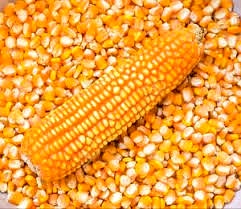
Yellow maize, also known as yellow corn, is a high-value agricultural product widely utilized in both human consumption and animal feed industries. Notable for its vibrant yellow kernels, yellow maize is a rich source of carbohydrates, dietary fiber, and essential vitamins, particularly Vitamin A, due to its naturally occurring carotenoid content such as beta carotene. This product is especially significant in nutritional improvement programs, as enhanced yellow maize varieties offer substantially increased beta carotene levels, contributing to the prevention of Vitamin A deficiency and associated health issues like childhood blindness in developing regions. Cultivated extensively in Africa and Latin America, yellow maize's adaptability to varied climates and soil types makes it a critical staple crop for food security and livestock nutrition. The yellow maize supplied is rigorously processed and quality-assured to maintain optimal nutritional content and kernel integrity, making it a reliable input for food manufacturers, feed producers, and agribusiness enterprises focused on sustainable agricultural practices and enhanced nutritional outputs.
Key Features
| Features | Description |
|---|---|
| Kernel Color | Bright yellow |
| Nutritional Content | High in carbohydrates, fiber, and beta carotene (Vitamin A precursor) |
| Source of Vitamin A | Contains significant levels of beta carotene, up to 10 times higher in enhanced varieties |
| Usage | Suitable for human food and animal feed applications |
| Geographical Adaptability | Easily cultivable in developing regions of Africa and Latin America |
| Health Benefits | Supports prevention of Vitamin A deficiency and childhood blindness |
| Crop Versatility | Can be used in various food products and livestock feed formulations |
| Quality Assurance | Processed for high nutritional integrity and kernel quality |
| Attributes | Description |
|---|---|
| Corn Type | Field yellow maize |
| Carotenoid Content | Enhanced varieties contain up to 10x beta carotene compared to standard sweet corn |
| Moisture Content | Typically 14-15% at delivery |
| Kernel Size | Uniform medium to large-sized kernels |
| Packaging Options | Bulk, sacks, or containers per customer requirements |
| Shelf Life | 6-9 months under proper storage conditions |
| Cultivation Regions | Africa, Latin America, other tropical and subtropical zones |
| Intended Use | Human food products, livestock feed, and industrial use |
*Disclaimer: The above description has been AI-generated and has not been audited or verified for accuracy. It is recommended to verify product details independently before making any purchasing decisions.
This yellow maize contains higher natural levels of beta carotene, a precursor of Vitamin A, which is generally absent in white maize, providing added nutritional benefits.
Yes, the yellow maize is suitable for human food applications and is particularly utilized in Vitamin A fortified food products to address micronutrient deficiencies.
Enhanced yellow maize varieties have up to 10 times more beta carotene, helping to prevent Vitamin A deficiency-related health issues such as blindness, especially in children in developing countries.
Absolutely, its high carbohydrate and nutrient levels make it excellent for formulating balanced and energy-rich livestock feeds.
Store in a cool, dry environment with moisture content around 14-15% to preserve kernel integrity and nutritional value for up to 9 months.
Country Of Origin: India