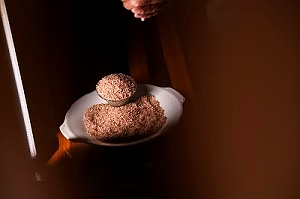
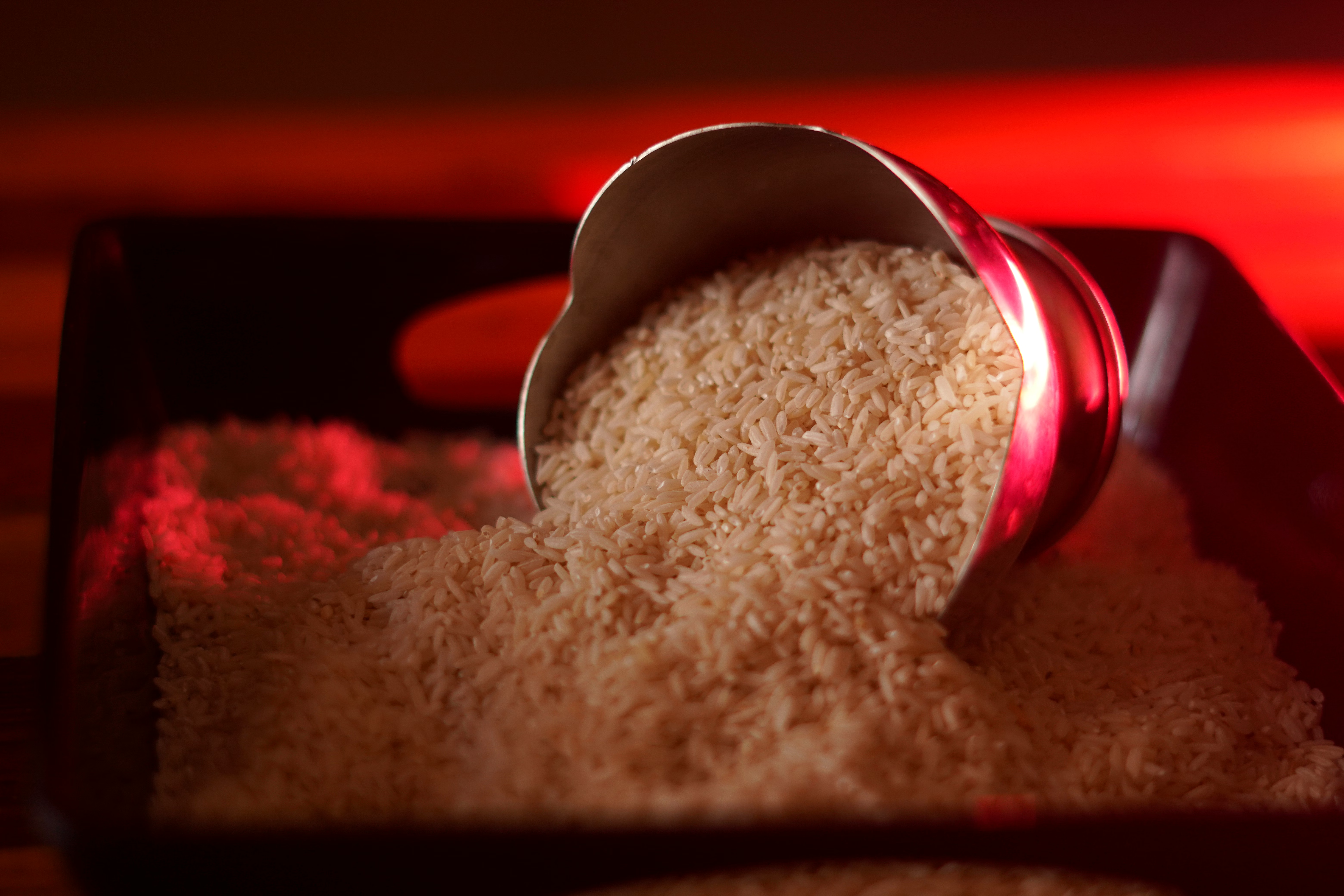
Our Rice Husk is a sustainable and versatile by-product derived from the outer shell of the rice grain, a result of the milling process. It serves as an eco-friendly resource widely used across various industries. Primarily employed as a biomass fuel, it offers a renewable and efficient energy source that supports environmental sustainability. Additionally, rice husk finds application in manufacturing green building materials such as insulating boards and composite panels, enhancing construction sustainability. In agriculture, it improves soil quality when used as a natural fertilizer and soil conditioner, promoting healthier crop growth. The rice husk's naturally high silica content also makes it a key raw material in producing silicon-based products for industrial use, including abrasives and refractory materials. Repurposing rice husk helps reduce agricultural waste, conserve resources, and fosters circular economy initiatives, making it essential for businesses focused on sustainable and eco-conscious solutions.
Key Features
| Features | Description |
|---|---|
| Source | By-product of rice milling process |
| Primary Use | Biomass fuel for renewable energy |
| Agricultural Application | Fertilizer and soil conditioner |
| Industrial Application | Raw material for silicon-based products |
| Environmental Benefit | Reduces agricultural waste and promotes sustainability |
| Material Composition | High silica content |
| Suitability | Eco-friendly and industrial uses |
| Packaging | Available in bulk or bags (customizable based on order) |
| Attributes | Description |
|---|---|
| Physical State | Dry, granular husk |
| Color | Light brown to beige |
| Moisture Content | Below 15% |
| Silica Content | Approx. 15-20% |
| Ash Content | Approximately 17-20% |
| Bulk Density | Approx. 100-150 kg/m³ |
| pH | Neutral to slightly acidic (6.0 - 7.0) |
| Origin | Derived from rice milling in South Asia |
| Packaging Size | Customizable per client requirement |
*Disclaimer: The above description has been AI-generated and has not been audited or verified for accuracy. It is recommended to verify product details independently before making any purchasing decisions.
The rice husk maintains a moisture content below 15%, ensuring suitability for biomass fuel and agricultural applications.
The high silica content, approximately 15-20%, makes rice husk an essential raw material for silicon-based products, abrasives, and refractories.
Yes, packaging sizes can be customized per client requirements, available in bulk or bags.
Yes, it acts as a natural soil conditioner and fertilizer, improving soil aeration and nutrient retention.
No, the product is a natural by-product without any chemical additives, suitable for eco-friendly applications.