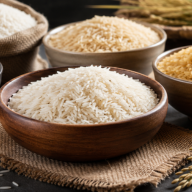
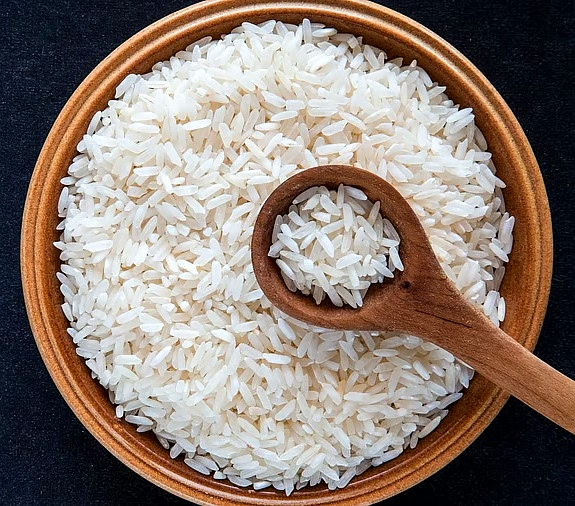
Non-Basmati rice encompasses a wide variety of rice types primarily cultivated across India, distinguished by their medium to short grain length, diverse color range, and adaptable texture. This broad category includes popular varieties such as Swarna, Sona Masoori, IR64, and other regional cultivars that excel in high yield and nutritional value. Specifically, Swarna rice—a major part of the Non-Basmati range—is available in both raw and parboiled forms, featuring medium grain length between 5.1 to 5.5 mm. The raw Swarna rice exhibits a creamy white color, while the parboiled variant has a golden hue due to the steaming process that enhances its nutritional profile and cooking stability. Upon cooking, Swarna rice yields a soft texture and pleasant mouthfeel, making it suitable for a variety of culinary uses including staple Indian meals, processed food manufacturing, and institutional feeding programs. Its moderate aroma and mild flavor allow it to easily complement a wide range of dishes, absorbing ambient spices and sauces effectively. Renowned for its affordability and consistent quality, Non-Basmati rice varieties like Swarna and others serve as essential commodities for B2B buyers such as food distributors, wholesalers, exporters, and institutional buyers across Asia, Africa, and the Middle East. The rice’s adaptability to various cooking styles and nutritional benefits make it a preferred choice for bulk procurement and extended shelf-life storage. By offering both raw and parboiled options, suppliers cater to diverse market demands, serving industries involved in packaged foods, catering, and large-scale consumption efficiently.
Key Features
| Features | Description |
|---|---|
| Variety | Non-Basmati including Swarna, Sona Masoori, IR64 |
| Grain Length | Medium (5.1 – 5.5 mm for Swarna) |
| Color | Creamy white (raw), Golden (parboiled) |
| Texture | Soft when cooked |
| Processing Type | Available in raw and parboiled forms |
| Aroma | Mild to light aroma (e.g., Sona Masoori) |
| Flavor Profile | Neutral to slightly nutty |
| Nutritional Benefit | High nutritional content especially in parboiled varieties |
| Usage | Suitable for staple meals, processed foods, and institutional catering |
| Market Suitability | Ideal for importers across Asia, Africa, Middle East |
| Attributes | Description |
|---|---|
| Moisture Content | Typically maintained below 14% for optimal storage |
| Purity | High purity with minimal broken grains |
| Packaging | Available in bulk bags and retail packs as per client requirement |
| Shelf Life | 12 to 18 months under proper storage conditions |
| Origin | India |
| Processing | Steamed and dried for parboiled variants, cleaned and polished for raw |
| Certification | FSSAI, AGMARK (depending on batch and exporter) |
| Physical Damages | Less than 2% |
| Admixture | Below 1% |
*Disclaimer: The above description has been AI-generated and has not been audited or verified for accuracy. It is recommended to verify product details independently before making any purchasing decisions.
Swarna parboiled rice undergoes a steaming and drying process that imparts a golden color, enhances its nutritional profile, improves cooking stability, and increases shelf life, unlike the raw Swarna which retains a creamy white color and softer texture but with shorter shelf life.
With a medium grain length of 5.1 to 5.5 mm, Swarna rice provides a soft, fluffy texture when cooked, making it versatile for a broad range of dishes from traditional Indian meals to processed food products where grain integrity and mouthfeel are essential.
To maintain quality, moisture content should be kept below 14%, and the rice should be stored in airtight bags in cool, dry conditions to prevent spoilage, infestation, and maintain optimal shelf life ranging from 12 to 18 months.
Common certifications include FSSAI certification for food safety, AGMARK certification for quality standards, and sometimes organic or fair-trade certifications depending on buyer requirements and export batch specifics.
Non-Basmati rice varieties such as Swarna are highly suitable for large-scale catering and processing due to their consistent grain size, soft cooked texture, neutral flavor that absorbs spices well, and availability in both raw and parboiled forms, facilitating diverse culinary uses.
Country Of Origin: India
Non-Basmati rice represents a diverse group of rice varieties cultivated across India, known for their adaptability, affordability, and widespread culinary use. Unlike Basmati, these grains range from short to medium in length, with variations in texture, color, and cooking characteristics depending on the specific type and region of origin. Commonly offered in both raw and parboiled forms, Non-Basmati rice is valued for its high yield, nutritional content, and versatile applications in global cuisines.
In terms of flavour, most Non-Basmati rice varieties are mild and neutral, making them ideal for absorbing spices, sauces, and seasonings. Some varieties, such as Sona Masoori, feature a light aroma and slightly nutty taste, while others like IR64 and Swarna offer a soft texture with excellent cooking performance. Whether used in staple meals, processed foods, or institutional catering, Non-Basmati rice provides consistent quality and adaptability, making it a preferred choice for importers across Asia, Africa, and the Middle East.
PRODUCT RANGE
1. Swarna Rice (Parboiled/Raw)
Grain Length: Medium (5.1–5.5 mm)
Color: Creamy white or golden (parboiled)
Texture: Soft when cooked
Moisture: <13%
Usage: Ideal for daily consumption, mid-tier retail, and institutional supply
2. IR64 Parboiled Rice
Grain Length: Medium (6 mm avg.)
Color: Yellowish (parboiled)
Broken Percentage: 5%, 25%, 100% options available
Aroma: Non-aromatic
Usage: Popular in Africa and Southeast Asia
3. Sona Masoori Rice
Grain Length: Medium (5.2–5.4 mm)
Texture: Light and soft
Aroma: Mild
Usage: South Indian cuisine, ideal for pongal, dosa, daily meals
4. 100% Broken Rice
Broken Ratio: 100%
Color: White / Parboiled
Usage: Breweries, animal feed, food processing industries