Inclusive of all taxes
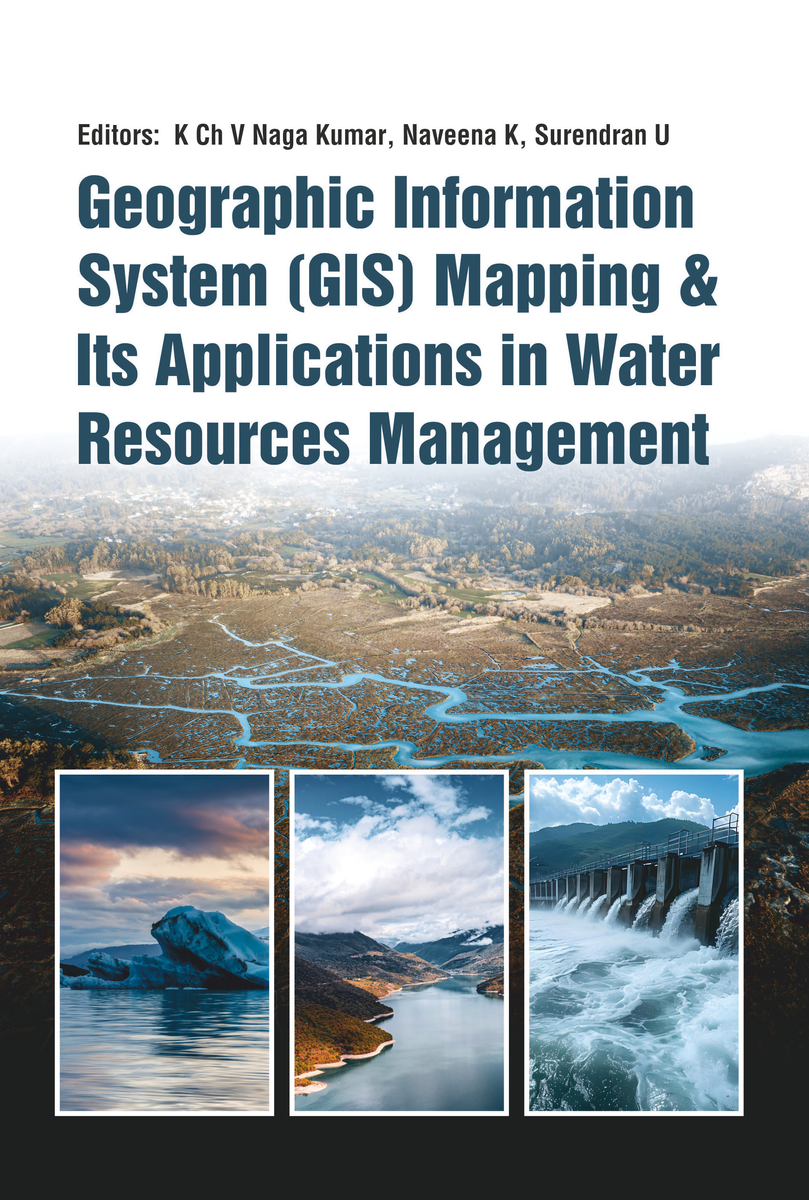
The 'Geographic Information System (GIS) Mapping and Its Applications in Water Resources Management' hardcover book by K Ch V Naga Kumar, Naveena K, and Surendran U delves deeply into the essential intersection between GIS technology and water resource management. With a focus on the importance of freshwater availability in a world facing increasing scarcity, the text provides an extensive overview of the principles of remote sensing, geomorphology, groundwater mapping, and rainfall distribution analysis. As urban populations rise and climate change pressures loom, this book serves as a critical resource for understanding and managing water resources effectively. The text aims to equip professionals and students alike with valuable insights and practical guidance in geographic technology, emphasizing data visualization and effective mapping techniques. Additionally, the book outlines the pressing challenges related to global water scarcity, making it a valuable reference point for planning and decision-making in the field of water resources.
Key Features
| Features | Description |
|---|---|
| Authors | K Ch V Naga Kumar, Naveena K, Surendran U |
| Format | Hardback |
| Focus | GIS applications in water resources management |
| Topics Covered | Remote Sensing, Geomorphology, Groundwater Mapping, Rainfall Distribution |
| Target Audience | Professionals and students in environmental science, forestry, and related fields |
| Importance of water resources | Addresses global water scarcity issues affecting 1.1 billion people |
| Attributes | Description |
|---|---|
| Publisher | Not Specified |
| Publication Year | Not Specified |
| ISBN | Not Specified |
| Number of Pages | Not Specified |
| Language | English |
| Dimensions | Not Specified |
| Weight | Not Specified |
*Disclaimer: The above description has been AI-generated and has not been audited or verified for accuracy. It is recommended to verify product details independently before making any purchasing decisions.
The book covers Remote Sensing, Quantitative Evaluation of Geomorphology, Groundwater Resource Mapping, Spatial Changes in Blue and Green Water Resources, and Rainfall Distribution.
This book is primarily aimed at professionals and students in environmental science, forestry, hydrology, and GIS technology.
GIS helps in visualizing, analyzing, and mapping water resources, enabling better decision-making and management strategies in the context of increasing water scarcity.
The book offers practical tools for data visualization, analysis, and effective map preparation to assist in the management of water resources.
It addresses the critical global water scarcity challenge, which affects billions, and explores how GIS techniques can help alleviate these issues through better resource planning.
Brand: nipa
Country Of Origin: India
Water is a valuable natural resource that is essential to all aspects of life on Mother “Earth” In fact, our planet is covered by 70% of water, but only 3% of the total water is in the form of freshwater, and again two-thirds of that is in the form of glaciers or is unavailable for our use. Presently, 1.1 billion people globally lack access to good drinking water resources, and another 2.7 billion find water scarce for at least one month of the year.
With growing urban population and land use changes, water scarcity will be exacerbated, and also with climate change and bio-energy demands amplify the complex relationship between world development and water demand.
Water is a valuable natural resource that is essential to all aspects of life on Mother “Earth” In fact, our planet is covered by 70% of water, but only 3% of the total water is in the form of freshwater, and again two-thirds of that is in the form of glaciers or is unavailable for our use. Presently, 1.1 billion people globally lack access to good drinking water resources, and another 2.7 billion find water scarce for at least one month of the year.
With growing urban population and land use changes, water scarcity will be exacerbated, and also with climate change and bio-energy demands amplify the complex relationship between world development and water demand. The chapters cover the topic of:
Introduction to Remote Sensing and Its Applications
Quantitative Evaluation of Geomorphology Using Geo-Spatial Techniques
Insights into the Groundwater Resource Mapping
Assessing Spatial Changes in Blue and Green Water Resources
GIS Tools for Mapping the Spatio-Temporal Trends in Rainfall Distribution
Geographic Information System (GIS): A Practical Guide Towards Data Visualization, Analysis
and Map Preparation
Inclusive of all taxes
You Save: 0
North Delhi , India
Service Provider , Manufacturer, Professional Services, Brand Owner, Distributor, Exporter, Importer, Wholesaler, Startup