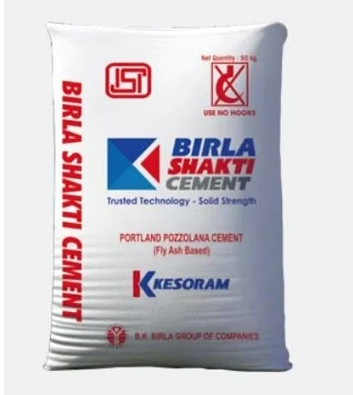
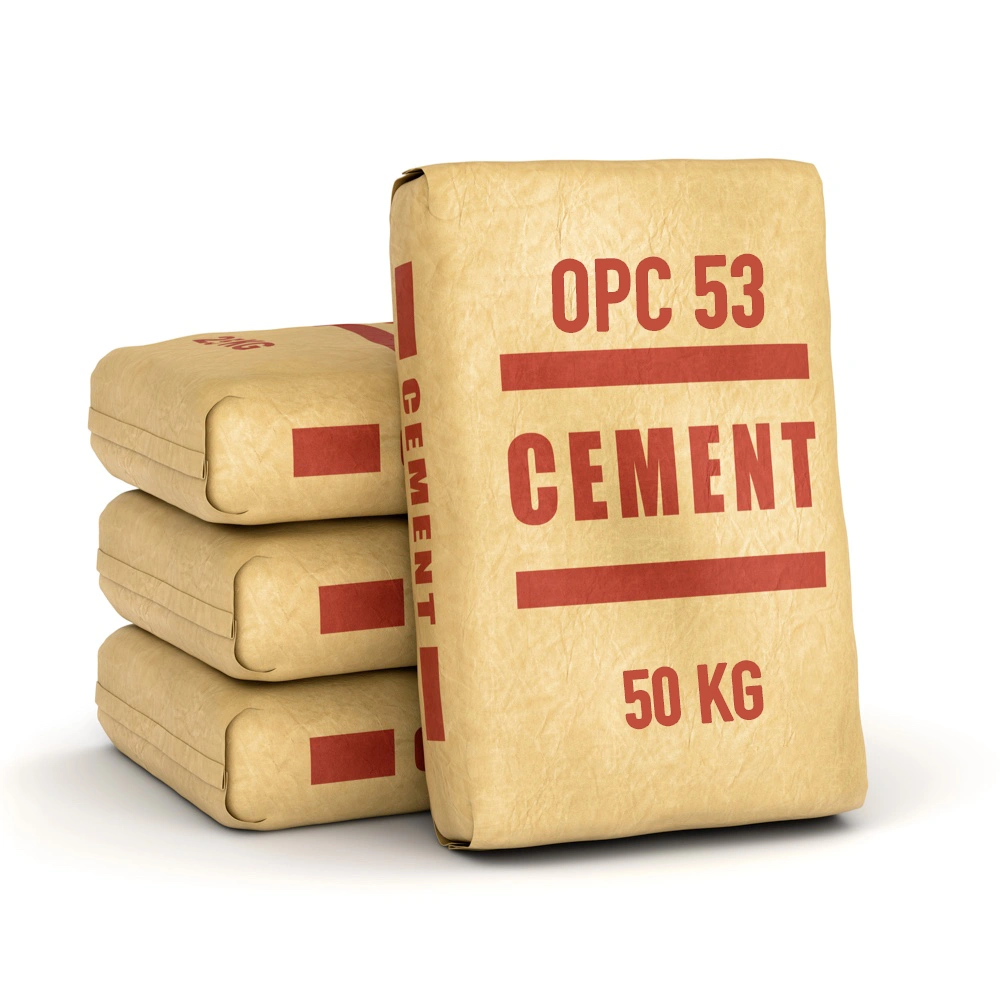
Our premium quality cement is engineered for maximum durability and strength, making it the ideal choice for both residential and commercial construction projects. This cement ensures excellent adhesion and workability, enabling a smooth, high-quality finish across various applications. Manufactured through a meticulous process that involves the heating and grinding of limestone and clay to create clinker, followed by blending with gypsum, this cement meets stringent quality standards. Specifically designed to resist weathering and cracking, it guarantees structural longevity and reliability. Ideal for use in a wide range of construction activities including concrete formulation, masonry work, and infrastructure development, our cement supports sustainable building practices with a focus on reducing carbon emissions through advanced production techniques. Whether used as Ordinary Portland Cement (OPC), Portland Pozzolana Cement (PPC), or Sulfate Resisting Cement, our product delivers consistent performance and enhances the structural integrity of your projects.
Key Features
| Features | Description |
|---|---|
| High Durability | Provides long-lasting strength and resistance to cracking and weathering |
| Excellent Workability | Ensures smooth application and superior adhesion in various construction uses |
| Versatile Application | Suitable for residential, commercial, and industrial construction projects |
| Manufacturing Process | Produced by heating and grinding limestone and clay to form clinker, blended with gypsum |
| Types Available | Includes Ordinary Portland Cement (OPC), Portland Pozzolana Cement (PPC), and Sulfate Resisting Cement |
| Sustainability Focused | Utilizes modern production methods aimed at reducing carbon footprint |
| Resistance to Aggressive Environments | Sulfate Resisting Cement type withstands harsh chemical exposure |
| Consistent Quality | Manufactured under strict quality control ensuring reliable construction outcomes |
| Attributes | Description |
|---|---|
| Primary Raw Materials | Limestone, Clay, Sand |
| Production Temperature | Kiln heated to over 2700°F |
| Clinker Formation | Rock-like substance formed from raw materials |
| Additives | Gypsum and pozzolanic materials added for specific cement types |
| Hydration Process | Chemical reaction with water to form solid mass |
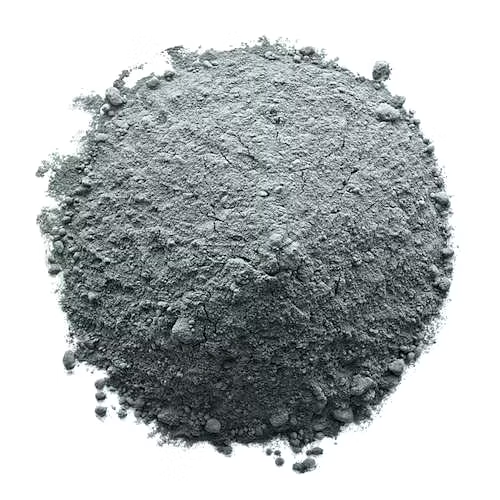
| Product Forms | Available in powder form for mixing |
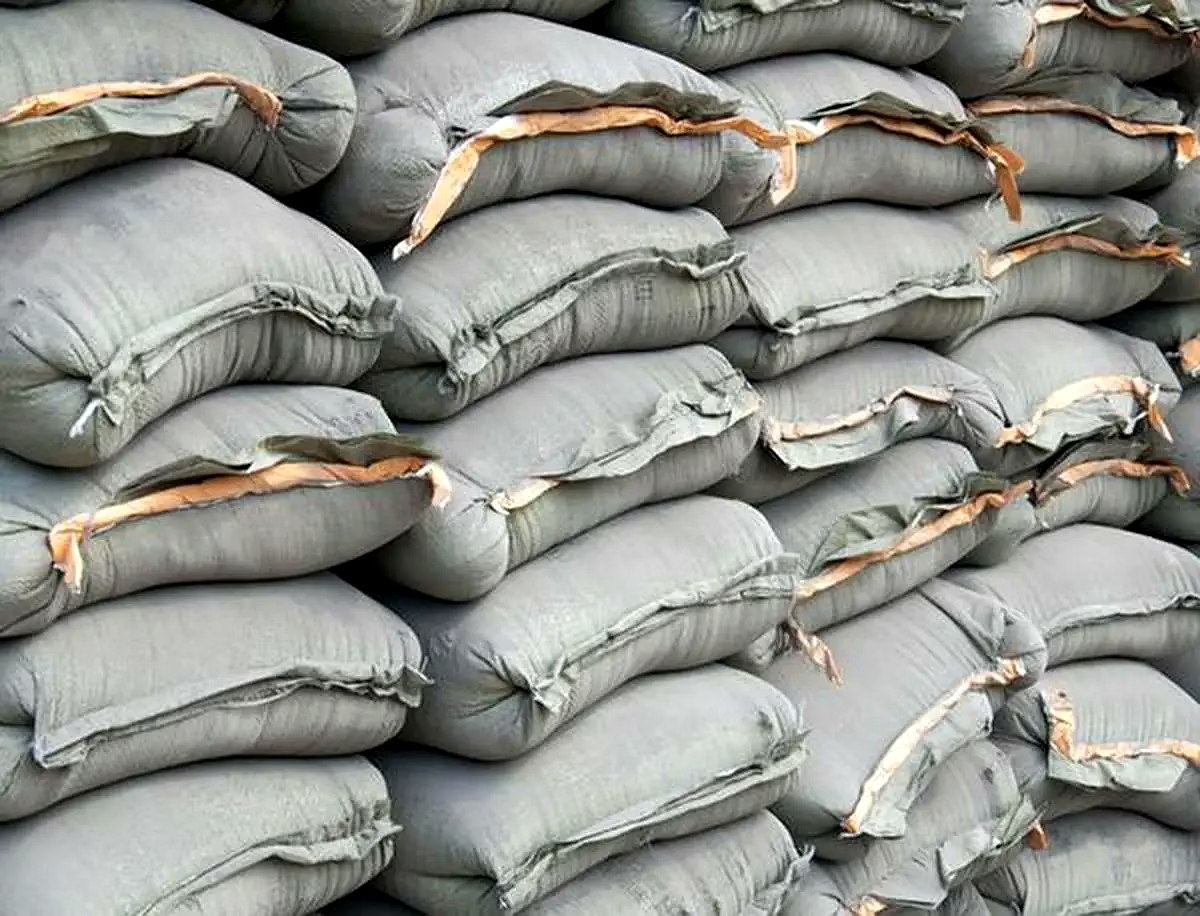
| Packaging Options | Varies by buyer requirement (typically bags or bulk) |
| Compressive Strength | Varies by cement type and standard, typically ranges between 32.5 to 53.5 MPa |
| Application Areas | Concrete manufacture, masonry work, plastering, infrastructure projects |
*Disclaimer: The above description has been AI-generated and has not been audited or verified for accuracy. It is recommended to verify product details independently before making any purchasing decisions.
This product line includes Ordinary Portland Cement (OPC) suitable for general construction, Portland Pozzolana Cement (PPC) that enhances durability by incorporating pozzolanic materials, and Sulfate Resisting Cement designed to protect structures in aggressive environments such as soil or water with high sulfate content.
The manufacturing process involves heating raw materials like limestone and clay to over 2700°F in a kiln to form clinker, which is then finely ground with gypsum. This ensures optimum particle size and composition for ideal setting time, strength, and durability, resulting in consistent and reliable cement performance.
Yes, this cement features superior resistance to weathering and cracking due to its chemical composition and stringent quality controls during manufacture. The Sulfate Resisting Cement variant is especially suited for harsh environments where exposure to chemicals can degrade typical cement.
Absolutely. The cement is versatile and formulated to provide excellent adhesion and workability, making it suitable for a broad spectrum of construction activities ranging from residential buildings to large commercial infrastructure.
The cement production incorporates modern methodologies aimed at reducing carbon emissions, such as using alternative binders and recycled materials. This commitment promotes environmentally friendly construction without compromising product quality.
Brand: ashok export
Country Of Origin: India
Cement is a crucial material in construction, serving as a binder that hardens and adheres to various substances, creating strong structures. It is primarily made from a mixture of limestone and clay, which is heated to high temperatures to form clinker, a rock-like substance that is then ground into a fine powder. This powder, when mixed with water, undergoes a chemical reaction known as hydration, leading to the formation of a solid mass.
There are several types of cement, each designed for specific applications. Ordinary Portland Cement (OPC) is the most commonly used type, suitable for general construction. Other varieties include Portland Pozzolana Cement (PPC), which incorporates pozzolanic materials to enhance durability, and Sulfate Resisting Cement, designed to withstand aggressive environments.
The history of cement dates back to ancient civilizations, with the Romans using a form of hydraulic cement made from lime and volcanic ash. Modern cement production has evolved significantly, focusing on sustainability and reducing carbon emissions. Innovations in the industry include the development of alternative binders and the use of recycled materials, contributing to more environmentally friendly construction practices. Overall, cement remains a foundational element in building infrastructure worldwide.
Cement plays a vital role in the construction industry, acting as a key ingredient in concrete, which is the most widely used man-made material globally.
Manufacturing Process
The production of cement involves several stages, starting with the extraction of raw materials such as limestone, clay, and sand.
These materials are crushed and blended before being heated in a kiln at temperatures exceeding 2,700 degrees Fahrenheit, resulting in the formation of clinker.
The clinker is then cooled and ground with gypsum to produce the final cement product.