

Our Products
Showing 1-10 of 10 products
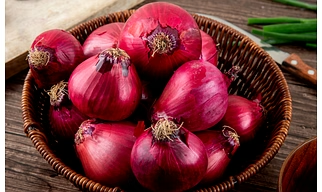
Onion
Onions are classified into various size categories mainly by diameter and weight, serving different culinary and commercial purposes. The largest category is Super Colossal, with onions measuring 4.5 inches or more in diameter, weighing over 21 ounces, often used in food service and for making onion rings. Slightly smaller are Colossal onions, around 3.75 inches and weighing 16 to 21 ounces, suitable for large slices and commercial use. Jumbo or Large onions measure about 3 inches and up, weighing between 10 to 16 ounces, commonly used in general recipes and retail.
Medium onions range from 2 to 3.25 inches, weighing 7 to 12 ounces, ideal for home cooking and salads. Pre-Pack onions, sized between 1.75 and 3 inches and weighing 4 to 9 ounces, are packaged small portions for retail. Small onions, measuring 1 to 2.25 inches and weighing 3 to 5 ounces, are perfect for whole roasting or pickling. Boiler onions are slightly smaller, between 1 and 1.875 inches and weighing 3 to 4 ounces, mainly for boiling and pickling. The smallest size, Creamer or Pearl onions, are under 1 inch and weigh less than 3 ounces, often used for pickling and garnishing.
In India, grading sometimes focuses on weight, with Big or Extra Large onions over 150 grams often used for salads and hotels, Ideal or Medium onions around 100 grams each for retail, and Sambar or Baby onions under 50 grams commonly used in South Indian cooking.
Yellow, red, and white onions are available in all these sizes, typically packaged in mesh bags ranging from 2 to 50 pounds or sold loose in bulk. This size classification helps in meeting specific needs for cooking, retail, and export markets efficiently.
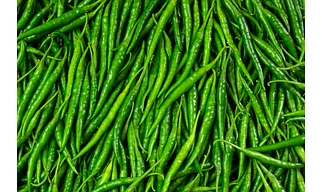
Green Chilli
Green chillies are an essential spice in Indian and global cuisines, valued for their pungency, distinctive flavor, and rich nutrient profile. They are typically harvested immature before turning red, giving them their characteristic bright green color and fresh, sharp taste.
Key Product Points:
Varieties: India grows a wide range of green chillies for both domestic use and export. The most prominent include:
G4 (Eagle 151): Elongated (2.5–3.5cm), dark green, firm and glossy. Highly pungent, widely exported and favored for its shelf life (15–25 days) and versatility in fresh consumption, pickles, powders, and pastes.
Lavangi: Small, very hot, native to Maharashtra, mainly used in spice mixes and Kolhapuri dishes.
Jwala: Long, wrinkled, moderately hot, common in Gujarat and across India, used fresh or in pickles and chutneys.
Bhavnagri: Broad, tangy, less spicy, mainly used for stuffing, grilling, and in snacks.
Dalle Khursani: Small, round, fiery, grown in the Northeast, used for chutneys and traditional dishes.
Kanthari (Bird’s Eye): Short, tiny, sharply pungent, grown in Kerala, used for pickles and hot dishes.
Boriya: Small, round, very spicy, from Andhra Pradesh and Tamil Nadu.
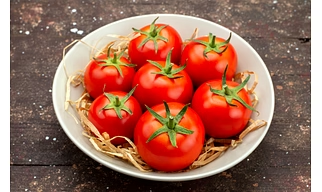
Tomatoes
Indian tomatoes consist of a wide range of hybrid and indigenous varieties, each adapted for particular growing conditions and uses such as fresh consumption, processing, and long-distance transport. Many varieties were developed by Indian agricultural institutes such as IIHR Bangalore and IARI New Delhi.
Key examples of Indian tomato varieties include:
Arka Abhijith: A high-yielding F1 hybrid producing medium-large fruits weighing 65-70 grams. It is suitable for fresh market use and has a yield potential of about 65 tons per hectare in 140 days.
Abhinav: A semi-determinate plant with broad leaves, known for good foliage cover, glossy deep red fruits, weighing 60-65 grams, suitable for long-distance transport, fresh market, and processing.
Namdhari: A determinate, early maturing hybrid with round, firm fruits around 80-90 grams, adapted broadly across India.
Rashmi: Widely adapted determinate hybrid with round, firm, smooth, and brightly colored fruits weighing approximately 90 grams, suitable for processing.
Vaishali: A determinate hybrid thriving in hot and humid climates, producing medium-sized fruits (~100 grams) with resistance to Fusarium and Verticillium wilts, mostly used for juice and processing.
Rupali: A determinate early hybrid, medium-sized (100 grams), compact-growing with dark red fruits, mainly for processing.
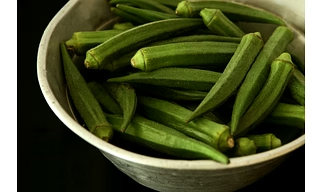
okra
Okra, also known as lady's fingers or bhindi, is a nutritious and versatile vegetable belonging to the Mallow family (Malvaceae), according to Wikipedia. It's cultivated globally in tropical, subtropical, and warm temperate regions, with its origins traced back to East Africa. India leads the world in okra production.
Nutritional value
Okra is a good source of vitamins, minerals, and antioxidants, including:
Vitamin K
Vitamin C
Folate
Magnesium
Fiber
A 100g serving of raw okra provides approximately 33 calories, 7g carbohydrates, 2g protein, and 3g fiber.
Health benefits
Okra is associated with various potential health benefits, including:
Heart health: May help lower cholesterol and reduce the risk of heart disease due to its soluble fiber content and antioxidants like polyphenols.
Blood sugar management: Okra may help prevent sugar from being absorbed during digestion, potentially benefiting blood sugar control.
Digestive health: Its fiber content promotes healthy digestion and may help prevent constipation and potentially reduce the risk of colorectal cancer.
Bone health: Okra is a good source of calcium and vitamin K, both crucial for strong bones.
Anticancer potential: Research suggests that compounds like lectin and flavonoids in okra may inhibit the growth of certain cancer cells, according to Healthline. However, more human research is needed to confirm these findings.
Beneficial during pregnancy: Okra is a good source of folate, which is essential for reducing the risk of neural tube defects in developing fetuses.
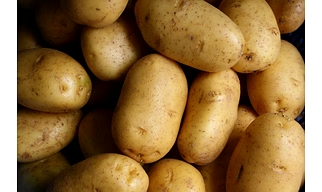
Potatoes
Potatoes are a staple food crop and a major agricultural product globally, ranking as the fifth most important crop worldwide. They are economical, provide a low-cost energy source, and are widely consumed in various forms globally.
Here's a summary of the potato product:
1. Nutritional value
Potatoes are a highly nutritious food containing carbohydrates, proteins, minerals, vitamins, and high-quality dietary fiber.
They are a good source of starch, which provides energy.
Rich in Vitamin C (an antioxidant that helps with immunity and iron absorption), Potassium (important for blood pressure regulation and muscle function), and Vitamin B6 (essential for brain health and metabolism).
Also contain dietary fiber (beneficial for digestion and weight management), minerals like magnesium, phosphorus, manganese, and iron, and phytonutrients like flavonoids, carotenoids, and phenolic acids.
According to Healthline, potatoes are naturally gluten-free, making them a good option for individuals with gluten sensitivities
Health considerations
The health benefits of potatoes can vary depending on preparation methods.
Boiling, baking, roasting, and air-frying are considered healthier cooking options compared to deep frying.
Keep the skin on when possible, as it contains a good portion of the nutrients.
Be mindful of toppings and additions that can increase fat and calories in dishes.
Varieties and types
Potatoes come in a wide variety of types, including Russets, Yellows (Yukon Gold), Reds, Whites, Blues/Purples, Fingerlings, and Petites.
Each type has specific characteristics influencing its best uses, e.g., russets are ideal for baking and frying, while waxy types like red potatoes are better for salads and soups.
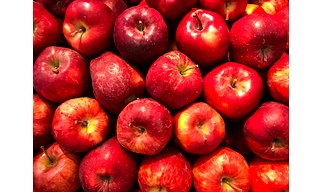
Apple
Apple (Malus domestica) is a widely popular temperate fruit cultivated and consumed worldwide. It is the fourth most widely produced fruit after bananas, oranges, and grapes.
Nutritional profile
Apples are a nutritious fruit, considered nutrient-dense, meaning they offer a significant amount of nutrients per serving while remaining relatively low in calories.
Calories: A medium-sized apple (around 182 grams) contains approximately 94.6 to 100 calories.
Fiber: Apples are rich in dietary fiber, with a medium apple providing about 4 grams, roughly 16% of the Daily Value. This fiber, particularly soluble fiber like pectin, plays a role in regulating blood sugar levels and promoting gut health. The skin contains a significant portion of this fiber, so it is recommended to consume apples unpeeled for maximum benefits.
Vitamins and Minerals: Apples are a good source of vitamin C (around 10% of DV for a medium apple), and potassium (around 5% of DV), along with smaller amounts of vitamins A, E, B1, B6, and minerals like calcium, iron, magnesium, and phosphorus.
Other Plant Compounds: Apples are rich in various antioxidant plant compounds, including quercetin, catechin, phloridzin, and chlorogenic acid, which contribute to many of their health benefits.
Health benefits
Apples offer a range of potential health benefits, supported by research:
Heart Health: Fiber, antioxidants, and potassium in apples contribute to cardiovascular well-being by potentially lowering cholesterol levels, regulating blood pressure, and protecting against oxidative stress. Eating 100-150 g/d of whole apples has been associated with a lower chance of heart disease and risk factors such as high blood pressure.
Blood Sugar Management: Apples have a low to moderate glycemic index (42-44), meaning they are less likely to cause rapid spikes in blood sugar levels compared to many other foods. Their fiber and polyphenols may slow down digestion and absorption of sugars, aiding blood glucose control. Eating apples may also reduce the chances of type 2 diabetes.
Weight Management: Apples' high fiber and water content make them filling and satisfying, which can be beneficial for those aiming to lose weight. Research suggests that whole apple intake may increase fullness more than apple juice.
Gut Health: Pectin in apples acts as a prebiotic, fostering the growth of beneficial bacteria in the gut microbiome.
Cancer Prevention: Research suggests apple polyphenols may help prevent cancerous cells from multiplying. Studies have also linked higher apple intakes to a lower chance of certain cancers.
Brain Health: Quercetin in apples may protect the brain from damage caused by oxidative stress and might have preventive properties against Alzheimer's disease.
Mental Health: Consuming fruits and vegetables, including apples, may positively impact mental health.
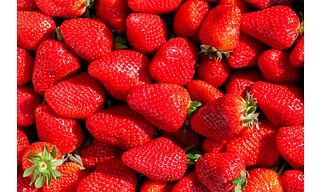
Strawberry
Strawberries (Fragaria × ananassa), a hybrid species within the rose family, are widely cultivated globally for their aromatic, juicy, and sweet red fruits. They are a popular fruit consumed fresh or used in various culinary applications like jams, desserts, and beverages.
Nutritional value
Strawberries are considered a healthy food choice due to their rich nutritional profile. A 100-gram serving of raw strawberries contains:
Calories: 32 kcal
Water: 91%
Carbohydrates: 7.7 g, mostly simple sugars like glucose, fructose, and sucrose, and about 2 grams of fiber. They have a low glycemic index (GI) of 40, minimizing blood sugar spikes.
Fiber: 2 g, consisting of both soluble and insoluble types.
Protein: 0.67 g
Fat: 0.3 g, with a modest amount of essential unsaturated fatty acids in the seeds.
Vitamins: Rich source of Vitamin C (65% of the Daily Value, DV), and a good source of Manganese (17% DV). They also contain Folate (Vitamin B9), Potassium, Vitamin A, B vitamins (B1, B2, B3, B5, B6), Vitamin K, and Vitamin E.
Minerals: Calcium, iron, magnesium, phosphorus, and potassium.
Health benefits
Strawberries offer numerous potential health benefits:
Heart Health: May improve HDL (good) cholesterol levels, lower blood pressure, and enhance blood platelet function due to anthocyanins, potassium, and quercetin. Fiber in strawberries also helps reduce LDL (bad) cholesterol levels.
Blood Sugar Regulation: Low glycemic index and fiber content help regulate blood sugar levels, potentially beneficial for individuals with diabetes.
Cancer Prevention: Antioxidant compounds like anthocyanins and ellagic acid may have protective effects against certain cancers, especially gastrointestinal and breast cancers, though more research is needed.
Brain Health: Flavonoids in strawberries may enhance cognitive function and reduce the risk of age-related mental decline.
Skin Health: Antioxidants and Vitamin C can protect the skin from damage, promote collagen production, and improve skin elasticity, potentially reducing signs of aging.
Eye Health: Vitamin C and other antioxidants can protect against cataracts and age-related macular degeneration.
Digestion: Rich in fiber, aiding in healthy digestion and preventing constipation.
Immunity: High Vitamin C content strengthens the immune system and fights infections.
Weight Management: Low in calories and high in fiber, contributing to feelings of fullness and aiding in weight control.

Banana
Bananas are a globally popular fruit, renowned for their convenience, sweet taste, and nutritional value. They are the world's second-largest produced fruit after citrus, with over 1000 varieties grown across 150 countries. India leads global production, though most of its output serves domestic demand, according to Adoni College.
Nutritional profile
Bananas are considered nutrient-dense, providing essential nutrients with relatively low calories. A medium-sized banana typically contains:
Calories: Around 105.
Carbohydrates: Roughly 27 grams, mainly as starch in unripe bananas and sugars (sucrose, fructose, and glucose) in ripe bananas. They have a low to moderate glycemic index (42-51) depending on ripeness, says Healthline.
Fiber: About 3 grams per medium banana, including both soluble and insoluble fiber. Unripe bananas are rich in resistant starch, a type of fiber that acts as a prebiotic, promoting beneficial gut bacteria.
Vitamins: Rich in Vitamin B6 (about 33% of the Recommended Daily Intake), a good source of Vitamin C (around 11% of RDI), and smaller amounts of Vitamin A (as carotene) and B-complex vitamins.
Minerals: Abundant in Potassium (around 422mg, or 10% of DV for a medium banana), which is vital for heart health and blood pressure regulation. Also contains magnesium (around 8% of RDI), manganese (about 12% of DV), copper (around 10% of RDI), and smaller amounts of iron, phosphorus, and zinc.
Antioxidants and Phytonutrients: Rich in antioxidants like flavonoids and amines, which help protect cells from oxidative damage.
Health benefits
Digestive Health: High fiber content, including pectin and resistant starch, aids in digestion, promotes regularity, and supports a healthy gut microbiome. Bananas are also known to help alleviate symptoms of diarrhea.
Heart Health: Potassium-rich, bananas contribute to healthy blood pressure by counteracting the effects of sodium. They also contain magnesium, which is crucial for heart health, according to PotsandPans India.
Energy Boost: Easily digestible carbohydrates and natural sugars make bananas an excellent source of quick and sustained energy, ideal for pre and post-workout snacks.
Weight Management: Low in calories and high in fiber, bananas can contribute to feelings of fullness, potentially aiding in weight loss by reducing overall calorie intake and suppressing appetite.
Blood Sugar Management: While ripe bananas contain sugar, their fiber and resistant starch content contribute to a slower release of glucose into the bloodstream, making them a suitable option for blood sugar control, particularly unripe bananas. However, it's advised to practice portion control, especially for individuals with diabetes.
Enhanced Exercise Performance: Potassium and magnesium act as electrolytes, crucial for muscle function and recovery, making bananas a popular choice for athletes.
Brain Health and Mood: Vitamin B6 plays a role in neurotransmitter production (like serotonin and dopamine), potentially impacting mood and cognitive function.
Bone Health: Magnesium is essential for maintaining strong bones.

Lemon
The lemon (Citrus × limon) is a small evergreen tree in the family Rutaceae, cultivated globally for its yellow, tart-tasting fruit. A true lemon is a hybrid of the citron and bitter orange. Though its origins are uncertain, there is evidence that lemons originated in Northeast India. India is currently the leading producer of lemons, accounting for 18% of global production in 2022.
Nutritional value
Lemons are primarily composed of water (88-89%) and carbohydrates (10%). They contain minimal amounts of fat and protein.
Carbohydrates: Roughly 9.32 grams per 100g serving, primarily as simple sugars (glucose, fructose, and sucrose) and dietary fiber.
Fiber: Around 2.8 grams per 100g, mostly soluble fiber like pectin. Pectin can help lower blood sugar levels by slowing the digestion of sugar and starch.
Vitamins: An excellent source of Vitamin C, providing around 59% of the Daily Value in a 100g serving. They also contain small amounts of Vitamin A (as carotene) and various B vitamins (B1, B2, B3, B6, and B9 or Folate).
Minerals: A good source of Potassium (around 138mg per 100g), and smaller amounts of Calcium, Iron, Magnesium, and Phosphorus.
Antioxidants and Phytonutrients: Rich in flavonoids, phenolic acids, carotenoids, and essential oils. These compounds possess antioxidant properties and may contribute to various health benefits.
Health benefits
Heart Health: Vitamin C, fiber, and compounds like diosmin and hesperidin in lemons may help lower the risk of heart disease and stroke by potentially reducing cholesterol and blood pressure, and improving circulation.
Immunity: High Vitamin C content boosts the immune system, potentially helping to prevent colds and flu.
Digestion: Soluble fiber (pectin) and citric acid in lemons aid in digestion, promote regularity, and may help relieve indigestion symptoms like bloating and heartburn.
Weight Management: Low calorie and high fiber content can promote feelings of fullness, potentially assisting in weight loss efforts.
Kidney Stone Prevention: Citric acid increases urinary citrate levels, which may help prevent the formation of calcium oxalate kidney stones.
Anemia Prevention: Vitamin C enhances the absorption of non-heme iron (iron from plant-based foods), reducing the risk of iron deficiency anemia.
Skin Health: Vitamin C is essential for collagen production, promoting healthy skin and potentially reducing signs of aging
Basmati Rice
Basmati
1121 Basmati
Rice (Steam,
Sella, Golden
Sella, Raw)
Traditional
Basmati Rice
Pusa Basmati
Rice
1509 Basmati
Rice
Sugandha
Basmati Rice
Sharbati
Basmati Rice
Sona Masoori
Rice
IR 64 Rice
(Raw &
Parboiled)
IR 36 Rice
PR 11 & PR 14
Rice
Swarna Rice
Ponni Rice
Matta (Kerala
Red) Rice
Broken Rice
(25%, 50%,
100%)


 GL Trustmark