Our Products
Showing 1-11 of 11 products
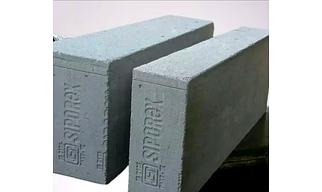
AAC SIPOREX BLOCK
**AAC Siporex** (Autoclaved Aerated Concrete) is a lightweight, precast building material known for its superior insulation, fire resistance, and ease of use. Made from a mixture of sand, cement, lime, water, and a small amount of aluminum powder, the material is cured under high pressure in an autoclave, giving it a unique cellular structure.
This structure makes AAC Siporex blocks up to three times lighter than traditional bricks, reducing structural load and construction time.
They offer excellent thermal insulation, helping to maintain comfortable indoor temperatures and reduce energy costs. Additionally, AAC Siporex is fire-resistant for up to six hours and provides effective sound insulation.
It is eco-friendly, made from non-toxic materials, and generates minimal construction waste.
Ideal for residential, commercial, and industrial applications, AAC Siporex is a cost-effective, sustainable solution that ensures faster construction with better finish and durability.
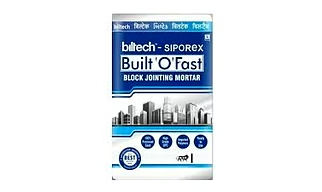
BILTECT BLOCK JOINING MORTAR
**Block Jointing Mortar** is a ready-to-use, polymer-modified, cement-based mortar specially designed for laying AAC blocks, hollow blocks, concrete blocks, and fly ash bricks. It offers superior bonding strength and requires only a thin 3–5 mm layer, significantly reducing the thickness compared to traditional cement mortar. The mortar is pre-mixed and only requires the addition of water, making it easy to use and ensuring consistent quality at the construction site. It sets quickly, reduces shrinkage cracks, and minimizes material wastage. Block jointing mortar enhances the speed of construction and provides a stronger, more durable bond between blocks. It also improves the thermal and acoustic performance of the wall system. Being eco-friendly and non-toxic, it is ideal for modern, sustainable construction practices. Suitable for both interior and exterior applications, block jointing mortar ensures a smooth and level finish, reducing the need for excessive plastering.
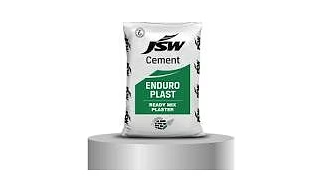
READY MIX PLASTER
**Ready Mix Plaster** is a pre-mixed, cement-based plaster designed for efficient and high-quality wall finishing on internal and external surfaces. It is composed of cement, graded sand, polymers, and performance-enhancing additives that provide excellent workability, adhesion, and durability. Ready mix plaster eliminates the need for on-site mixing, ensuring consistent quality, reduced material wastage, and faster application. It can be applied directly over brick, block, or concrete surfaces with minimal surface preparation. The product offers superior crack resistance, a smooth finish, and excellent water retention, resulting in long-lasting walls with enhanced aesthetics. It also reduces shrinkage and drying time compared to traditional sand-cement plaster. Ideal for residential, commercial, and industrial projects, ready mix plaster supports cleaner construction practices and saves labor costs. Its ready-to-use nature ensures speed, efficiency, and better finish quality, making it a preferred solution in modern construction.
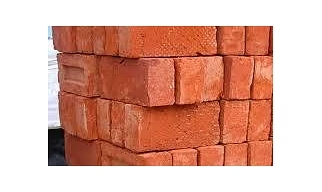
RED BRICK
**Red bricks** are one of the most traditional and widely used building materials in construction. Made from natural clay and fired in kilns at high temperatures, these bricks are known for their strength, durability, and timeless appeal. Red bricks offer excellent thermal insulation, helping to maintain indoor comfort in all weather conditions.
They provide good compressive strength and are suitable for load-bearing and non-load-bearing walls in residential, commercial, and industrial structures.
The natural composition of clay makes them eco-friendly and recyclable. Red bricks also offer sound insulation and fire resistance, making them a safe and reliable choice.
Their uniform size and shape allow for easier masonry and finishing work. Ideal for both exposed and plastered finishes, red bricks bring a classic aesthetic to any building project. With a proven track record over centuries, red bricks remain a preferred and dependable material in modern and traditional construction alike.
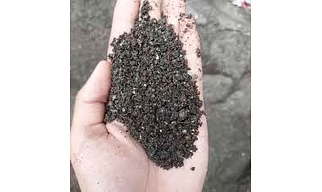
black river sand
Black river sand is a dark, fine-grained sediment typically found along riverbanks or in riverbeds, characterized by its deep grey to jet-black color. Formed through natural erosion, it consists of rounded grains free of rocks, clay, or organic debris, often enriched with minerals and nutrients. Its composition may include volcanic materials like basalt or heavy minerals such as magnetite, giving it a glossy, sometimes magnetic quality. Ideal for construction, landscaping, and aquarium use, black river sand offers excellent drainage and is silt-free, making it suitable for leveling yards, planting sod, or serving as a base for turf. In aquariums, it’s valued for its pH-neutral, non-toxic properties and low maintenance, enhancing visual appeal with its striking color. However, it may require thorough rinsing to avoid cloudiness or floating particles. Sourced from rivers, it’s a sustainable choice for various applications, from agriculture to decorative substrates.
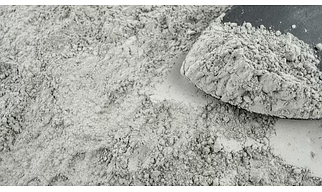
cement
Cement is a fine, gray powder, a crucial binding agent in construction. It's made by grinding materials like limestone and clay into a powder, then heating it to create clinker, which is then ground again.
When mixed with water, cement forms a paste that hardens and binds other materials like aggregates (sand, gravel) and water, creating concrete or mortar.
This hardened material provides strength and durability to structures like buildings, bridges, and roads. Cement's versatility and strength make it indispensable in modern construction.
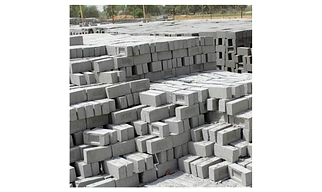
FLYASH BRICK
Fly ash bricks are a sustainable building material, primarily composed of fly ash, a byproduct of coal combustion, along with sand and lime.
These bricks are an environmentally friendly alternative to traditional clay bricks, offering numerous benefits.
They are known for their high strength, low water absorption, and uniform dimensions.
The production of fly ash bricks helps reduce environmental pollution by utilizing a waste material.
Fly ash bricks are created by mixing fly ash, lime, gypsum, and sand, often with water, and then pressing the mixture into brick shapes.
They can be used in various construction applications, similar to clay bricks. The use of fly ash, which is often a byproduct of coal-fired power plants, helps in managing waste and reducing landfill usage.
These bricks are also known for their thermal insulation properties and can be more cost-effective than clay bricks.
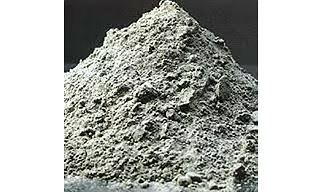
FLYASH POWDER
Fly ash powder is a fine, powdery byproduct generated from the combustion of pulverized coal in thermal power plants.
Typically grey to black, its color and properties vary based on coal type and combustion conditions.
Composed primarily of silica, alumina, and iron oxides, it consists of tiny, spherical particles that contribute to its pozzolanic properties, making it a valuable additive in construction.
Fly ash enhances concrete strength, durability, and workability while reducing permeability and heat of hydration.
It’s widely used in cement production, road construction, and as a filler in bricks and tiles. Environmentally, it aids in waste management by recycling industrial byproducts, reducing landfill use.
However, handling requires care due to its fine nature, which can cause dust-related health concerns. Classified as Class F or Class C based on calcium content, fly ash is a sustainable, cost-effective material for various engineering applications.
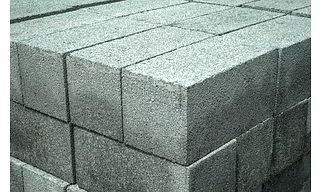
SOLID CONCRET BLOCK
Solid concrete blocks, also known as concrete bricks, are building materials made from cement, sand, water, and aggregates, such as gravel or crushed stone. They are molded into rectangular or square shapes and cured under specific conditions to achieve strength and durability. These blocks are characterized by their solid core, meaning they are denser and heavier than hollow concrete blocks.
Solid concrete blocks are widely used in construction for their robustness and ability to withstand various environmental conditions, including heavy loads, extreme weather, fire, and pests. They are commonly employed in load-bearing walls, foundation walls, retaining walls, chimneys, and fireplaces due to their high compressive strength and stability. They can also be used in non-load-bearing applications like garden walls or decorative structures.
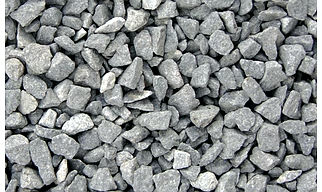
AGGREGATES
Aggregates, such as sand, gravel, and crushed stone, are essential materials in the construction industry.
Uses of aggregates
Concrete and Asphalt Production: Aggregates form the bulk of concrete and asphalt, providing strength, durability, and stability. In concrete, they reduce the amount of cement needed, acting as a cost-effective filler.
Road Construction: Aggregates form the foundational layers (base and sub-base) for roads and highways, ensuring stability and load distribution.
Drainage Systems: Their porous nature makes them ideal for drainage applications like French drains and filtration beds, preventing waterlogging and erosion.
Railway Ballast: Large, angular aggregates are used to stabilize railway tracks, distributing the weight of passing trains and absorbing vibrations.
Building Foundations and Fill: Aggregates are used as a base material for foundations, providing support and preventing erosion, and also as fill to level or raise ground for various construction and landscaping purposes.
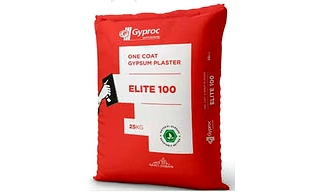
gypsum powder
Gypsum Powder: Versatile and Sustainable
Gypsum powder, a fine white substance, is derived from the natural mineral gypsum, a hydrated calcium sulfate with the chemical formula CaSO₄·2H₂O. It's formed in sedimentary deposits, according to Vedantu, and processed through crushing, drying, and grinding. This process removes some of the water molecules, creating the powder. Gypsum powder, known for its non-toxic nature and affordability, finds extensive use across various industries due to its unique properties like fire resistance, durability, and ability to mold when mixed with water.
Applications:
Construction: A primary ingredient in plaster, drywall, and gypsum boards, it’s used for walls, ceilings, and partitions. It provides a smooth finish, resists fire and cracks, and improves thermal and sound insulation. It also acts as a retarder in cement, controlling the setting time and preventing rapid hardening.
Agriculture: As a soil conditioner, it enhances soil structure, drainage, and water infiltration. It helps break up compacted soil, improves nutrient availability (calcium and sulfur), reduces sodicity, and promotes healthier root growth and crop yields.
Other Industries: Used in manufacturing ceramics, molds, and casts; as a filler in toothpaste, shampoos, and some food products (like tofu); and in producing medical items such as orthopedic casts and dental molds.

 GL Trustmark