 FIEO Registered
Our Products
Showing 1-17 of 17 products

MILK PROCESS PLANT
HTST stands for High-Temperature Short-Time pasteurization. It's a crucial process in the dairy industry to ensure the safety of milk by eliminating harmful bacteria without significantly altering its taste or nutritional value.
Components of an HTST Milk Process Plant
A typical HTST milk process plant consists of the following key components:
Raw Milk Reception: Milk is received and tested for quality parameters.
Clarification and Standardization: Milk is clarified to remove impurities and standardized to achieve desired fat and protein levels.
Pasteurization: The core of the process, where milk is heated to a specific temperature (usually 72°C or 161°F) for a short duration (15 seconds) to kill harmful microorganisms.
Homogenization: Milk is passed through a high-pressure valve to break down fat globules for a consistent texture.
Cooling: Pasteurized milk is rapidly cooled to prevent bacterial growth.
Packaging: Milk is filled into containers (bottles, cartons, or pouches) and sealed.
RETORT
A retort machine, or retorting system, is a crucial piece of equipment in the food industry. It's designed to preserve food products by eliminating harmful bacteria, enzymes, and microorganisms. This is achieved through a high-pressure steam process that ensures the food's safety and extends its shelf life.
How Does It Work?
Packaging: Food is packaged in airtight containers like cans, glass jars, or retort pouches.
Heating: The packaged food is placed in the retort machine, where it's exposed to high-pressure steam.
Sterilization: The high temperature and pressure kill harmful microorganisms, ensuring the food is safe to consume.
Cooling: After processing, the food is cooled down to prevent spoilage.
Opens in a new window
retort machine
VEGETABLE WASHER
Industrial Vegetable Washer
An industrial vegetable washer is a specialized piece of equipment designed to efficiently clean large quantities of vegetables before further processing or packaging.
These machines are essential in the food processing industry to ensure food safety and quality.
Key Components and Functions
Washing Tank: This is where the vegetables are immersed in water. It's often equipped with agitation mechanisms to loosen dirt and debris.
Conveyor Belt: In many models, a conveyor belt carries the vegetables through the washer, ensuring even cleaning.
Water Jets: High-pressure water jets are used to remove stubborn dirt and contaminants.
Brushes: Some washers have brushes to scrub the vegetables gently.
Drying Section: Some models include a drying section to remove excess water.
ICE CREAM PLANT
Ice Cream Plant: A Sweet Endeavor
An ice cream plant is a facility where delicious frozen treats are produced. It involves a complex process that requires specialized equipment and stringent hygiene standards.
Ice Cream Plant: A Sweet Endeavor
An ice cream plant is a facility where delicious frozen treats are produced. It involves a complex process that requires specialized equipment and stringent hygiene standards.
Key Components of an Ice Cream Plant
Ingredient Reception and Storage:
Milk, cream, sugar, and other ingredients are received and stored in appropriate conditions.
Mix Preparation:
Ingredients are carefully measured and blended to create the base ice cream mix.
Heat treatment (pasteurization) is often applied to kill harmful bacteria.
Homogenization:
The mix is subjected to high pressure to break down fat globules for a smooth texture.
Aging:
The finished product is stored in cold storage facilities and distributed to market
BUTTER CHURNER
he basic principle of a butter churner is to agitate cream until the butterfat separates from the buttermilk. This process involves:
Agitation: The cream is subjected to vigorous shaking or rotation.
Separation: The butterfat particles collide and clump together to form butter granules.
Buttermilk Formation: The liquid portion remaining after butter formation is called buttermilk.
Types of Butter Churners
Manual Churners: These are hand-operated, often requiring significant physical effort.
Electric Churners: These use electric power to automate the churning process.
Industrial Churners: Large-scale machines used in commercial butter production.
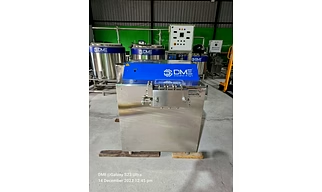
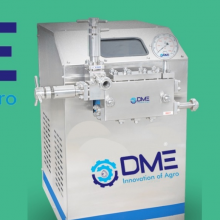
HOMOGENIZER 2000
Homogenizer Applications: A Versatile Tool Across Industries
Homogenizers are essential pieces of equipment used to break down particles into smaller, more uniform sizes.
They are widely employed in various industries to create consistent and high-quality products.
Key Applications of Homogenizers
Food and Beverage Industry:
Dairy Products: Homogenizers are used to prevent the separation of cream in milk, ensuring a smooth and consistent texture.
Sauces and Dressings: They help create emulsified mixtures, such as mayonnaise and salad dressing Dispersion: They help disperse pigments and other ingredients in cosmetics.
Biotechnology:
Cell Disruption: Homogenizers are used to disrupt cells and extract their contents for analysis.
Tissue Homogenization: They help prepare tissue samples for various biological experiments.
Chemical Industry:
Emulsions: Homogenizers are used to create emulsions in various chemical processes.
Particle Dispersion: They help disperse pigments and other additives in paints, inks, and other chemical products.
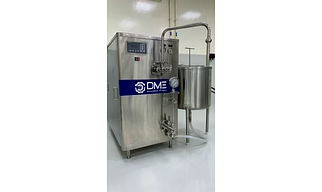


 GL Trustmark