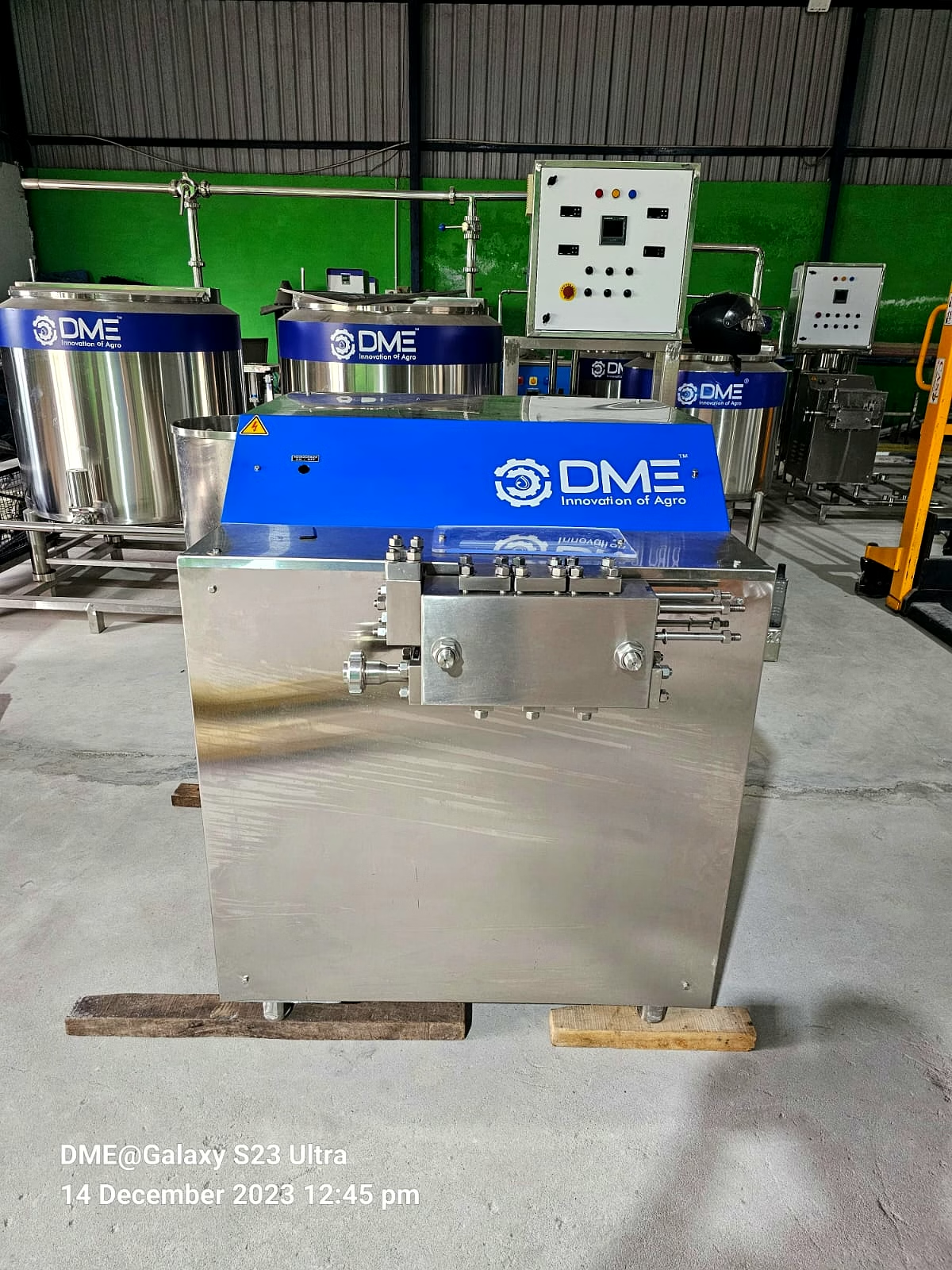
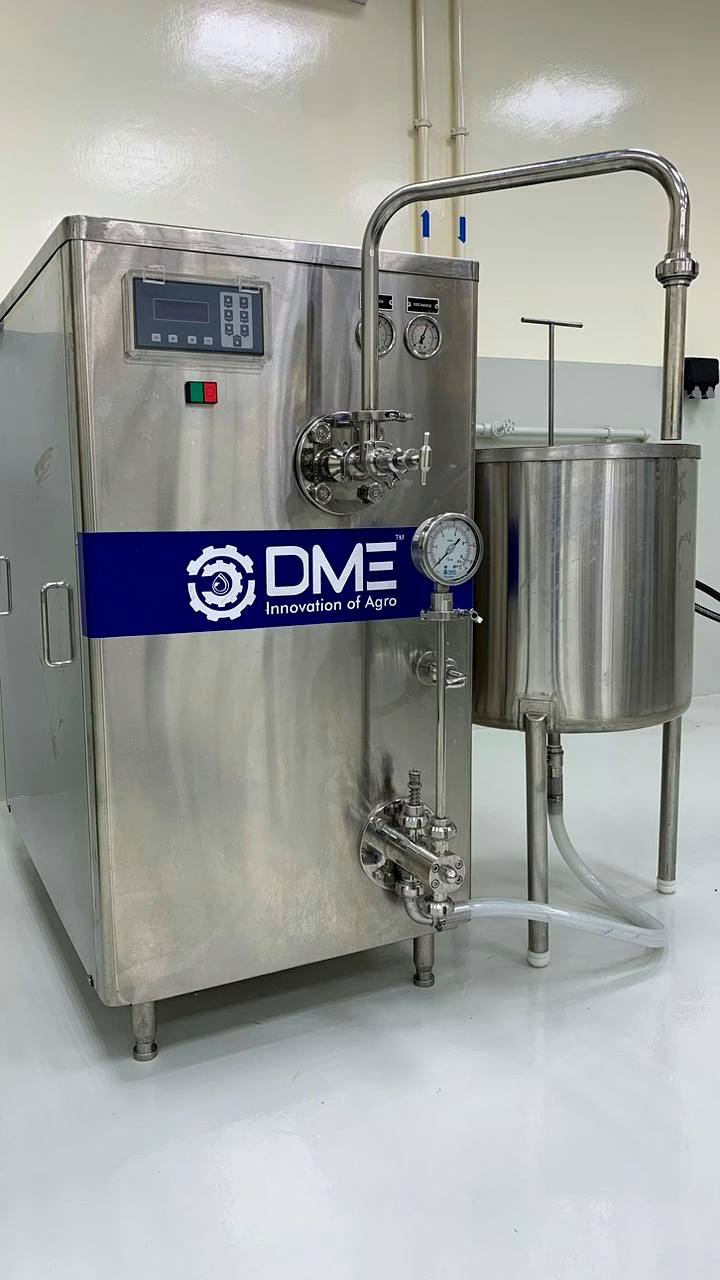
The Ice Cream Plant is a specialized manufacturing facility designed for the efficient production of high-quality ice cream. This plant integrates a series of advanced processing stages that transform raw dairy and other ingredients into delicious frozen treats ready for market distribution. Key production steps include ingredient reception and storage under controlled conditions to preserve raw material integrity, precise mix preparation where ingredients like milk, cream, and sugar are blended, followed by heat treatment (pasteurization) to ensure safety by eliminating harmful bacteria. The homogenization process further refines the mixture, breaking down fat globules to create a smooth, creamy texture. Aging of the ice cream mix at low temperatures enhances its flavor and consistency before it undergoes rapid freezing with air incorporation for optimal volume and mouthfeel. Customized flavoring is then integrated and thoroughly mixed into the frozen base. The final product is carefully packaged in various formats such as cups, cones, or tubs and subjected to hardening—quick freezing to solidify the ice cream for storage and transport. The plant emphasizes stringent hygiene protocols, temperature control, and routine equipment maintenance to maintain product quality and compliance with food safety standards. This turnkey ice cream production facility is ideal for businesses looking to enter or expand in the frozen dessert market with consistent, innovative ice cream products.
Key Features
| Features | Description |
|---|---|
| Ingredient Reception and Storage | Controlled environment storage for milk, cream, sugar, and additives to maintain freshness and quality. |
| Mix Preparation | Precise blending and measurement of raw materials with heat treatment (pasteurization) for safe and consistent ice cream base. |
| Homogenization Process | High-pressure treatment to break down fat globules ensuring smooth texture and uniform consistency. |
| Aging Process | Low-temperature holding of mix to enhance flavor development and improve texture. |
| Freezing with Air Incorporation | Rapid freezing that incorporates air to achieve desired texture, volume, and creaminess. |
| Flavoring and Mixing System | Integration of fruits, flavors, and other mix-ins in controlled environment to maintain quality. |
| Packaging | Automated packaging in multiple formats (cups, cones, tubs) suitable for various market segments. |
| Hardening and Storage | Quick freezing of packaged ice cream to solid state with cold storage for extended shelf life. |
| Hygiene and Sanitation | Strict sanitation protocols and equipment cleaning to prevent contamination. |
| Temperature Control | Precise temperature regulation throughout processing to ensure product safety and quality. |
| Attributes | Description |
|---|---|
| Production Capacity | Customizable, typically ranging from 500 liters/hour to 5000 liters/hour |
| Primary Ingredients | Milk, cream, sugar, emulsifiers, stabilizers, flavorings |
| Equipment Included | Pasteurizer, homogenizer, aging tanks, freezer, mixer, packaging machine, hardener, cold storage units |
| Heating Method | Plate or tubular heat exchangers for pasteurization |
| Temperature Range | Mix held at 0–4°C during aging, freezing at approx. -5°C, hardening at -25°C to -30°C |
| Air Incorporation Rate | Up to 100% (overrun) depending on ice cream type |
| Automation Level | Semi-automatic to fully automatic production lines available |
| Compliance Standards | FSSAI and HACCP compliant with GMP for food safety |
| Material of Construction | Food-grade stainless steel for all contact parts |
| Power Requirements | Variable based on capacity and automation, typically 220-380V, 50Hz |
*Disclaimer: The above description has been AI-generated and has not been audited or verified for accuracy. It is recommended to verify product details independently before making any purchasing decisions.
The Ice Cream Plant's production capacity is customizable, generally ranging from 500 liters per hour to 5000 liters per hour, catering to small-scale to large industrial requirements.
The plant incorporates stringent hygiene protocols including usage of food-grade stainless steel equipment, regular sanitation, controlled environment storage, and heat treatment (pasteurization) to eliminate harmful bacteria, ensuring high hygienic standards.
Yes, the plant includes dedicated mixing and flavoring systems that allow for the integration of various flavors, fruits, and additives, enabling production of diverse ice cream varieties according to market demand.
The plant maintains precise temperature ranges such as 0–4°C during aging, around -5°C during freezing with air incorporation, and -25°C to -30°C during the hardening phase to preserve texture, flavor, and safety.
Yes, the plant offers options for automated packaging in multiple container formats including cups, cones, and tubs, facilitating efficient production scalability and market readiness.
Absolutely, the plant is designed to comply with FSSAI guidelines, HACCP, and GMP requirements, ensuring the final products meet Indian regulatory safety and quality standards.
Ice Cream Plant: A Sweet Endeavor
An ice cream plant is a facility where delicious frozen treats are produced. It involves a complex process that requires specialized equipment and stringent hygiene standards.
Ice Cream Plant: A Sweet Endeavor
An ice cream plant is a facility where delicious frozen treats are produced. It involves a complex process that requires specialized equipment and stringent hygiene standards.
Key Components of an Ice Cream Plant
Ingredient Reception and Storage:
Milk, cream, sugar, and other ingredients are received and stored in appropriate conditions.
Mix Preparation:
Ingredients are carefully measured and blended to create the base ice cream mix.
Heat treatment (pasteurization) is often applied to kill harmful bacteria.
Homogenization:
The mix is subjected to high pressure to break down fat globules for a smooth texture.
Aging:
The finished product is stored in cold storage facilities and distributed to market
Key Components of an Ice Cream Plant
Ingredient Reception and Storage:
Milk, cream, sugar, and other ingredients are received and stored in appropriate conditions.
Mix Preparation:
Ingredients are carefully measured and blended to create the base ice cream mix.
Heat treatment (pasteurization) is often applied to kill harmful bacteria.
Homogenization:
The mix is subjected to high pressure to break down fat globules for a smooth texture.
Aging:
The mix is held at a low temperature to improve its flavor and texture.
Freezing:
The mix is rapidly frozen while air is incorporated to create the desired texture and volume.
Flavoring and Mixing:
Flavors, fruits, and other ingredients are added and mixed into the frozen base.
Packaging:
The ice cream is packaged in various containers (cups, cones, tubs) for distribution.
Hardening:
The packaged ice cream is quickly frozen to a solid state for storage and transportation.
Storage and Distribution:
The finished product is stored in cold storage facilities and distributed to markets.
Opens in a new window
www.researchgate.net
ice cream production line
Challenges and Considerations
Hygiene: Maintaining strict cleanliness is crucial to prevent contamination.
Temperature Control: Precise temperature management is essential for product quality.
Equipment Maintenance: Regular upkeep of machinery is necessary for efficient operation.
Product Development: Continuous innovation is required to meet consumer demands.
Inclusive of all taxes
You Save: 0
Irugur , India
Service Provider , Manufacturer, Brand Owner, Exporter, Wholesaler, Startup