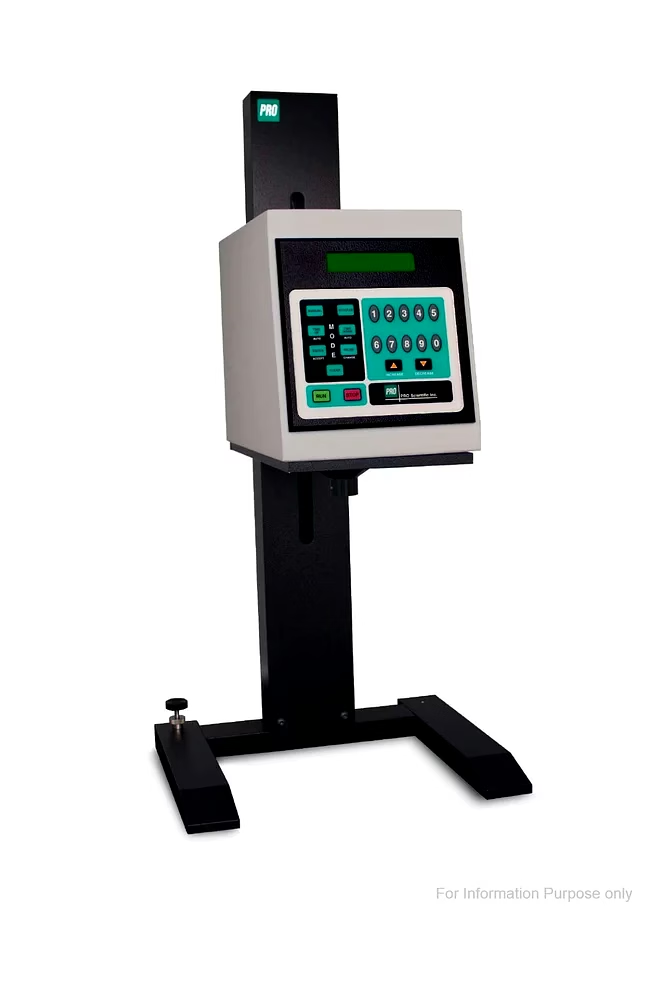
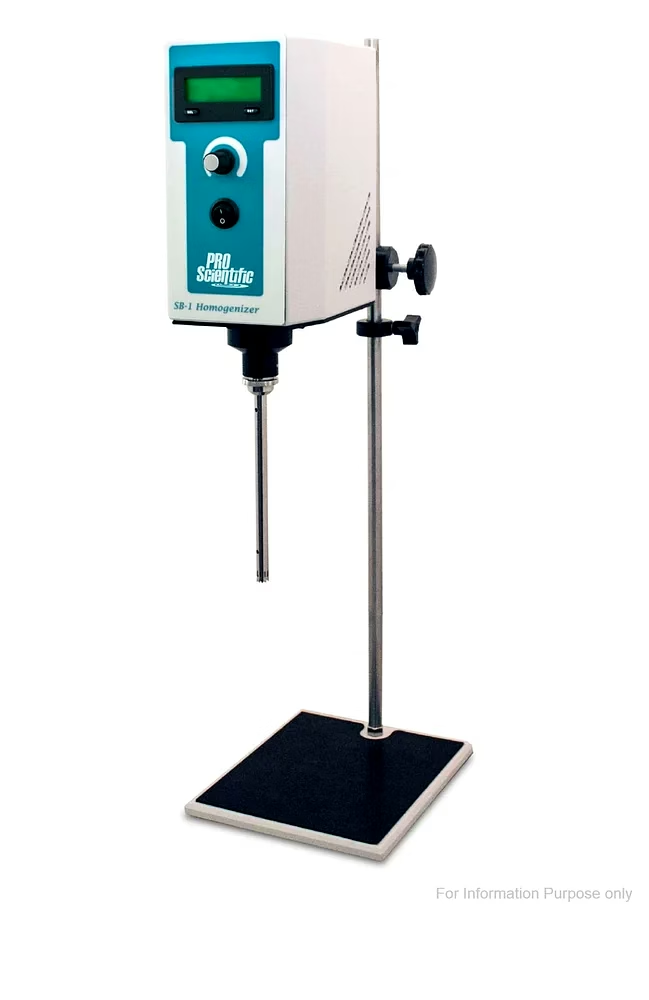
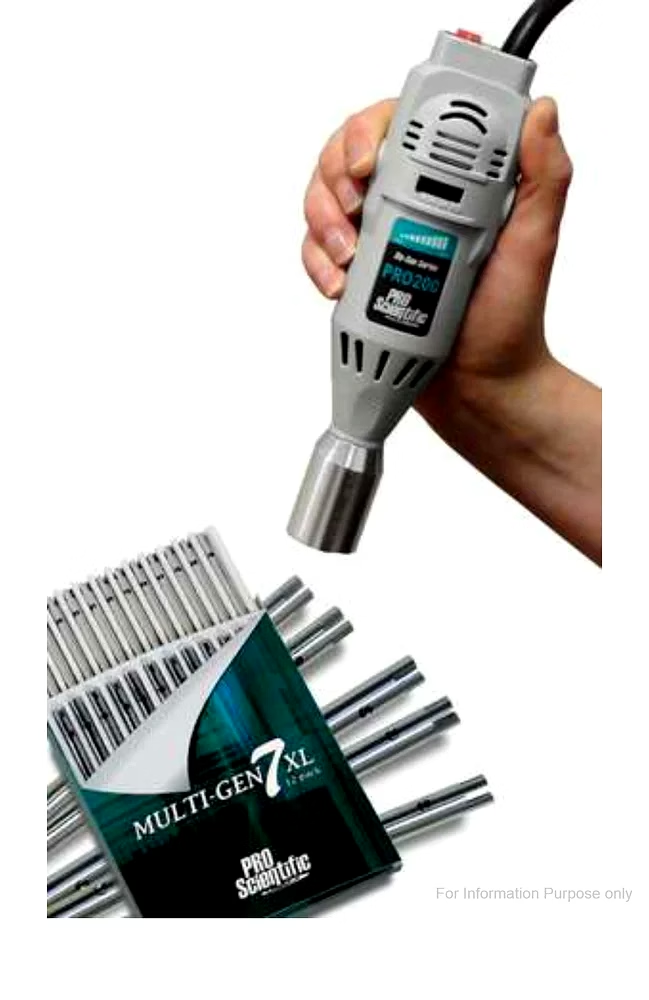
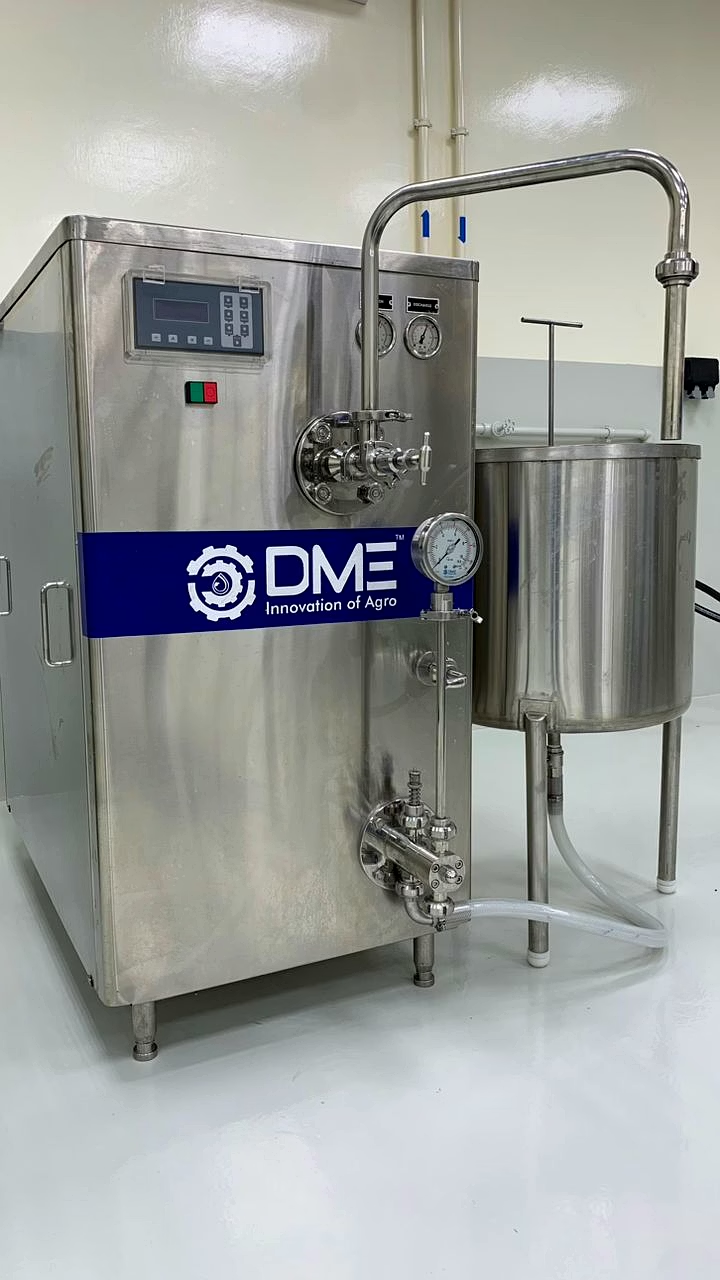
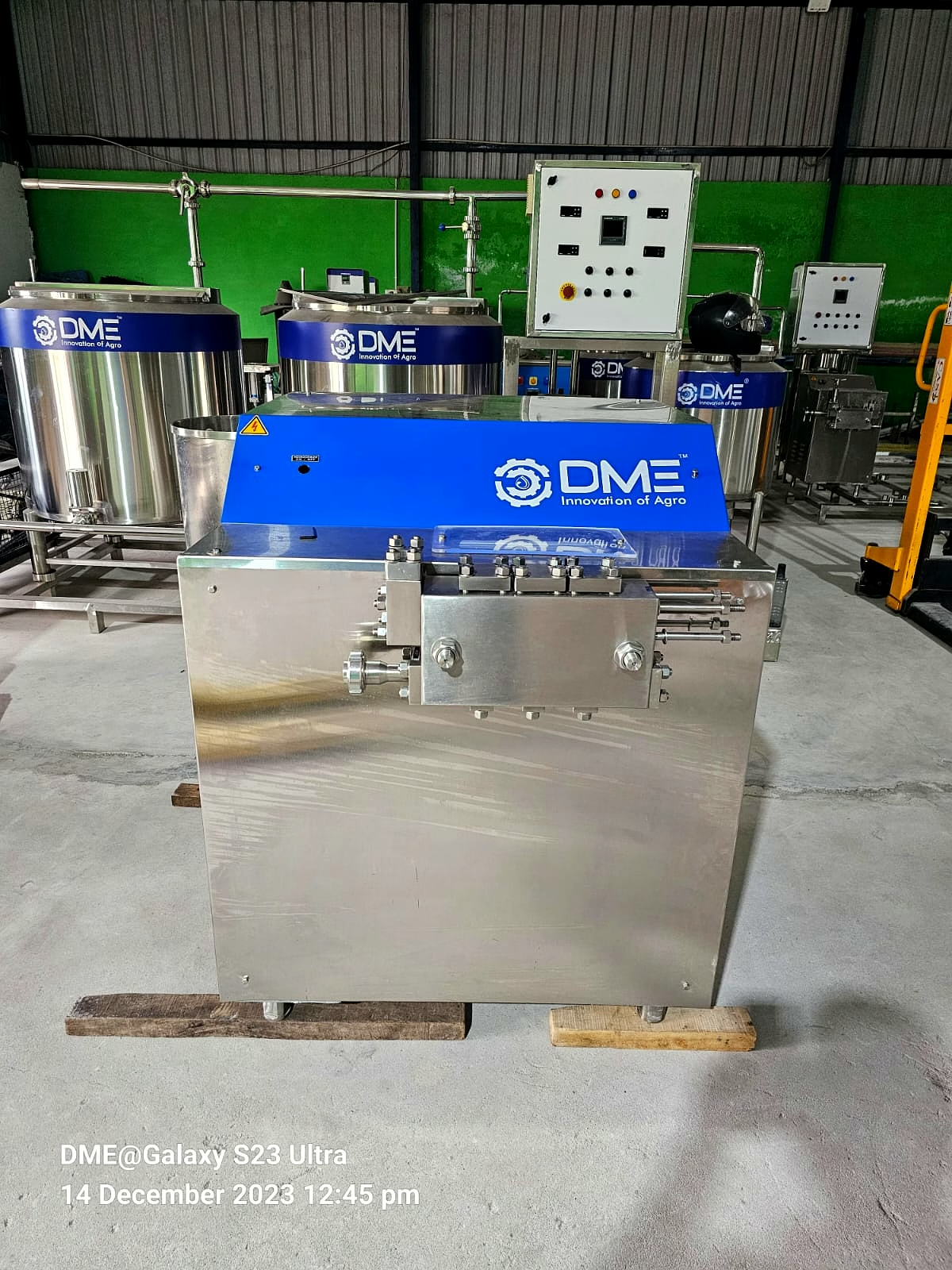
The HOMOGENIZER 2000 is a high-performance homogenizing machine designed for precise particle size reduction and uniform dispersion across diverse industrial applications. Engineered to deliver consistent results, this homogenizer is ideal for sectors including food and beverage, pharmaceuticals, cosmetics, biotechnology, chemical processing, and environmental sciences. With advanced rotor-stator technology and optional configurations including high-pressure, ultrasonic, and bead mill techniques, the HOMOGENIZER 2000 ensures efficient emulsification, cell disruption, and particle dispersion. It optimizes texture and stability in dairy products, sauces, and beverages, facilitates nanoencapsulation in drug development, and enhances pigment distribution in chemical and cosmetic formulations. This versatile device supports critical processes such as tissue homogenization and environmental sample preparation, making it an indispensable tool for research institutes, manufacturing plants, and quality control labs. Its robust design guarantees reliable operation, superior efficiency, and scalable performance for both small-scale laboratory and large industrial settings.
Key Features
| Features | Description |
|---|---|
| Model | HOMOGENIZER 2000 |
| Technology | Rotor-stator with high-pressure, ultrasonic, and bead mill options |
| Industry Applications | Food & Beverage, Pharmaceuticals, Cosmetics, Biotechnology, Chemical, Environmental Science |
| Particle Size Reduction | Achieves uniform particle size through mechanical and ultrasonic disruption |
| Emulsification Capability | Stable oil-water emulsions for sauces, creams, lotions, and more |
| Cell Disruption Efficiency | Prepares biological samples for analysis and extraction |
| Sample Preparation | Suitable for environmental and tissue homogenization |
| Operational Capacity | Scalable for lab, pilot, and industrial production |
| Build Quality | Durable materials ensuring consistent performance and longevity |
| Ease of Use | User-friendly controls with customizable processing parameters |
| Attributes | Description |
|---|---|
| Power Supply | 220-240V, 50/60Hz |
| Drive Type | Electric motor with variable speed control |
| Maximum Pressure | Up to 2000 bar (high-pressure variant) |
| Ultrasonic Frequency | 20 kHz (ultrasonic variant) |
| Bead Size | 0.1 - 2 mm (bead mill variant) |
| Material Contact Parts | Stainless steel 316L |
| Capacity Range | 0.5 Liters to 500 Liters per hour |
| Control Interface | Digital touchscreen with programmable settings |
| Dimensions | Varies by model and configuration |
| Weight | Approximately 50-300 kg depending on configuration |
| Safety Features | Overload protection, emergency stop, sealed system |
*Disclaimer: The above description has been AI-generated and has not been audited or verified for accuracy. It is recommended to verify product details independently before making any purchasing decisions.
Yes, the HOMOGENIZER 2000 offers flexible configurations that include rotor-stator mechanical homogenization, high-pressure processing up to 2000 bar, and ultrasonic cavitation, allowing it to cater to various processing needs.
Absolutely. The HOMOGENIZER 2000 supports nanoencapsulation by achieving precise particle size reduction essential for drug delivery systems.
All parts in contact with the product are made from stainless steel 316L, ensuring high corrosion resistance and compliance with hygiene standards.
Yes, the device is designed to prepare environmental samples efficiently, including soil and water, for accurate analysis.
Yes, it features a digital touchscreen interface that allows users to program and control processing parameters for repeatability and precision.
Country Of Origin: India
Homogenizer Applications: A Versatile Tool Across Industries
Homogenizers are essential pieces of equipment used to break down particles into smaller, more uniform sizes.
They are widely employed in various industries to create consistent and high-quality products.
Key Applications of Homogenizers
Food and Beverage Industry:
Dairy Products: Homogenizers are used to prevent the separation of cream in milk, ensuring a smooth and consistent texture.
Sauces and Dressings: They help create emulsified mixtures, such as mayonnaise and salad dressing Dispersion: They help disperse pigments and other ingredients in cosmetics.
Biotechnology:
Cell Disruption: Homogenizers are used to disrupt cells and extract their contents for analysis.
Tissue Homogenization: They help prepare tissue samples for various biological experiments.
Chemical Industry:
Emulsions: Homogenizers are used to create emulsions in various chemical processes.
Particle Dispersion: They help disperse pigments and other additives in paints, inks, and other chemical products.
Homogenizer Applications: A Versatile Tool Across Industries
Homogenizers are essential pieces of equipment used to break down particles into smaller, more uniform sizes.
They are widely employed in various industries to create consistent and high-quality products.
Key Applications of Homogenizers
Food and Beverage Industry:
Dairy Products: Homogenizers are used to prevent the separation of cream in milk, ensuring a smooth and consistent texture.
Sauces and Dressings: They help create emulsified mixtures, such as mayonnaise and salad dressings.
Beverages: Homogenizers are used in the production of fruit juices, smoothies, and other blended drinks.
Pharmaceutical Industry:
Drug Development: Homogenizers are employed to prepare and analyze drug formulations.
Nanoencapsulation: They are used to create nanoparticles for drug delivery systems.
Particle Size Reduction: Homogenizers help reduce the size of particles in pharmaceutical ingredients.
Cosmetic Industry:
Emulsions: Homogenizers are used to create stable emulsions of oil and water in products like creams, lotions, and makeup.
Particle Dispersion: They help disperse pigments and other ingredients in cosmetics.
Biotechnology:
Cell Disruption: Homogenizers are used to disrupt cells and extract their contents for analysis.
Tissue Homogenization: They help prepare tissue samples for various biological experiments.
Chemical Industry:
Emulsions: Homogenizers are used to create emulsions in various chemical processes.
Particle Dispersion: They help disperse pigments and other additives in paints, inks, and other chemical products.
Environmental Science:
Sample Preparation: Homogenizers are used to prepare environmental samples for analysis, such as soil, water, and biological materials.
Types of Homogenizers
Rotor-Stator Homogenizers: These use a rotating rotor and a stationary stator to create shear forces and break down particles.
High-Pressure Homogenizers: These force materials through a narrow orifice at high pressure, causing mechanical disruption.
Ultrasonic Homogenizers: These use ultrasonic waves to create cavitation, which breaks down particles.
Bead Mills: These use grinding beads to disrupt particles through mechanical action.
In conclusion, homogenizers are versatile tools with a wide range of applications across various industries. They play a crucial role in creating consistent, high-quality products and are essential for many manufacturing processes.
Inclusive of all taxes
You Save: 0
Irugur , India
Service Provider , Manufacturer, Brand Owner, Exporter, Wholesaler, Startup