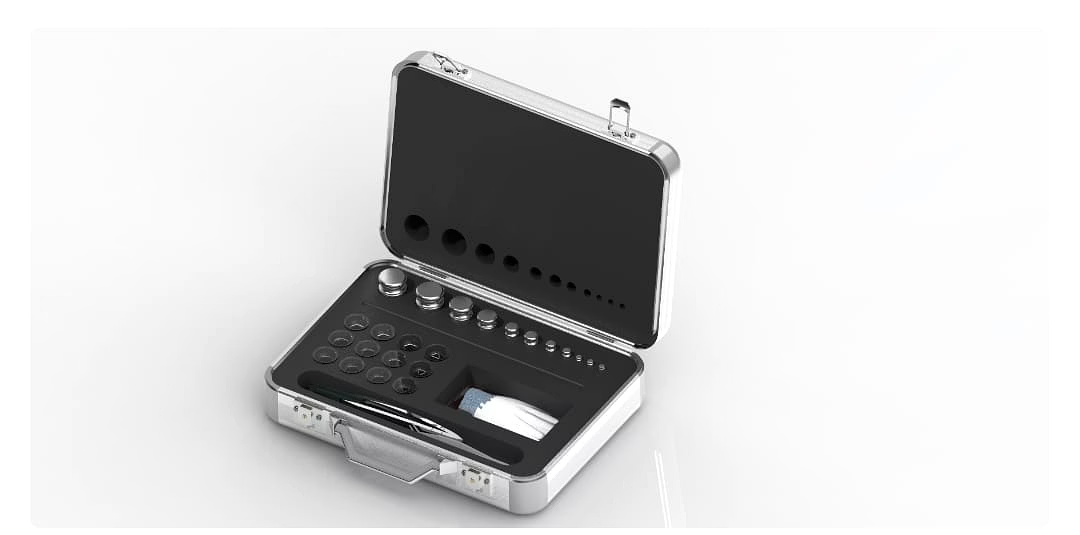
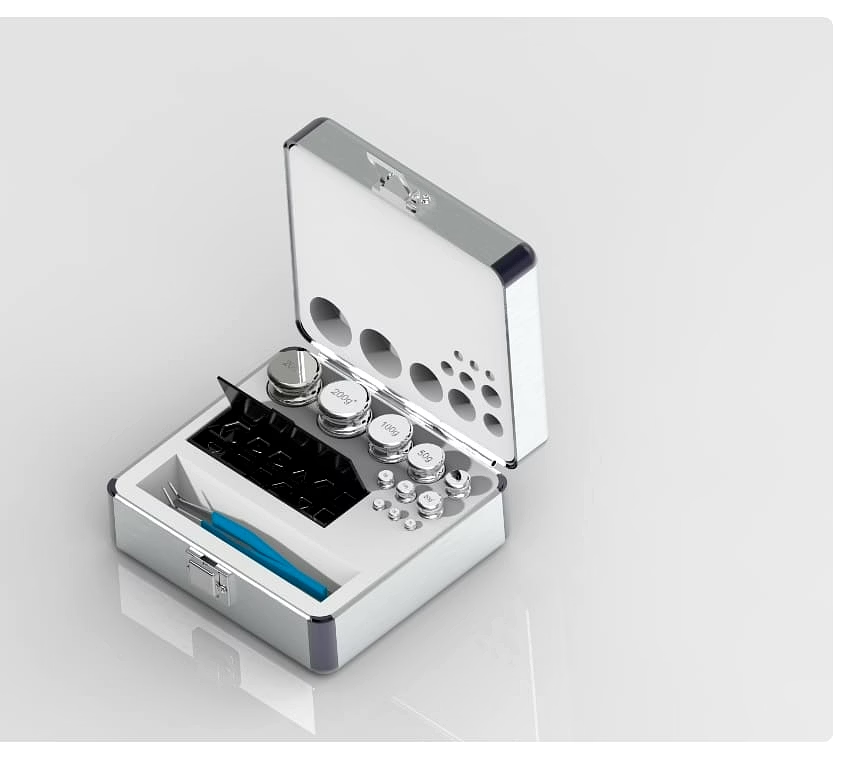
F Class Weights are precision calibration weights designed for high metrological accuracy, ideal for serving as reference standards when calibrating lower class weights such as F2 and below. These weights come in integral types ranging from 1 mg to 200 g and two-piece types from 20 g to 50 kg. The 20 g to 50 kg weights feature adjustment cavities that allow fine-tuning to achieve exact calibration values. Specifically engineered for medium precision analytical balances, F Class Weights ensure that weighing instruments meet rigorous accuracy requirements. Their robust construction and adjustability make them suitable for laboratories, calibration centers, and industries requiring reliable medium precision mass calibration, ensuring compliance with international metrological standards.
Key Features
| Features | Description |
|---|---|
| Class Type | F Class |
| Metrological Accuracy | High precision, suitable as reference standard |
| Weight Range | 1 mg to 200 g (integral type), 20 g to 50 kg (two-piece type) |
| Adjustment Capability | Adjustment cavities for weights 20 g to 50 kg for fine calibration |
| Primary Application | Calibration of medium precision analytical balances |
| Usage | Reference standard for calibrating lower class weights (F2 and below) |
| Material | High-quality materials adhering to metrological standards |
| Calibration Compliance | Suitable for use in accredited calibration laboratories |
| Attributes | Description |
|---|---|
| Weight Type | Integral type (1 mg to 200 g), Two-piece type (20 g to 50 kg) |
| Adjustment Cavities | Present in 20 g to 50 kg weights for precise calibration |
| Precision Class | F Class as per OIML standard |
| Material Composition | Stainless steel or equivalent metrological standard material |
| Calibration Standards | Meets international metrological accuracy requirements |
| Typical Application | Medium precision analytical and industrial balance calibration |
| Traceability | Traceable to national or international standard weights |
| Finish | Smooth surface to prevent contamination and corrosion |
*Disclaimer: The above description has been AI-generated and has not been audited or verified for accuracy. It is recommended to verify product details independently before making any purchasing decisions.
Integral F Class weights cover ranges from 1 mg to 200 g, while two-piece types cover weights from 20 g to 50 kg.
The adjustment cavities in weights from 20 g to 50 kg allow for fine-tuning the mass, ensuring precise calibration that meets metrological standards.
F Class weights are designed for medium precision analytical balances; for high precision calibration, higher classes such as E2 or OIML class F1 might be used.
F Class weights are typically made from stainless steel or equivalent materials that provide corrosion resistance and stable mass over time.
Yes, F Class weights serve as reference standards specifically for calibrating lower class weights such as F2 and below.
Country Of Origin: India
These weights are of high metrological accuracy and used as reference standards for calibrating other lower class weights like F2 and below classes , F class weights are integral(1mg to 200 g) /two piece (20 g to 50 kg) type weights ,These weights have adjustment cavities for adjusting the weights(20 g to 50 kg).These weights are appropriate for calibration of medium precision analytical balances.
Class F weights are known for their high metrological accuracy and are widely used as reference standards for calibrating lower-class weights, such as F2 and below. These weights provide a precise and reliable method for ensuring that analytical balances and other weighing instruments meet the necessary accuracy standards in medium precision applications.
These weights are of high metrological accuracy and used as reference standards for calibrating other lower class weights like F2 and below classes , F class weights are integral(1mg to 200 g) /two piece (20 g to 50 kg) type weights ,These weights have adjustment cavities for adjusting the weights(20 g to 50 kg).These weights are appropriate for calibration of medium precision analytical balances.
Class F weights are known for their high metrological accuracy and are widely used as reference standards for calibrating lower-class weights, such as F2 and below. These weights provide a precise and reliable method for ensuring that analytical balances and other weighing instruments meet the necessary accuracy standards in medium precision applications.