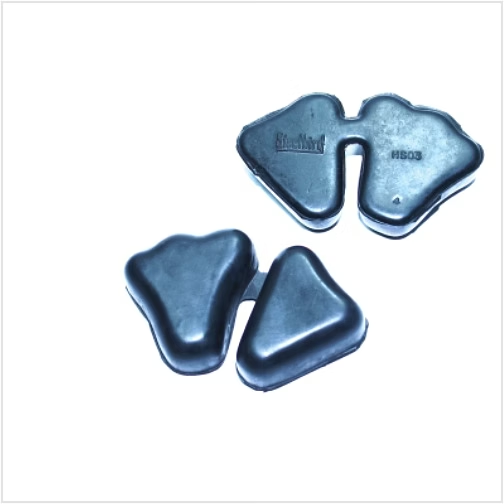
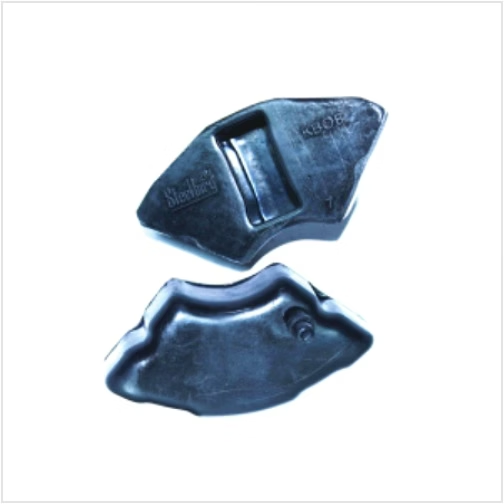
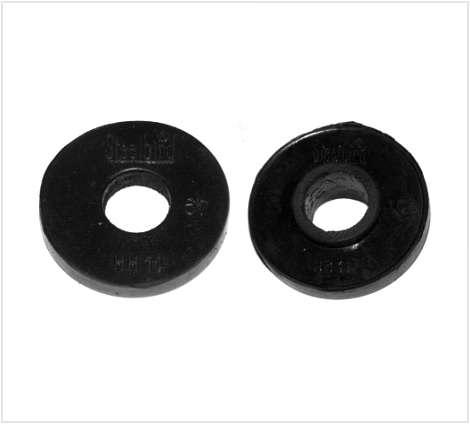
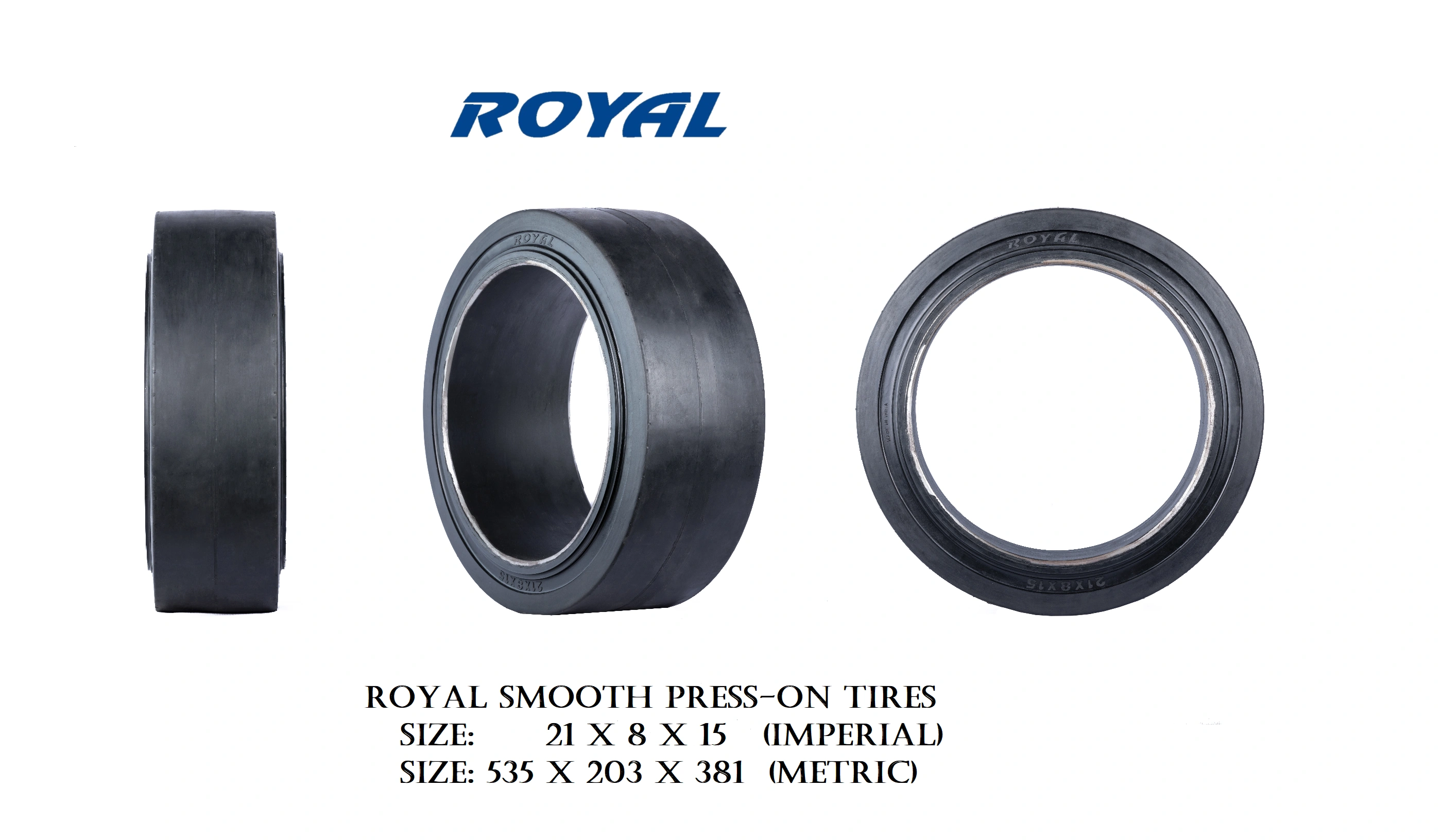
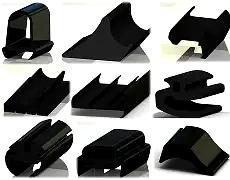
Haima Polymers presents Extruded EPDM Rubber Profiles manufactured using advanced microwave curing technology. This innovative process ensures uniform curing, enhancing the structural integrity and performance of the EPDM rubber profiles while significantly reducing production cycle times. These specialized EPDM profiles exhibit excellent impact and abrasion resistance, outstanding chemical stability, and superior durability, making them well-suited for demanding industrial applications. Widely deployed in construction, automotive, aerospace, marine, electrical systems, heavy machinery, and technical sectors, these extruded profiles serve as reliable sealing solutions, gaskets, and protective components in safety-critical environments. The use of microwave curing not only optimizes manufacturing efficiency but also ensures consistent product quality, catering to the stringent requirements of high-performance applications, thereby providing customers with robust and long-lasting sealing and protection solutions.
Key Features
| Features | Description |
|---|---|
| Curing Technology | Microwave Curing for uniform and rapid curing |
| Material | EPDM Rubber (Ethylene Propylene Diene Monomer) |
| Durability | High impact and abrasion resistance |
| Chemical Resistance | Excellent resistance to chemicals and weathering |
| Applications | Construction, Automotive, Aerospace, Marine, Electrical Systems, Heavy Machinery |
| Manufacturing Efficiency | Reduced cycle time due to microwave curing process |
| Product Form | Extruded profiles in customized dimensions and shapes |
| Performance | Exceptional sealing, gasketing, and protective properties |
| Industry Use | Ideal for safety-critical and technical applications |
| Attributes | Description |
|---|---|
| Material Composition | Ethylene Propylene Diene Monomer (EPDM) Rubber |
| Curing Method | Microwave Curing Technology |
| Density | Typically 1.1 - 1.2 g/cm³ |
| Temperature Resistance | -40°C to +120°C |
| Chemical Resistance | Resistant to ozone, UV, weathering, and many chemicals |
| Tensile Strength | Typically 6 - 10 MPa |
| Elongation at Break | Up to 300% |
| Surface Finish | Smooth, consistent finish due to microwave curing |
| Available Sizes | Custom extruded profiles in various dimensions and shapes |
| Color | Standard black; custom colors on request |
*Disclaimer: The above description has been AI-generated and has not been audited or verified for accuracy. It is recommended to verify product details independently before making any purchasing decisions.
Microwave curing provides uniform heat distribution throughout the EPDM material, ensuring consistent curing without hot spots. This accelerates the curing process, reduces cycle time, and enhances the mechanical and chemical properties of the extruded profiles.
Industries such as automotive, aerospace, marine, construction, electrical systems, and heavy machinery rely on these profiles for their excellent sealing capabilities, chemical resistance, and durability, especially in safety-critical and technical applications.
Yes, Haima Polymers offers customization in profile shapes and dimensions to meet specific client requirements while maintaining consistent product quality due to the precision of microwave curing.
These profiles exhibit excellent resistance to ozone, UV radiation, weathering, and a wide range of chemicals, making them suitable for harsh environmental conditions.
They are suitable for applications operating between -40°C and +120°C, making them versatile for most industrial scenarios requiring heat resistance.
Country Of Origin: India
Specialized EPDM Rubber Profiles (Microwave Curing)
Haima Polymers is recognized for producing EPDM rubber profiles using microwave curing technology—a cutting-edge process that offers efficient, uniform curing at reduced cycle times. These profiles are in demand across various sectors, including:
Construction
Automotive
Technical applications (such as seals or gaskets)
Heavy machinery
Aerospace, marine, and electrical systems
Th extruded EPDM profiles deliver high impact and abrasion resistance, chemical protection, and exceptional durability—making them versatile and ideal for industrial and safety-critical uses .