Inclusive of all taxes
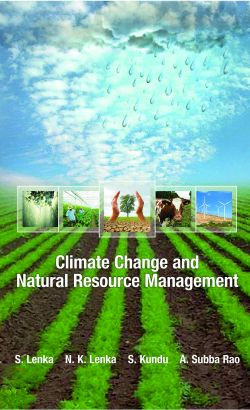
The publication 'Climate Change and Natural Resources Management' by S. Lenka and N.K. Lenka provides an in-depth analysis of the relationship between climate change and food security in India. This hardback book discusses how agricultural systems are vulnerable to the impacts of climate change, which can alter crop yields, resource availability, and the economic viability of farming practices. The authors delve into adaptive and mitigation strategies essential for sustainable agriculture in the face of increasing population pressures and environmental changes. Topics covered include greenhouse gas sources and sinks within India's agroecosystems, soil carbon sequestration potential, management practices for crops and livestock, and the implications of CO2 fertilization. This book serves as a significant resource for researchers, policymakers, and students interested in sustainable natural resource management and climate change adaptation in agriculture.
Key Features
| Features | Description |
|---|---|
| Authors | S. Lenka & N.K. Lenka |
| Format | Hardback |
| Focus Areas | Food security, sustainable natural resource management, climate change |
| Key Topics | Greenhouse gas management, soil carbon sequestration, crop management, livestock management |
| Illustrations | Includes schematic diagrams, tables, and graphs |
| Target Audience | Researchers, farm managers, policymakers, students |
| Future Opportunities | Information on carbon credits and trading for Indian farmers |
| Attributes | Description |
|---|---|
| Publication Date | 2023 |
| Number of Authors | Multiple contributors |
| Pages | Variable (specific number not provided) |
| ISBN | To be provided |
| Publisher | To be provided |
*Disclaimer: The above description has been AI-generated and has not been audited or verified for accuracy. It is recommended to verify product details independently before making any purchasing decisions.
The book meticulously examines how climate change impacts crop yields, resource use efficiency, and the economic performance of farming operations, emphasizing adaptive and mitigative strategies specific to Indian agroecosystems.
The publication highlights strategies including soil carbon sequestration, optimized crop and soil management practices, as well as scientific livestock management to reduce greenhouse gas emissions.
Yes, the book outlines potential opportunities for farmers to engage in carbon trading practices and earn carbon credits through sustainable agricultural practices.
This publication is beneficial for a wide range of readers including researchers, agricultural managers, policymakers, students, and anyone interested in climate change impacts on agriculture.
Brand: nipa
Country Of Origin: India
"This publication examines the critical subject of food security and the sustainable utilization of natural resources in India, taking into account the potential impact of climate change. As agroecosystems are locations of significant interaction between humans and the natural environment, global climate change is likely to have a significant effect on the resource base, crop yields, input efficiency, and overall profitability of agricultural production systems. However, the adverse consequences of climate change can be mitigated through the use of mitigation and adaptation strategies, which are becoming increasingly important due to India growing population and demand for food. This collection covers potential sources and sinks of greenhouse gases in the Indian context, including the potential for soil carbon sequestration, crop and soil management, and scientific livestock management as mitigation and adaptation options.
"This publication examines the critical subject of food security and the sustainable utilization of natural resources in India, taking into account the potential impact of climate change. As agroecosystems are locations of significant interaction between humans and the natural environment, global climate change is likely to have a significant effect on the resource base, crop yields, input efficiency, and overall profitability of agricultural production systems. However, the adverse consequences of climate change can be mitigated through the use of mitigation and adaptation strategies, which are becoming increasingly important due to India growing population and demand for food. This collection covers potential sources and sinks of greenhouse gases in the Indian context, including the potential for soil carbon sequestration, crop and soil management, and scientific livestock management as mitigation and adaptation options. The book also covers fundamental concepts related to the greenhouse effect and the potential mechanisms by which soil nutrient availability may be altered due to CO2 fertilization. The book is illustrated with schematic diagrams, tables, and graphs. The inclusion of information on the likelihood of earning carbon credits and engaging in carbon trading through best management practices may benefit Indian farmers in the future. This book will be useful for researchers, farm managers, policymakers, and students involved in climate change-related studies.
"
Content
"1 Greenhouse Effect and Contribution of Indian Agriculture by S. Lenka, N. K. Lenka and A. Subba Rao 2 Climate Change and Weather Extremes in India by N. K. Lenka 3 Importance of Tropospheric Ozone in Climate Change Research by S. Lenka 4 Impact of Elevated CO2 and Temperature on Crop ET and Plant Water Productivity by N. K. Lenka 5 Elevated Atmospheric CO2- Its Indirect Effects on Soil Processes by S. Kundu, S. Rajendiran, and M. Vassanda Coumar 6 Impact of Climate Change on Rhizosphere Microbial Activity and Nutrient Cycling by A. Mandal, T. K. Radha and S. Neenu 7 Feedbacks of CO2 Fertilization on Soil and Plant Nitrogen by N. K. Lenka 8 Enteric Methane Emission in Domestic Ruminant Livestock: Prediction and Measurement by V. Sejian, B. Saumya and A. K. Singh 9 Adaptation Strategies in Agriculture in Context of Climate Change by S. Lenka 10 Impact of Climate Change on Insect Pests, Beneficial Insects and Possible Adaptation Strategies by M.S. Rao and B. Venkateswarlu 11 Climate Change Mitigation Options in Agriculture by S. Lenka, N. K. Lenka and R. S. Chaudhary 12 Role of Farm Machinery in Reducing Greenhouse Gas Emissions by R. C. Singh 13 Strategies to Reduce Enteric Methane Emission in Domestic Ruminant Livestock by V. Sejian and S. Indu 14 Carbon Sequestration in Indian Agriculture by S. Kundu, M. L. Dotaniya and S. Lenka 15 Carbon Credits and Trading - An Opportunity for Indian Farmers by C.A. Rama Rao, B. Venkateswarlu and Josily Samuel 16 Use of Simulation Models to Assess the Impact of Climate Change on Agro-ecosystems by M. Mohanty and Nishant K Sinha
"
Inclusive of all taxes
You Save: 0
North Delhi , India
Service Provider , Manufacturer, Professional Services, Brand Owner, Distributor, Exporter, Importer, Wholesaler, Startup