
 GL Trustmark
 FIEO Registered
Our Products
Showing 1-24 of 78 products
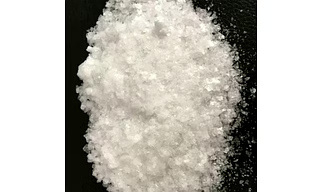
Sodium Acetate Trihydrate
Sodium Acetate Trihydrate is a hydrated form of sodium acetate, which is a sodium salt of acetic acid. It is commonly found in the form of colorless, transparent, or white crystalline needles or granules. The "tri" in its name indicates that it contains three molecules of water of crystallization.
Appearance: Sodium Acetate Trihydrate appears as colorless, transparent, or white crystalline needles or granules.
Chemical Formula: CH3COONa 3H2O (or NaC2H3O2 3H2O)
Molecular Weight:136.08 g/mol
Applications:
Hot Ice or Heat Packs: Sodium Acetate Trihydrate is used in heat packs and "hot ice" applications. When it is heated and then allowed to cool, it undergoes a phase change from a liquid to a solid, releasing heat in the process. This property is utilized for heat therapy and warming applications.
Chemical Reagent: In laboratories, it serves as a chemical reagent for various chemical processes and experiments.
Buffer Solution: It is used in the preparation of buffer solutions in analytical and laboratory work, helping to control pH levels in reactions.
Food Additive: In the food industry, it is sometimes used as a food additive and preservative. It can act as a pH regulator and preservative in certain products.
Electroplating: Sodium Acetate Trihydrate is used in electroplating as an electrolyte solution for certain types of electroplating processes. Packing Size: 25kg Packing Type: HDPE Bag
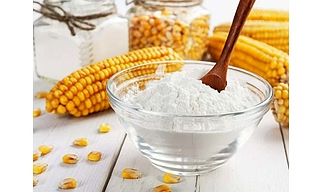
Corn Starch
Maize starch, derived from the hearty kernels of corn, is a versatile and essential ingredient that finds its place in both culinary and industrial applications. This fine, odorless, and tasteless white powder is primarily composed of carbohydrates, specifically starch molecules. Its unique properties make it a sought-after ingredient for a variety of uses.
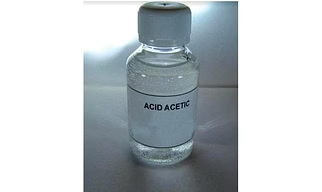
Acetic Acid Glacial
Acetic Acid Glacial is a versatile chemical compound known for its strong acidity and wide-ranging applications. It is a colorless, pungent-smelling liquid with a high solubility in water.
IUPAC Name:Acetic Acid
Common Name:
Glacial Acetic Acid
Ethylic Acid
Methanecarboxylic Acid
Appearance:Acetic Acid Glacial appears as a colorless, clear liquid with a sharp, vinegar-like odor.
Chemical Formula:CH3COOH
Molecular Weight:60.052 g/mol
Applications:
Chemical Manufacturing: Acetic Acid Glacial is used as a crucial raw material in the production of various chemicals, including acetate esters, acetic anhydride, and acetate fibers. It plays a vital role in the synthesis of pharmaceuticals, dyes, and perfumes.
Food Industry: In the food industry, it serves as a food preservative and flavor enhancer. It is a key component in the production of vinegar, imparting its characteristic sour taste.
Laboratory and Research: Laboratories utilize Acetic Acid Glacial for analytical purposes, such as pH adjustment and titration. It is commonly used in molecular biology and histology procedures.
Textile Industry: Acetic Acid Glacial is employed in textile manufacturing for dyeing and finishing processes, assisting in achieving vibrant and colorfast textiles.
Cleaning and Sanitization: It finds use in household cleaning products due to its effective disinfectant properties. Industrial cleaning processes also rely on Acetic Acid Glacial for cleaning and descaling tasks.
Packing Size- 30 Kg
Packing type - HDPE Carboy
Acrylic Acid
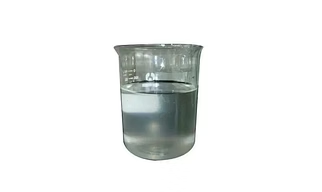
Acrylic Acid is a versatile and essential organic compound with a wide range of industrial applications. It is a colorless, pungent-smelling liquid that plays a crucial role in the production of various chemicals and polymers.
IUPAC Name:Prop-2-enoic Acid
Other Name or Common Name:
Acrylic Acid
Ethylenecarboxylic Acid
Vinylformic Acid
Appearance:Acrylic Acid typically appears as a colorless to pale yellow liquid with a strong, acrid odor.
Chemical Formula:CH2=CHCOOH.
Molecular Weight:72.06 g/mol.
Applications:
Polymer Production: Acrylic Acid is a primary building block for the production of various acrylic polymers, including acrylic resins and superabsorbent polymers (SAPs). These polymers are used in a variety of products, such as paints, adhesives, and diapers.
Adhesives and Sealants: It is used in the formulation of adhesives and sealants, providing strong bonding properties and excellent adhesion to various substrates.
Coatings and Paints: Acrylic Acid is a key component in the production of acrylic coatings and paints, offering durability, weather resistance, and excellent color retention.
Water Treatment: It is used in water treatment processes to improve the efficiency of coagulation and flocculation, aiding in the removal of impurities and pollutants.
Textiles and Superabsorbent Products: In the textile industry, it is used in the production of water-absorbent materials, such as diapers and hygiene products.
Oil and Gas Industry: Acrylic Acid is used in drilling fluids as a rheology modifier and stabilizer, helping to maintain wellbore stability during drilling operations.
Pharmaceuticals: It is used in the synthesis of pharmaceutical intermediates and active ingredients.
Agriculture: In agriculture, it is employed in soil conditioners and agricultural chemicals.
Packing Size: 200 KG
Packing type: HDPE Barrel
Acid Slurry 90% (Labsa)
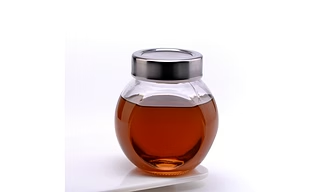
Acid Slurry, also known as Linear Alkyl Benzene Sulphonic Acid (LABSA), is a versatile and essential chemical compound used in various industries. It is a viscous, brownish liquid with excellent surfactant properties, making it an indispensable ingredient for numerous applications.
IUPAC Name:Linear Alkyl Benzene Sulphonic Acid (LABSA)
Other Name or Common Name:
Acid Slurry
LABSA
Alkylbenzene Sulfonic Acid
Appearance:Acid Slurry typically appears as a brownish, viscous liquid.
Chemical Formula: The chemical formula of Acid Slurry (LABSA) is C6H4(SO3H)(CH2)nCH3, where 'n' represents the length of the alkyl chain.
Applications:
Detergent Manufacturing: Acid Slurry is a fundamental raw material in the production of various detergents, including dishwashing liquids, laundry detergents, and industrial cleaners. It aids in removing stubborn stains and grease effectively.
Textile Industry: In the textile sector, Acid Slurry is used for textile scouring, dyeing, and finishing processes. It helps in achieving optimal wetting and penetration of dyes and chemicals.
Household Cleaning Products: Many household cleaning products, such as floor cleaners and toilet bowl cleaners, contain Acid Slurry for its cleaning and foaming properties.
Industrial Cleaners: Industrial cleaning applications, including degreasing and equipment cleaning, benefit from the emulsifying and detergent capabilities of Acid Slurry.
Agriculture: Acid Slurry is used in agriculture as a wetting agent and emulsifier for agrochemical formulations.
Packing Size: 250 KG
Packing Type: HDPE Barrel
Alpha Olefin Sulphonates (Aos) Paste
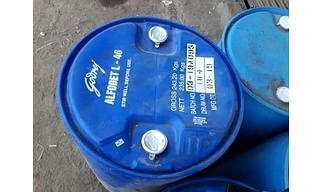
Alpha Olefin Sulfonate (AOS) Paste is a viscous and semi-solid substance that serves as an anionic surfactant. It is widely used in the production of various detergents, cleaning products, and personal care formulations.
Applications:
Detergents and Cleaning Products: AOS Paste is a key ingredient in the formulation of various detergents, such as laundry detergents, dishwashing detergents, and industrial cleaning products. It contributes to the product's cleaning and foaming properties.
Personal Care Products: It is used in personal care products, including shampoos, body washes, and facial cleansers, as a foaming agent and surfactant.
Industrial and Institutional Cleaning: AOS Paste is employed in industrial and institutional cleaning formulations for its cleaning and foaming properties.
Textile and Leather Processing: It is used in the textile and leather industry for its emulsifying and cleaning abilities.
Emulsification: AOS Paste is used in various applications as an emulsifier to mix oil and water-based ingredients in cosmetic and industrial formulations.
Oil and Gas Industry: In the oil and gas sector, it may be used in drilling fluids as a dispersant and deflocculant.
Packing Size: 220 Kg
Packing Type: HDPE Drum
Alpha Olefin Sulphonates (Aos) Liquid
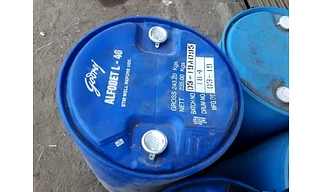
AOS Liquid, short for Alpha Olefin Sulphonate Liquid, is a versatile and high-performance surfactant renowned for its exceptional cleaning and foaming properties. It is a clear or slightly hazy liquid that finds widespread use in various industries. Our AOS Liquid is manufactured to the highest quality standards, ensuring its effectiveness and reliability for a wide range of applications.
Applications:
1. Detergent and Cleaning Products:
AOS Liquid is a fundamental ingredient in the formulation of various detergents, including laundry detergents, dishwashing liquids, and industrial cleaners.
It excels in removing dirt, grease, and stains effectively.
2. Personal Care Products:
It is used in the production of shampoos, body washes, and liquid soaps, providing rich lather and effective cleansing properties.
3. Textile Industry:
In textiles, AOS Liquid is utilized for textile scouring, dyeing, and finishing processes to achieve optimal wetting and penetration of dyes and chemicals.
4. Agriculture:
It serves as a wetting agent, dispersant, and emulsifier in agrochemical formulations for improved effectiveness.
5. Oil and Gas Industry:
AOS Liquid is a valuable component in drilling fluids, enhancing drilling efficiency, mud rheology, and wellbore stability.
6. Water Treatment:
It aids in coagulation and flocculation processes, facilitating the removal of impurities and pollutants from water.
7. Industrial and Institutional Cleaning:
Industries and institutions benefit from its emulsifying and cleaning properties, particularly in tasks such as degreasing and equipment cleaning.
Packing Size: 235 Kg Packing Type: HDPE Drum
Aluminium Sulphate
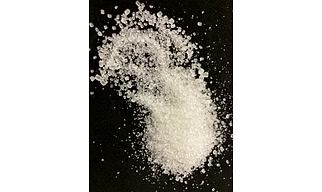
Aluminum Sulfate, also known as alum, is a versatile chemical compound with numerous industrial and water treatment applications. It is a white crystalline solid or powder, known for its ability to clarify water and play a crucial role in various chemical processes.
IUPAC Name:Aluminum Sulfate
Other Name or Common Name:
Alum
Alum Powder
Appearance:Aluminum Sulfate typically appears as a white crystalline solid or powder. In water treatment applications, it is often used in a liquid form.
Chemical Formula:The chemical formula for Aluminum Sulfate is Al2(SO4)3.
Molecular Weight:The molecular weight of Aluminum Sulfate is approximately 342.15 g/mol.
Applications:
Water Treatment: Aluminum Sulfate is widely used as a coagulant in water treatment processes to clarify and purify water. It aids in the removal of impurities, turbidity, and suspended particles, making water safe for consumption and industrial use.
Paper Manufacturing: It is employed in the paper industry to improve paper formation and strength. Aluminum Sulfate is used as a sizing agent and as a means to control the pH of paper pulp.
Textile Industry: In textiles, Aluminum Sulfate is used as a mordant in dyeing and printing processes to fix dyes onto fabrics effectively.
Construction: It is used in construction applications, such as as a flocculating agent in cement and concrete production.
Soil Conditioner: In agriculture, it is utilized as a soil conditioner and pH adjuster to enhance soil structure and nutrient availability to plants.
Deodorants: Some deodorant products contain Aluminum Sulfate to help control odor and perspiration.
Fire Retardants: It is used as a fire retardant in some fire extinguishing products and flame-resistant materials.
Chemical Industry: Aluminum Sulfate is employed in various chemical processes and as a catalyst in certain reactions.
Packing Size: 50 Kg
Packing Type: HDPE Bag
Alpha Olefin Sulphonates (Aos) Powder
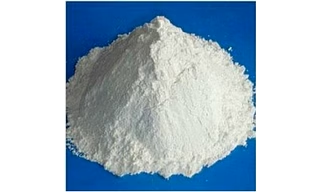
Alpha Olefin Sulphonate Powder, also known as AOS powder, is a versatile and high-performance surfactant used in various industries. It is a white, free-flowing powder that exhibits exceptional cleaning and foaming properties. Our Alpha Olefin Sulphonate Powder is manufactured to meet stringent quality standards, ensuring its effectiveness and versatility for a wide range of applications. Applications:
1. Detergent and Cleaning Products:
Alpha Olefin Sulphonate Powder is a key ingredient in the production of various detergents, including laundry detergents, dishwashing liquids, and industrial cleaners.
It excels in removing dirt, grease, and stains effectively.
2. Personal Care Products:
It is used in the formulation of shampoos, body washes, and liquid soaps, providing rich lather and cleansing properties.
3. Textile Industry:
In textiles, it is utilized for textile scouring, dyeing, and finishing processes to achieve optimal wetting and penetration of dyes and chemicals.
4. Agriculture:
It is employed in agriculture as a wetting agent, dispersant, and emulsifier in agrochemical formulations.
5. Oil and Gas Industry:
Alpha Olefin Sulphonate Powder is used in drilling fluids to enhance drilling efficiency, mud rheology, and wellbore stability.
6. Water Treatment:
It aids in coagulation and flocculation processes, helping to remove impurities and pollutants from water.
7. Industrial and Institutional Cleaning:
Industrial and institutional cleaning applications, such as degreasing and equipment cleaning, benefit from its emulsifying and cleaning properties.
Packing Size:25 Kg Packing Type:HDPE Bag
Alphox 200
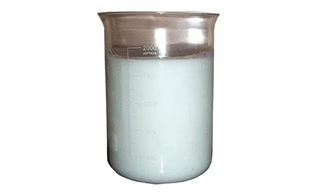
Alphox 200 is an ethylene oxide condensate of alkyl phenol. It is a pale colored liquid solution in water, vegetable Oils, alcohol, glycol ether, chloroform and Insoluble in mineral Oil and Ketone. Alphox 200 is a versatile chemical compound that finds wide application in various industries. It is a highly effective surfactant and emulsifier, known for its excellent performance in diverse applications. Application
TEXTILE -Alphox 200 is useful as a powerful wetting and scouring agent in many textiles Processing applications. It also aids bleaching and desizing action due to excellent wetting actions. It is also useful in dye leveling and kier boiling operations.
AGRICULTURE -Alphox 200 is useful as a non-ionic component along with anionic surfactant for formulation of emulsifiers for pesticidal sprays.
LEATHER -Alphox 200 is useful as an ingredient in the formulation of tanning agents.
PAINTS -Alphox 200 is useful as pigment wetting and as an emulsifier in paint formulation.
DETERGENTS -Alphox200 is useful at low concentration for formulation with anionics to obtain improved detergency. Blended with quarterly ammonium compounds it can yield germicidal cleaners for institutional cleaning. It can also be formulated as a liquid detergent with softeners.
METAL CLEANING-Alphox 200 is a Powerful detergent at low concentration. Therefore, it is useful in the removal of heavy grease and industrial metal cleaning.
Packing Size:210 Kg & 50 Kg
Packing Type:HDPE Drum & Carboy
Amino Acid 50 & 80% Soya Base
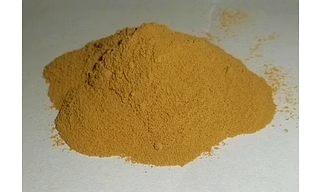
Amino Acids are organic compounds that serve as the building blocks of proteins and play essential roles in various biological processes. They are critical for the structure and function of proteins and enzymes in living organisms. Appearance:Cream to Brown Colour Applications:
Protein Synthesis: Amino acids are used by living organisms to build proteins through a process known as protein synthesis. Each amino acid contributes to the structure and function of the resulting protein.
Nutrition: Amino acids are essential nutrients in the human diet. They can be obtained from dietary sources and are required for various bodily functions, including muscle growth, enzyme production, and overall health.
Pharmaceuticals: Amino acids are used in the pharmaceutical industry for the production of medications and supplements, including amino acid-based nutritional supplements and drugs.
Research: Amino acids are commonly used in scientific research to study protein structure, function, and interactions. They are essential reagents in molecular biology and biochemistry.
Food and Beverage: Amino acids are used as food additives in the food and beverage industry to enhance flavor, improve taste, and serve as flavor enhancers. They are often found in products like savory snacks and condiments.
Packing Size: 25kg Packing Type: Bag Packing
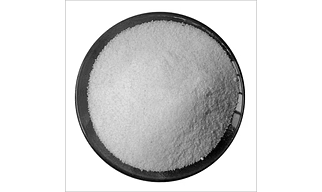
Borax Pentahydrate
Borax Pentahydrate is a hydrated form of sodium tetraborate, a naturally occurring mineral compound. It contains five water molecules for every molecule of sodium tetraborate, resulting in a pentahydrate form. It is typically found as colorless or white crystals.
IUPAC Name: Sodium tetraborate pentahydrate
Other Name or Common Name: Borax Pentahydrate is commonly known simply as "borax."
Appearance: Colorless or white crystalline solid
Chemical Formula: Na2B4O75H2O
Molecular Weight: 201.22 g/mol
Applications:
Household Cleaning: Borax Pentahydrate is widely used as a household cleaner and laundry booster. It helps to remove stains, deodorize, and soften water in washing machines.
Insecticides: It can be used as an ingredient in some insecticides to control pests like ants and cockroaches.
Preservative: In the preservation of wood, borax is used as a natural and eco-friendly alternative to chemical preservatives. It can help protect wood against decay and insect infestation.
Flame Retardant: Borax is utilized in the manufacturing of flame-resistant materials, including certain textiles and fire-resistant coatings.
Metallurgy: In metallurgical processes, borax is employed as a flux to facilitate the removal of impurities and improve the quality of metals.
Glass Production: It is used in the glass industry to improve the strength and clarity of glass products.
Buffer Solution: Borax solutions can be used as a buffer in various chemical and biological applications, including laboratory experiments.
Packing Size: 50kg Packing Type: HDPE Bag
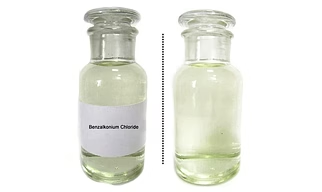
Benzalkonium Chloride 50% & 80%
Benzalkonium Chloride is a quaternary ammonium compound and is known for its antimicrobial and disinfectant properties. It is widely used as a biocidal agent to kill or inhibit the growth of bacteria, viruses, and fungi. IUPAC Name: N,N-dimethyl-N-dodecyl-N-(2-hydroxyethyl)ammonium chloride Appearance:Colorless to pale yellow solution
Applications:
Disinfectants and Antiseptics: Benzalkonium Chloride is used in various disinfectant and antiseptic products, including hand sanitizers, surface disinfectants, and wound antiseptics. It effectively kills a broad spectrum of microorganisms.
Preservatives: It is employed as a preservative in a wide range of personal care and pharmaceutical products, including eye drops, nasal sprays, and ophthalmic solutions.
Biocidal Applications: Benzalkonium Chloride is used in industrial and healthcare settings to sanitize equipment, surfaces, and instruments.
Swimming Pool Water Treatment: It is used to control algae and bacteria in swimming pool water.
Pharmaceuticals: It is used in various pharmaceutical formulations as a disinfectant and preservative, particularly in multi-dose eye drops and nasal solutions.
Packing Size: 50kg Packing Type: HDPE Carboy
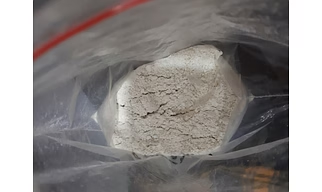
Ammonium Sulphate(Off White)
Ammonium sulfate (off white) is a variation of ammonium sulfate, a chemical compound that is typically off-white or light gray in color. Like standard ammonium sulfate, it is used in various industrial, agricultural, and laboratory applications.
IUPAC Name: Diammonium sulfate
Other Name or Common Name: Ammonium sulphate (off white)
Appearance: Off-white or light gray crystalline solid
Chemical Formula: (NH4)2SO4
Molecular Weight: 132.14 g/mol
Applications:
Agriculture: Used as a nitrogen fertilizer, ammonium sulfate (off white) provides essential nitrogen and sulfur nutrients for plant growth. It is particularly effective in alkaline soils and helps to lower soil pH.
Industrial Applications:
Water Treatment: It is employed in water treatment processes to precipitate heavy metals and reduce the concentration of certain contaminants.
Textiles: In the textile industry, it can serve as a flame retardant and dye-fixing agent for fabrics.
Chemical Manufacturing: Used as a reagent in various chemical reactions and processes.
Fire Extinguishers: Ammonium sulfate (off white) can be included in some dry chemical fire extinguishers as a fire-suppressing agent.
Laboratory and Research: In laboratory settings, ammonium sulfate (off white) is used for various purposes, including protein precipitation, chemical reactions, and analytical techniques.
Food Industry: While its use in the food industry has decreased over time, it has been used as an acidity regulator or dough conditioner in certain food products.
Pharmaceuticals: In pharmaceutical manufacturing, ammonium sulfate (off white) may be used in some processes for protein purification and crystallization.
Packing Size: 50kg
Packing Type: HDPE Bag
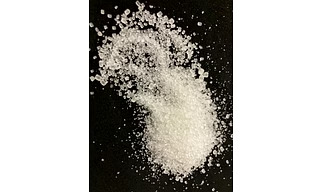
Ammonium Sulphate(Pure White )
Ammonium Sulphate is an inorganic compound with the formula (NH4)2SO4. It is an inorganic salt commonly used in various industries due to its versatile properties. It is Composed of ammonium cation (NH4+) and sulfate anion (SO42-), and is highly soluble in water .Ammonium sulfate is a white, water-soluble powder that is used as a fertilizer and in other industrial applications. It is a good source of nitrogen and sulfur, two important nutrients for plant growth. Ammonium sulfate can be applied to soil directly or dissolved in water and applied as a liquid fertilizer. It is important to follow the manufacturer's directions for application rates, as too much ammonium sulfate can damage plants.
IUPAC Name: Diammonium sulfate
Other Name or Common Name: Ammonium sulphate
Appearance: White crystalline solid
Chemical Formula: (NH4)2SO4
Molecular Weight:132.14 g/mol
Applications:
Agriculture: Used as a nitrogen fertilizer to provide essential nutrients for plant growth, particularly in alkaline soils. It also helps lower soil pH.
Industrial Applications:
Water Treatment: Employed to precipitate heavy metals and reduce water contaminants.
Textiles: Used as a flame retardant and dye-fixing agent in the textile industry.
Chemical Manufacturing: Used as a reagent in various chemical processes.
Fire Extinguishers: Included in some dry chemical fire extinguishers as a fire-suppressing agent.
Laboratory and Research: Utilized for protein precipitation, chemical reactions, and analytical techniques in laboratory settings.
Food Industry: Occasionally used as an acidity regulator or dough conditioner in food products, although its use has decreased with the availability of other food-grade additives.
Pharmaceuticals: May be used in some pharmaceutical processes for protein purification and crystallization.
Packing Size: 50kg
Packing Type: HDPE Bag
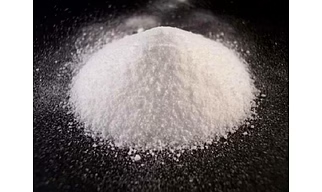
Borax Decahydeate
Borax Decahydrate, also known as sodium tetraborate decahydrate, is a naturally occurring mineral compound that is composed of sodium, boron, oxygen, and water. It is typically found as colorless, white, or light gray crystals.
IUPAC Name: Sodium tetraborate decahydrate
Other Name or Common Name: Borax Decahydrate is commonly known simply as "borax."
Appearance: Colorless, white, or light gray crystalline solid
Chemical Formula: Na2B4O710H2O
Molecular Weight:381.37 g/mol
Applications:
Household Cleaning: Borax Decahydrate is widely used as a household cleaner and laundry booster. It helps to remove stains, deodorize, and soften water in washing machines.
Insecticides: It can be used as an ingredient in some insecticides to control pests like ants and cockroaches.
Preservative: In the preservation of wood, borax is used as a natural and eco-friendly alternative to chemical preservatives. It can help protect wood against decay and insect infestation.
Flame Retardant: Borax is utilized in the manufacturing of flame-resistant materials, including certain textiles and fire-resistant coatings.
Metallurgy: In metallurgical processes, borax is employed as a flux to facilitate the removal of impurities and improve the quality of metals.
Glass Production: It is used in the glass industry to improve the strength and clarity of glass products.
Packing Size: 50kg Packing Type: HDPE Bag
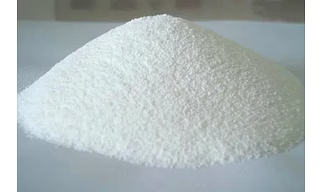
Calcium Chloride
Calcium Chloride is an inorganic chemical compound composed of calcium and chlorine ions. It is a white crystalline solid at room temperature and is highly soluble in water. Calcium chloride is known for its hygroscopic properties, meaning it can absorb moisture from the air.
IUPAC Name: Calcium Chloride
Other Name or Common Name: Calcium chloride is commonly referred to by its chemical name.
Appearance: White crystalline solid
Chemical Formula: CaCl2
Molecular Weight: Approximately 110.98 g/mol
Applications:
De-icing and Anti-icing: Calcium chloride is widely used for de-icing roads and highways during winter to melt ice and snow. It is also used as an anti-icing agent to prevent the formation of ice on surfaces.
Dust Control: In arid and dusty environments, calcium chloride is applied to roads and unpaved surfaces to control dust by attracting moisture from the air and binding fine particles together.
Concrete Accelerator: In construction, calcium chloride is used as a concrete accelerator, as it can speed up the setting and curing of concrete.
Desiccant: Calcium chloride is used as a desiccant in various applications, including drying air in industrial processes, protecting sensitive equipment from humidity, and reducing moisture in packaging.
Food Additive: It is used as a food additive (E509) in the food industry to enhance firmness in canned fruits and vegetables, as well as to help maintain the texture of certain dairy products.
Oil and Gas Industry: Calcium chloride is used in the oil and gas industry for various purposes, including drilling fluids, well completion, and hydraulic fracturing (fracking) operations.
Packing Size: 50kg Packing type: HDPE Bag
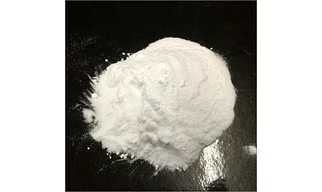
Boric Acid
Boric Acid is a weak, monobasic Lewis acid of boron. It is a white, crystalline solid that is soluble in water and known for its mild antiseptic and antifungal properties. It is a natural substance that is generally safe for most people to use, but it is important to follow the manufacturer's instructions carefully when using boric acid products.
IUPAC Name: Boric Acid
Other Name or Common Name: Orthoboric Acid
Appearance: White crystalline powder or solid
Chemical Formula: H3BO3
Molecular Weight: Approximately 61.83 g/mol
Applications:
Antiseptic and Antifungal: Boric acid is commonly used as an antiseptic and antifungal agent for various purposes, including treating minor cuts, burns, and skin infections.
Preservative: It is used as a preservative in some cosmetic and personal care products, including eye drops and saline solutions.
Insecticides: Boric acid is used in some insecticides and pesticides to control pests like ants, roaches, and silverfish. It works by disrupting their digestive systems.
Flame Retardant: It is utilized as a flame retardant in certain textiles and cellulose-based materials.
Metallurgy: In metallurgical processes, boric acid is used as a flux to facilitate the removal of impurities and improve the quality of metals.
Packing Size: 25 kg Bag
Packing Type: HDPE bag
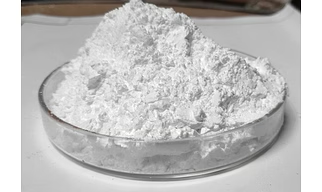
Boron 20%
Disodium Octaborate Tetrahydrate is a boron-containing chemical compound used in various applications, including wood preservation and as an insecticide. It is a white, crystalline solid that contains boron, sodium, and oxygen atoms.
IUPAC Name: Disodium Octaborate Tetrahydrate
Other Name or Common Name: Disodium Octaborate Tetrahydrate is sometimes referred to as "DOT" or "Borax Boron."
Appearance: White crystalline powder or solid
Chemical Formula: Na2B8O134H2O
Molecular Weight: Approximately 381.28 g/mol
Applications:
Wood Preservation: Disodium Octaborate Tetrahydrate is used to protect wood against decay, fungi, and insect infestation. It is commonly applied as a wood preservative in construction and building materials.
Insecticide: It is utilized as an insecticide and pesticide to control wood-boring insects, such as termites and wood-destroying beetles.
Fire Retardant: In some applications, Disodium Octaborate Tetrahydrate is used as a fire retardant in cellulose-based materials, providing flame resistance.
Textile Fireproofing: It can be used in textiles to enhance their fire resistance properties.
Fungicide: Disodium Octaborate Tetrahydrate is used as a fungicide in various applications, including agriculture and wood preservation, to prevent fungal growth.
Packing Size: 25kg Packing Type: HDPE Bag
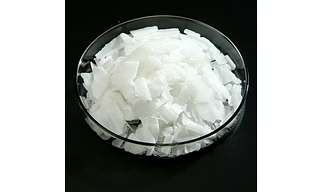
Caustic Soda Flakes
Sodium Hydroxide, commonly known as caustic soda or lye, is a highly caustic and alkaline chemical compound. It is a white, solid substance at room temperature and is highly soluble in water. Sodium hydroxide is known for its strong alkaline properties.
IUPAC Name: Sodium Hydroxide
Other Name or Common Name: Caustic soda, Lye
Appearance: White, opaque, crystalline solid
Chemical Formula: NaOH
Molecular Weight:40.00 g/mol
Applications:
Chemical Manufacturing: Sodium hydroxide is a crucial chemical in various industrial processes. It is used in the production of soaps, detergents, and various chemicals. It is also used in the manufacture of plastics and textiles.
Water Treatment: Sodium hydroxide is employed in water treatment to adjust the pH of water, neutralize acidic substances, and remove heavy metals.
Food Industry: In the food industry, it is used for various purposes, including food preparation (e.g., peeling fruits and vegetables), as a food additive (E524) for pH control, and in the production of cocoa and chocolate.
Cleaning and Household Products: Sodium hydroxide is a common ingredient in many cleaning products such as drain cleaners, oven cleaners, and various household detergents.
Paper and Pulp Industry: It is used in the production of paper and pulp, where it helps break down lignin and separate fibers during the pulping process.
Petroleum Refining: In the petroleum industry, sodium hydroxide is used for various processes, including the removal of impurities and sulfur compounds from crude oil.
Textile Industry: Sodium hydroxide is used for mercerization in the textile industry to enhance the strength and luster of cotton fibers.
Packing Size: 50kg Packing Type: HDPE Bag
Cetyl Alcohol
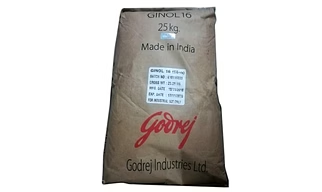
Cetyl Alcohol is a fatty alcohol that is often used as an emollient, thickening agent, and emulsifier in cosmetic and personal care products. It is valued for its soothing and moisturizing properties.
IUPAC Name: Hexadecan-1-ol
Other Name or Common Name:Cetyl Alcohol
Appearance: white, waxy solid or flakes at room temperature.
Chemical Formula: C16H34O
Molecular Weight: 242.45 g/mol
Applications:
Cosmetics and Personal Care: Cetyl Alcohol is a common ingredient in creams, lotions, and other cosmetic products. It functions as an emollient, helping to soften and hydrate the skin. It also acts as a thickener to provide desirable texture and consistency to products.
Hair Care Products: It is used in hair conditioners and styling products to improve the texture and manageability of hair. It can help reduce frizz and static electricity.
Pharmaceuticals: In pharmaceutical formulations, Cetyl Alcohol is used as a stabilizer and thickener for various topical medications and creams.
Lubricants: It can be found in some industrial and automotive lubricants, providing lubricating properties.
Food and Beverage Industry: In some cases, Cetyl Alcohol is used as a food additive, particularly in the manufacturing of chocolates and confectionery products.
Packing Size: 25kg Packing Type: HDPE Bag
Coca Diethenol Amide (Cdea)
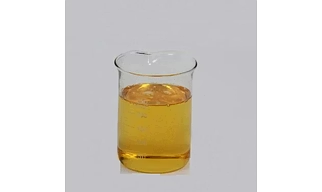
Coco Diethanol Amide (CDEA) is a nonionic surfactant and viscosity-enhancing agent. It is derived from coconut oil and is used in various personal care and cleaning products for its foaming, emulsifying, and thickening properties.
IUPAC Name:
Other Name or Common Name: Coco Diethanol Amide is commonly known by its abbreviation, "CDEA."
Appearance:Pale yellow liquid.
Chemical Formula:
Molecular Weight:
Applications:
Cosmetics and Personal Care: CDEA is commonly used in shampoos, conditioners, body washes, and other personal care products to enhance foaming and stabilize emulsions. It also contributes to the viscosity and texture of these products.
Cleaning Products: It is used in various cleaning products, including dishwashing liquids, laundry detergents, and multi-purpose cleaners, to improve foaming and cleaning effectiveness.
Industrial Applications: CDEA finds applications in industrial settings, such as in the formulation of cutting fluids, metalworking fluids, and lubricants.
Textile Industry: In the textile industry, CDEA may be used as a leveling agent and emulsifier in dyeing processes.
Agriculture: CDEA is sometimes used in agricultural formulations, including herbicides and pesticides, for its emulsifying properties.
Paints and Coatings: In paints and coatings, CDEA can serve as a coalescing agent and thickening agent, contributing to the stability and consistency of the formulations.
Packing Size: 50kg Packing Type: Carboy
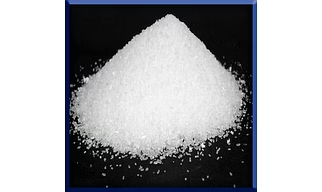
Citric Acid Monohydrate
Citric Acid Monohydrate is a weak organic acid and a natural preservative. It is a crystalline compound derived from citric acid and is commonly used in various applications.
IUPAC Name: 2-Hydroxypropane-1,2,3-tricarboxylic acid monohydrate
Other Name or Common Name:Citric Acid
Appearance: Citric Acid Monohydrate appears as colorless or translucent crystals.
Chemical Formula: C6H8O7H2O
Molecular Weight:210.14 g/mol
Applications:
Food and Beverage Industry: Citric Acid Monohydrate is widely used as an acidulant and flavoring agent in the food and beverage industry. It adds a tart or sour taste to a variety of products, including soft drinks, candies, jams, jellies, and baked goods.
Pharmaceuticals: It is used in pharmaceutical formulations, including effervescent tablets and solutions, where its acidity and effervescence are beneficial.
Cosmetics and Personal Care: Citric Acid Monohydrate is used in cosmetics and personal care products as a pH adjuster, chelating agent, and exfoliant. It helps to balance the pH of skincare products and aids in the removal of dead skin cells.
Cleaning Products: It is used in cleaning products, such as descaling agents, due to its ability to dissolve mineral deposits, limescale, and rust.
Water Softening: Citric Acid Monohydrate can be used to regenerate ion-exchange resins in water softening systems, reducing the hardness of water by removing calcium and magnesium ions.
Industrial Applications: In various industrial processes, Citric Acid Monohydrate can act as a chelating agent to control metal ion content, such as in the textile and metalworking industries.
Packing Size: 25kg Packing Type: HDPE Bag