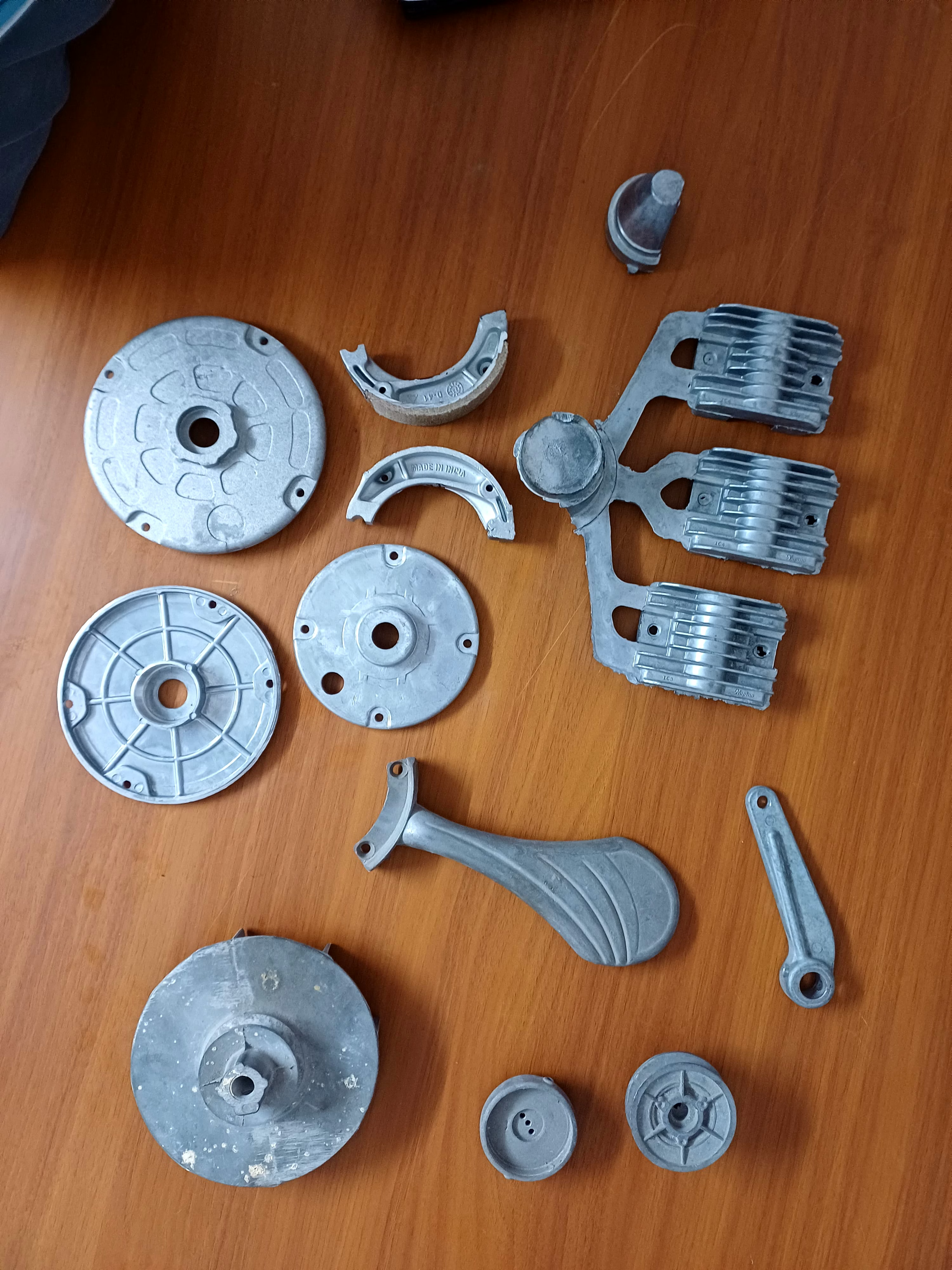
Zinc components are precision-engineered parts made primarily from high-grade zinc alloys, widely used across various industrial applications due to their excellent corrosion resistance, strength, and versatility. These components are typically produced through die casting, allowing for detailed, complex designs with tight tolerances that ensure optimal performance in mechanical assemblies. Ideal for manufacturing durable hardware, automotive parts, electrical fittings, and consumer goods, zinc components offer enhanced longevity and reliability. Their inherent properties provide superior dimensional stability and a smooth finish, making them a cost-effective solution in both prototyping and large-scale production scenarios.
Key Features
| Features | Description |
|---|---|
| Material Composition | High-purity zinc alloy |
| Manufacturing Process | Precision die casting |
| Corrosion Resistance | Excellent resistance to oxidation and environmental degradation |
| Mechanical Strength | High tensile strength suitable for load-bearing applications |
| Dimensional Accuracy | Maintains tight tolerances for precise fit |
| Finish Quality | Smooth, uniform surface conducive to plating and painting |
| Application Range | Automotive, electrical, hardware, consumer electronics |
| Production Volume | Scalable from prototype to mass production |
| Attributes | Description |
|---|---|
| Zinc Alloy Grade | Typically Zamak 3, Zamak 5, or Zamak 7 |
| Typical Density | Approximately 6.6 to 6.75 g/cm³ |
| Melting Point | Around 419.5°C (787°F) |
| Casting Method | Hot chamber die casting |
| Tensile Strength | Ranges from 310 to 380 MPa depending on alloy grade |
| Dimensional Tolerance | ±0.05 mm to ±0.1 mm depending on part complexity |
| Surface Treatment | Electroplating, powder coating, or painting options available |
| Typical Applications | Precision components, structural parts, decorative hardware |
| Compliance Standards | RoHS compliant, REACH regulation adherence |
*Disclaimer: The above description has been AI-generated and has not been audited or verified for accuracy. It is recommended to verify product details independently before making any purchasing decisions.
The most commonly used zinc alloy grades include Zamak 3, Zamak 5, and Zamak 7, which provide varying levels of strength and corrosion resistance suitable for different applications.
Die casting allows for precise, high-volume production of complex zinc components with tight tolerances and consistent quality, reducing production costs while enhancing mechanical properties.
Yes, zinc components manufactured from appropriate alloys like Zamak 5 possess high tensile strength suitable for moderate load-bearing applications in automotive and industrial uses.
Zinc parts can undergo various surface treatments including electroplating, powder coating, and painting to improve appearance and resistance to corrosion.
Yes, the zinc components typically comply with RoHS and REACH standards, ensuring they meet environmental and safety regulations for industrial use.