Sodium Alginate Pharma Grade is a versatile polysaccharide extracted from the cell walls of brown algae, known for its stability, thickening, emulsifying, and gel-forming properties. Ideal for applications in the food, pharmaceutical, and textile printing industries, this white or yellowish powder is tasteless and odorless. It is widely utilized in the formulation of dental impression materials due to its excellent gelling capabilities and favourable biocompatibility for pharmaceutical applications. Sodium Alginate, also referred to as Algimic acid, effectively increases viscosity and acts as an emulsifier, making it essential for creating stable products in various industries. Its unique characteristics allow it to bind with water, creating a viscous gum that enhances the texture and stability of different formulations. Understanding the properties and applications of Sodium Alginate is key for manufacturers looking to ensure quality and compliance within their products.
Key Features
| Features | Description |
|---|---|
| Biocompatibility | Favourable for pharmaceutical applications. |
| Gelling Properties | Used in dental impression material. |
| Viscosity Regulation | Increases viscosity in food and pharmaceutical products. |
| Emulsifier Functionality | Acts as an emulsifier for stable formulations. |
| Source | Extracted from the cell wall of brown algae. |
| Attributes | Description |
|---|---|
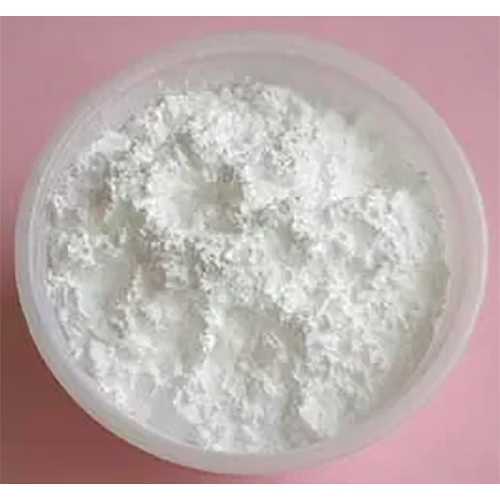
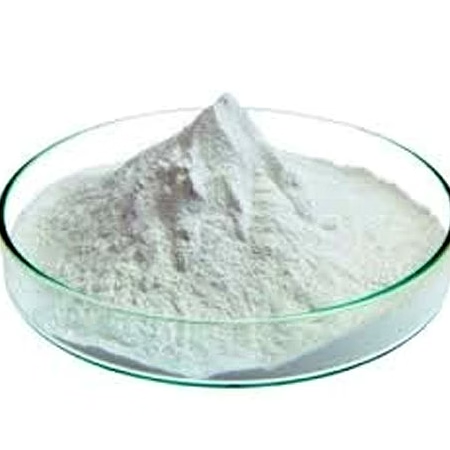
| Appearance | White or yellowish powder. |
| Taste | Almost tasteless. |
| Odour | Odorless. |
| Solubility | Forms a viscous gum when hydrated. |
| Applications | Food industry, pharmaceuticals, textile printing, dental materials. |
*Disclaimer: The above description has been AI-generated and has not been audited or verified for accuracy. It is recommended to verify product details independently before making any purchasing decisions.
Sodium Alginate Pharma Grade is primarily used in the food industry for thickening, in the pharmaceutical industry for formulations requiring biocompatibility, and in textile printing for its emulsifying properties.
Yes, Sodium Alginate is safe as an ingredient in manufactured foods and complies with food safety standards.
Sodium Alginate has excellent gelling properties, making it suitable for applications such as dental impression materials.
Sodium Alginate increases viscosity by binding with water, thereby forming a viscous gum that enhances the texture of various products.
Sodium Alginate is extracted from the cell walls of brown algae, ensuring a natural and sustainable source.
Brand: meron
Country Of Origin: India
It is widely used in food, pharmaceutical and textile printing industry for its stability, thickening and emulsibility, hydratability and gel properties.
Extracted from cell wall of brown algae.
Favourable biocompatibility for pharma applications
Sodium Alginate is also called Algimic acid and it has a variety of uses in the food, pharmaceutical and textile printing industries. It is also used in the making of dental impression material as its means of gelling. Sodium Alginate is safe as an ingredient in manufactured foods. It is a polysaccharide distributed widely in the cell walls of brown algae, where through binding with water it forms a viscous gum. It is also a significant component of the biofilms produced by the bacterium Pseudomonas aeruginosa, the major pathogen in cystic fibrosis, that confer it a high resistance to antibiotics and killing by macrophages. It is a white or yellowish powder, is almost tasteless and odorless and is extracted from the cell wall of brown algae, where through binding with water forms a viscous gum and is used 2 increase viscosity and also as an emulsifier.