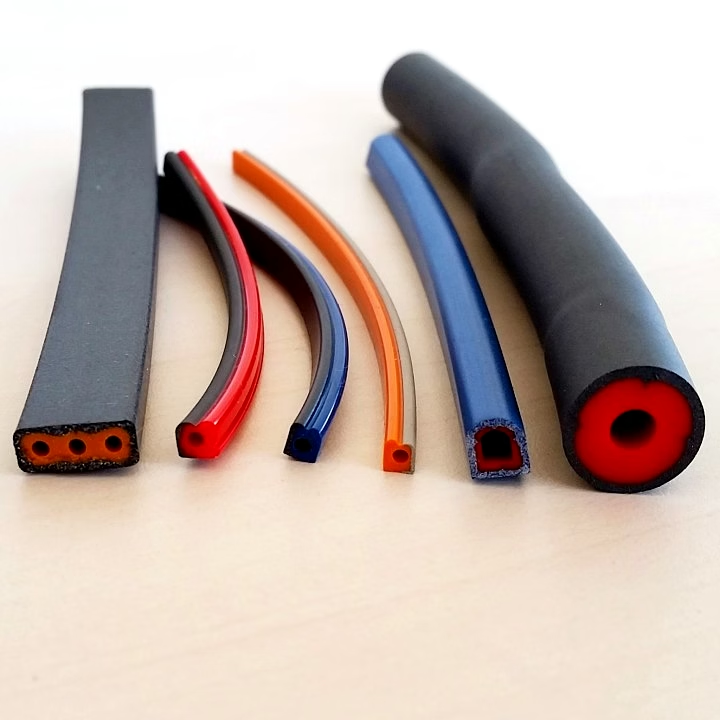
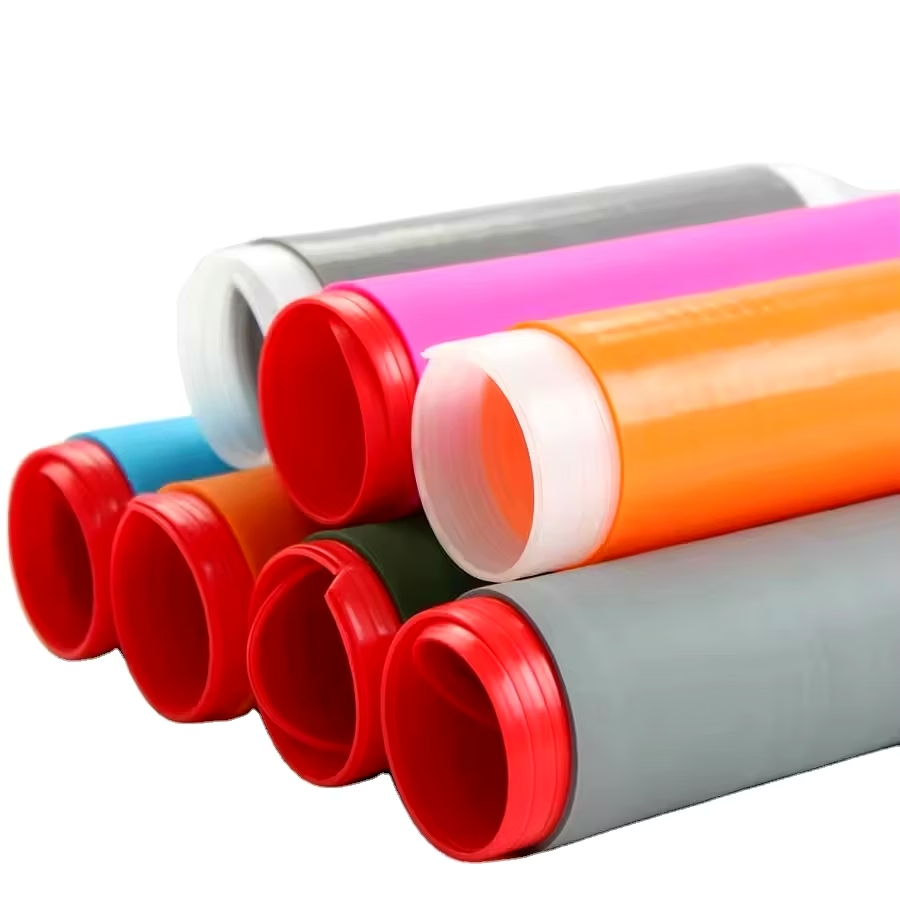
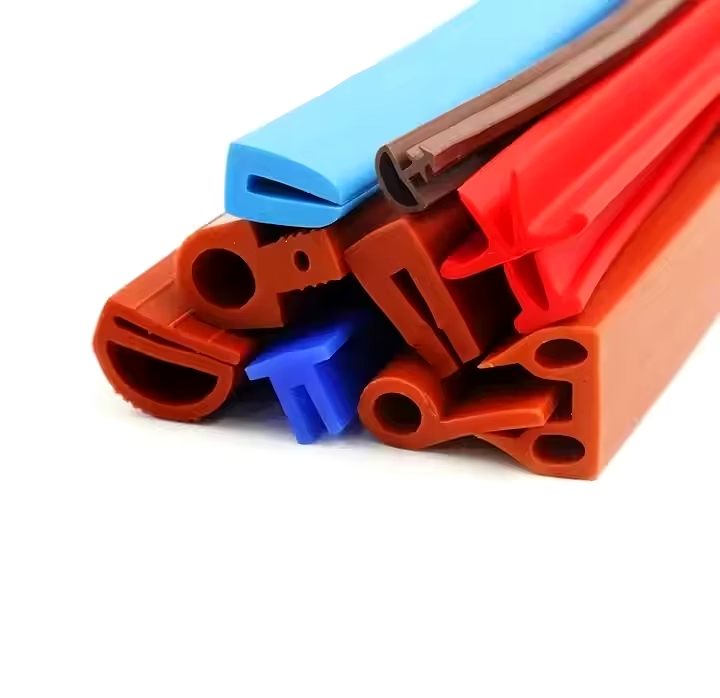
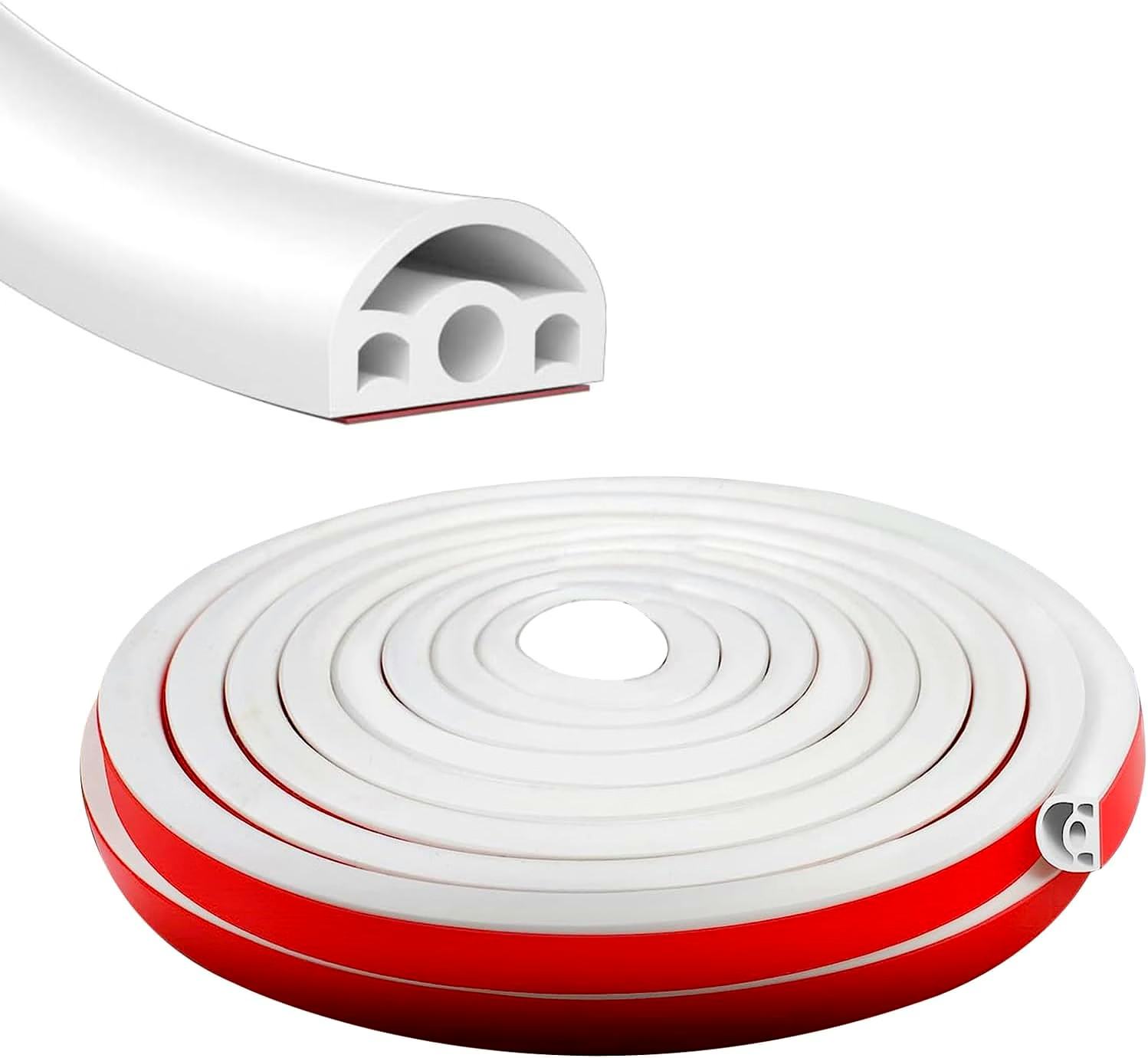
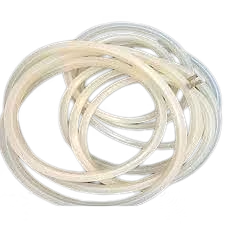
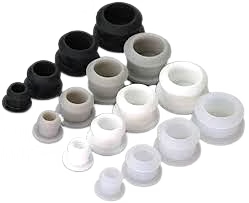
Silicone plugs are premium-grade, flexible sealing components designed to protect and mask holes, ports, and threaded openings during various industrial processes such as manufacturing, finishing, coating, plating, painting, anodizing, and assembly. Crafted from high-quality silicone rubber, these plugs exhibit exceptional heat resistance, operating effectively at temperatures up to 250–300°C, while maintaining outstanding chemical resistance and elasticity. Their unique properties ensure a secure, non-damaging seal that supports surface integrity across demanding applications. Widely utilized in the automotive, electrical, electronics, metal finishing, powder coating, medical device manufacturing, and industrial sectors, silicone plugs come in a variety of shapes—including tapered, straight, ribbed, and hollow designs—to meet diverse masking and sealing requirements. The availability of multiple colors aids in process identification, while custom molding options for sizes, hardness levels (Shore A), and colors allow for tailored solutions optimized to specific OEM and industrial manufacturing needs. Designed for repeated use, these plugs offer long service life and resist deterioration from oils, solvents, UV exposure, and harsh chemicals, making them ideal for precision masking and protection during high-heat and pressure operations.
Key Features
| Features | Description |
|---|---|
| Material | Premium-grade silicone rubber |
| Temperature Resistance | Heat resistant up to 250–300°C |
| Flexibility | Excellent elasticity for easy insertion and removal |
| Chemical Resistance | Resistant to chemicals, oils, solvents, and UV exposure |
| Durability | Reusable with a long service life |
| Design Varieties | Available in tapered, straight, ribbed, hollow, and custom designs |
| Color Options | Multiple colors available for process identification |
| Customizability | Custom sizes, hardness (Shore A), and color options available |
| Application Areas | Used in automotive, electronics, metal finishing, powder coating, medical, and industrial sectors |
| Non-reactive and Non-contaminating | Ensures no surface damage or contamination during use |
| Attributes | Description |
|---|---|
| Material | High-quality silicone rubber |
| Temperature Range | Up to 250–300°C heat resistance |
| Hardness | Customizable Shore A hardness |
| Design Types | Tapered, straight, ribbed, hollow, custom molded |
| Color Variants | Available in multiple colors |
| Chemical Resistance | Resistant to oils, solvents, chemicals, and UV exposure |
| Reusable | Yes, with long service life |
| Dimensions | Standard and custom sizes available |
| Industry Use | Automotive, electronics, metal finishing, powder coating, medical devices |
*Disclaimer: The above description has been AI-generated and has not been audited or verified for accuracy. It is recommended to verify product details independently before making any purchasing decisions.
Silicone plugs are typically rated for heat resistance up to 300°C, but continuous exposure at the upper limit may affect lifespan; we recommend consulting technical data sheets for specific use cases.
Yes, hardness can be customized according to Shore A scale to meet specific application flexibility or rigidity requirements.
Threaded holes can be effectively masked using tapered or ribbed silicone plugs designed to create a secure seal without damaging the threads.
Yes, multiple color options are available and can be selected to aid in process identification during manufacturing cycles.
Silicone plugs feature excellent chemical resistance and durability, allowing for multiple reuse cycles depending on the specific process and exposure.
Brand: orion industrial corporation
Country Of Origin: India
Silicone Plugs are precision-molded elastomeric closure components designed to provide effective sealing, protection, and isolation in assemblies across a broad range of industrial, laboratory, and consumer applications. Manufactured from high-performance silicone compounds, these plugs deliver dependable dimensional stability, compression resistance, and environmental protection under varied operating conditions. Orion Industrial Corporation develops silicone plugs tailored to specific design requirements including diameter, profile, hardness, and interface fit to ensure reliable engagement and sealing. Available in a wide selection of shapes and sizes, these silicone plugs can be used for closure, end sealing, protective caps, or temporary covers for ports and openings. Controlled molding processes help ensure consistent quality, repeatability, and fit reliability. These components are utilized in electronics enclosures, fluid handling systems, industrial machinery, appliances, HVAC assemblies, water and plumbing systems, laboratory systems, and general-purpose equipment where dependable sealing and contamination control contribute to overall product performance and reliability.
Key Product Details
Silicone Plugs are molded elastomer components designed to seal openings, protect ports or surfaces, and isolate internal cavities from dust, moisture, or debris. Their geometry enables secure engagement and reliable closure without distortion.
Performance Properties
Silicone material properties provide flexibility, compression resistance, and stability across a broad temperature range. These features help maintain sealing performance under repeated use and varied environmental conditions.
Customization Capabilities
Orion develops silicone plugs to match customer drawings, dimensions, and functional requirements. Options include varied diameters, lengths, profiles, hardness levels (durometer), and color variations for identification or system organization.
Typical Applications
Silicone Plugs are used in industrial machinery, electronics housings, fluid handling systems, appliances, HVAC systems, water & plumbing assemblies, laboratory setups, and general equipment where effective closure and contamination control are needed.
Quality & Reliability
Manufacturing processes are governed by controlled parameters to ensure dimensional accuracy, material consistency, surface quality, and repeatable performance across production batches, supporting long-term reliability.