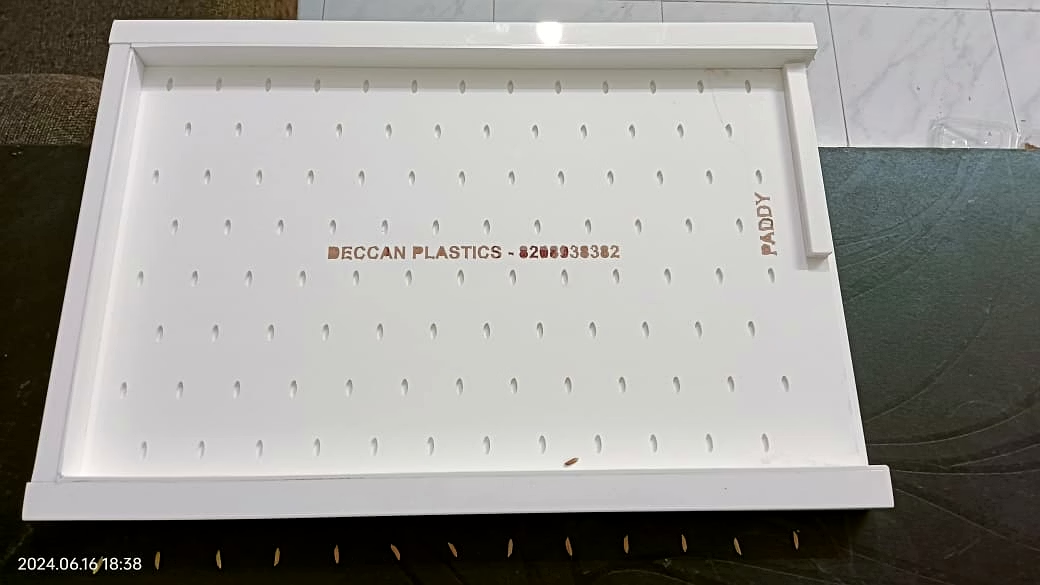
The Seed Purity Board is a specialized regulatory authority designed to maintain and certify the genetic integrity, physical purity, and overall quality of agricultural seeds. It plays a critical role in ensuring that seeds used for cultivation are genetically true to their variety, viable, and free from contaminants such as inert matter, weed seeds, and other crop seeds. This board executes comprehensive testing protocols which include physical purity tests to detect the presence of inert and foreign matter, genetic purity tests employing advanced molecular marker techniques or grow-out tests to verify varietal identity, and germination tests to assess seed viability and germination success rates. By enforcing stringent seed laws and regulations, the Seed Purity Board prevents the distribution and sale of spurious, misbranded, or low-quality seeds in the agricultural market. It is an essential body for stakeholders like seed producers, regulatory agencies, agricultural researchers, and commercial farmers who prioritize high-quality seed supply to achieve optimal crop performance and yield consistency.
Key Features
| Features | Description |
|---|---|
| Regulatory Oversight | Enforces seed purity, labeling, and marketing regulations to maintain industry standards. |
| Physical Purity Testing | Detects inert matter, weed seeds, and other crop seeds in seed samples. |
| Genetic Purity Testing | Employs grow-out tests and molecular marker techniques to confirm seed variety identity. |
| Germination Testing | Measures the percentage of seeds capable of successful sprouting and growth. |
| Seed Certification | Certifies seeds that comply with prescribed genetic and physical purity standards. |
| Prevention of Spurious Seeds | Acts against sale of misbranded and contaminated seeds to protect farmers and markets. |
| Maintains Genetic Integrity | Ensures seeds retain original varietal characteristics and purity throughout production. |
| Attributes | Description |
|---|---|
| Physical Purity Test | Checks for presence of inert matter, weed seeds, and foreign crop seeds. |
| Genetic Purity Test Methods | Grow-out tests, molecular marker analysis (PCR-based or other molecular techniques). |
| Germination Test Parameters | Quantifies germination percentage indicating seed viability. |
| Compliance Standards | Adheres to national and regional seed laws for purity and labeling. |
| Certification Process | Sequential testing and documentation to approve seed lots for commercial use. |
| Seed Sample Handling | Standardized collection, storage, and preparation procedures for accurate testing. |
*Disclaimer: The above description has been AI-generated and has not been audited or verified for accuracy. It is recommended to verify product details independently before making any purchasing decisions.
The board conducts genetic purity tests using grow-out methods and advanced molecular marker analysis to confirm the seed variety identity and prevent contamination with other varieties.
It adheres to prescribed national and regional seed laws related to seed purity, labeling, and marketing enforced through rigorous testing and documentation processes.
It performs physical purity tests to detect inert and unwanted matter, genetic purity tests to verify varietal identity, and germination tests to assess seed viability and sprouting percentage.
Yes, the board enforces seed marketing regulations that block the distribution of mislabeled, spurious, or contaminated seeds ensuring only certified seeds reach the market.
Germination testing measures the percentage of seeds that successfully sprout, providing a key indicator of seed viability which is crucial for certification approval.
Country Of Origin: India
A Seed Purity Board typically refers to a regulatory that oversees and ensures the quality, identity, and purity of seeds used in agriculture. To maintain and certify the purity and quality of seeds to ensure receive genetically true, viable, and contaminant-free seeds.
1. Conducting genetic and physical purity tests on seed samples.
Certifying seeds that meet prescribed standards.
2. Enforcing seed laws and regulations related to seed purity, labeling, and marketing.
Preventing the sale of spurious or misbranded seeds.
3. Maintaining Genetic Integrity
Physical Purity Test: Checks for inert matter, weed seeds, and other crop seeds.
Genetic Purity Test: Confirms the seed variety through methods like grow-out tests or molecular markers.
Germination Test: Measures the percentage of seeds that will successfully sprout.
Inclusive of all taxes
You Save: 0
Aurangabad , India
Manufacturer, Distributor, Exporter, Importer, Wholesaler
GST- 27amtpc6835e1zu
Stay informed with the latest market trends, quality guides, and industry analysis