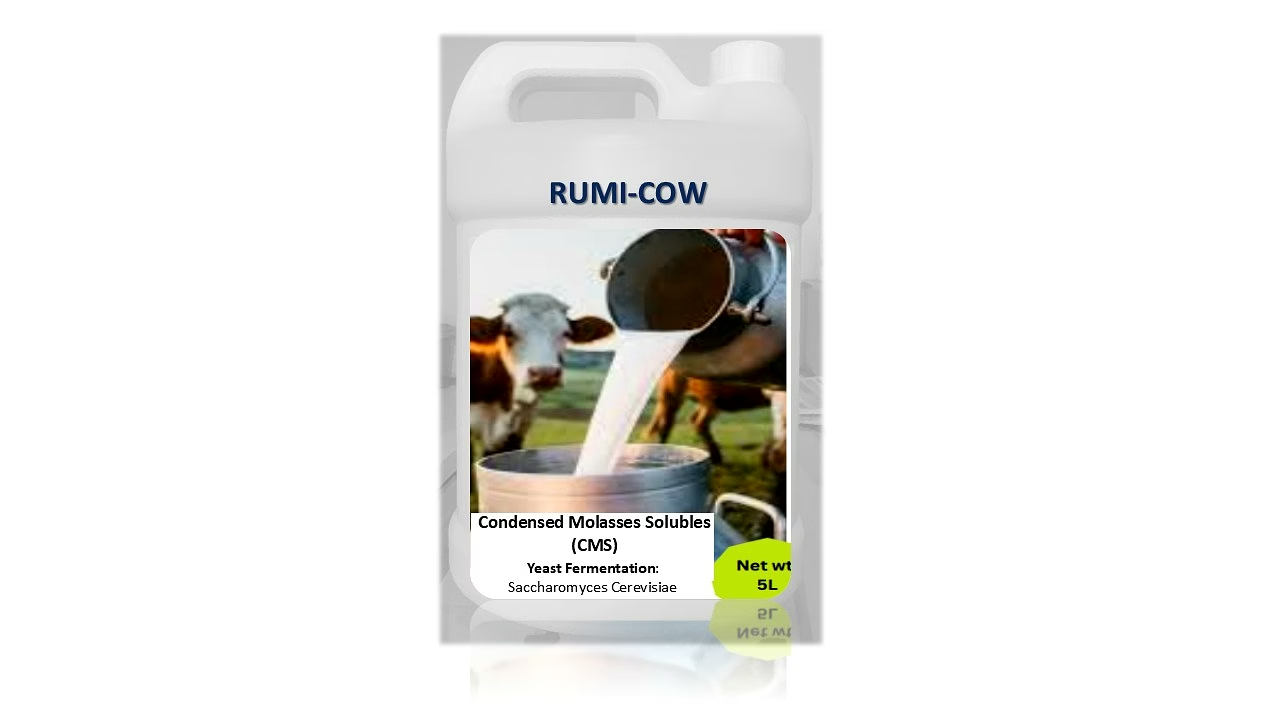
RUMI-COW is a premium natural co-product derived from the production of high-quality baker’s yeast, presented as a semi-viscous liquid with a mid to dark brown hue. It exhibits a faint molasses aroma complemented by a salty taste, making it an ideal nutritional supplement for livestock diets, especially for cattle. The liquid form of RUMI-COW allows it to integrate seamlessly with concentrates and roughages, enhancing the overall feed quality. Rich in fermentation metabolites, this product offers significant health and nutritional benefits, promoting better livestock performance. Additionally, RUMI-COW acts as an excellent adjunct in the manufacturing of pelleted feed, improving feed texture and consistency. To maintain its quality, RUMI-COW must be stored in sealed tanks or containers away from wide temperature fluctuations, with regular circulation during extended storage. The optimal shelf life is recommended not to exceed one year to ensure maximum efficacy and freshness.
Key Features
| Features | Description |
|---|---|
| Origin | Co-product from baker’s yeast production |
| Form | Semi-viscous liquid flowing easily at room temperature |
| Color | Mid to dark brown |
| Odor | Faint molasses smell |
| Taste | Salty |
| Nutritional Application | Safe for livestock diets, especially cattle; complements concentrates and roughages |
| Functional Benefit | Contains fermentation metabolites with health and nutritional benefits |
| Feed Processing Use | Useful adjunct in pelleted feed production |
| Storage Requirements | Store in sealed containers, avoid temperature fluctuations, circulate during long storage |
| Shelf Life | Recommended storage time up to 1 year |
| Attributes | Description |
|---|---|
| Total Solids (Dry Matter) | 47 - 55 % |
| Dissolved Solids | 47 - 55 % |
| Suspended Solids | 4 % |
| Specific Gravity at 32 °C | 1.2 - 1.3 |
| Gross Calorific Value (A.D.B.) | 2000 - 3000 kcal/kg |
| pH | 4.50 - 6.0 |
| Total Ash (A.D.B.) | 40 - 50 % |
| Crude Protein | 6 - 8 % |
| Vitamin E Content | 5 - 10.3 mg/100g |
| Vitamin B5 Content | 5 - 8.6 mg/100g |
| Vitamin B7 Content | 15 - 38.1 mg/100g |
| Vitamin B12 Content | 15 - 22.4 mg/100g |
| Microbial Content | Yeast & Moulds CFU/g |
| Potential Contaminants | Monitored for microbial safety |
*Disclaimer: The above description has been AI-generated and has not been audited or verified for accuracy. It is recommended to verify product details independently before making any purchasing decisions.
RUMI-COW contains metabolites of fermentation that contribute beneficially to livestock gut health and metabolic efficiency, potentially improving digestion and overall animal wellbeing.
Yes, RUMI-COW acts as a useful adjunct in pelleted feed production, aiding in pellet binding and enhancing feed quality due to its semi-viscous nature.
It must be stored in sealed tanks or containers, avoiding wide temperature fluctuations. Continuous circulation of the liquid during long-term storage is advised to maintain homogeneity and prevent degradation.
It is best used within one year of storage to ensure the stability of its nutritional and functional properties.
While it is especially formulated and beneficial for cattle diets, RUMI-COW can be safely used in other livestock diets provided it complements the existing feed regimen.
Country Of Origin: India
|
A natural co-product from the production of baker’s yeast. Semi-viscous liquid that flows easily at room temperature being mid to dark brown in colour. Typically has a faint molasses odour and salty taste. concentrates and roughages. Contains metabolites of fermentation that can have beneficial health / nutritional impacts. It can also act as a useful adjunct in the production of pelleted feed.
|
|
Main Parameters |
% |
|
mg/100g |
|
Typical Total Solids (Dry Matter) |
47 - 55 |
Vitamin E |
5 - 10.3 |
|
Typical Dissolved Solids |
47 - 55 |
Vitamin B5 |
5 - 8.6 |
|
Typical Suspended Solids |
4 |
Vitamin B7 |
15 - 38.1 |
|
Specific Gravity at 32 Degs C |
1.2 - 1.3 |
Vitamin B12 |
15 - 22.4 |
|
Gross Calorific Value (A. D. B.) |
2000 - 3000 kcal/kg |
||
|
pH |
4.50 -6.0 |
||
|
|
% |
Potential
Contaminants |
|
|
Total Ash (A. D. B.) |
40 - 50 |
CFU/g |
|
|
Crude Protein |
6 - 8 |
Yeast & Moulds |
<10.0 |
|
Total Amino Acids |
2 - 3.5 |
Yeast & Moulds |
<10.0 |
|
Crude Fibre |
<0.01 |
Salmonella |
Not Present |
|
Total Sugars |
<0.25 |
Coliform Bacteria |
Not Present |
|
Fulvic and Humic Acids |
20 - 28 |
|
|
|
Carbon (A.D.B.) |
15 - 22 |
µg/kg |
|
|
Potassium |
2 - 4.6 |
Arsenic |
Max 1.1 |
|
Magnesium |
0.2 - 0.5 |
Tin |
Max 250 |
|
Phosphorus |
0.2 - 0.4 |
Mercury |
Max 1 |
|
Calcium |
1 - 2.1 |
Lead |
Max 5 |
|
Sodium |
1 - 2.1 |
Copper |
Max 60 |
|
Sulphur |
1 - 2.9 |
Mycotoxins (AFL,T2,DON,ZEA) |
<1.0 |