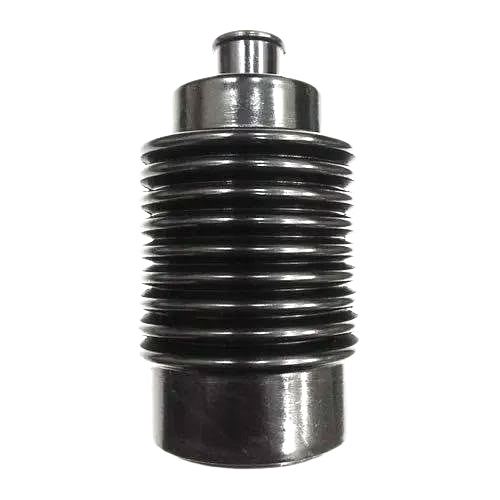
Rubber Metal Bonded Products are specialized industrial components designed to combine the resilient properties of rubber with the structural strength of metal. These products are used extensively in heavy machinery, automotive applications, and industrial equipment to provide vibration damping, noise reduction, and shock absorption. The bonding process ensures a durable, seamless interface between the rubber and metal components, enhancing the performance and life expectancy of machinery parts like mounts, bushings, pads, and isolators. Their resistance to oil, chemicals, and wear makes them extremely reliable in challenging operating conditions, making them an essential component for industries requiring enhanced operational durability and stability.
Key Features
| Features | Description |
|---|---|
| Material Composition | High-quality natural and synthetic rubber bonded to metal substrates |
| Bonding Technique | Advanced vulcanization and adhesive bonding methods ensuring strong adhesion |
| Application Areas | Used in automotive mounts, industrial machinery, vibration isolators, and shock absorbers |
| Durability | Resistant to wear, oil, chemical exposure, and extreme temperatures |
| Vibration Damping | Effectively reduces noise and vibration in mechanical systems |
| Customization | Available in various shapes, sizes, and rubber hardness as per client requirements |
| Operational Temperature Range | -40°C to 120°C depending on rubber grade |
| Corrosion Resistance | Metal parts are often treated or coated to prevent rust and corrosion |
| Attributes | Description |
|---|---|
| Rubber Types | Natural Rubber (NR), Neoprene (CR), Nitrile Rubber (NBR), EPDM, Silicone |
| Metal Types | Steel, Stainless Steel, Aluminum, Brass |
| Bonding Strength | Meets industrial standards with tensile strength up to 10 MPa |
| Maximum Operating Temperature | Up to 120°C depending on rubber material |
| Thickness Range | 1 mm to 50 mm rubber layer thickness available |
| Shape and Size | Customized dimensions based on customer specifications |
| Compliance Standards | ISO 9001 manufacturing process adherence |
| Surface Finish | Smooth or textured based on application needs |
*Disclaimer: The above description has been AI-generated and has not been audited or verified for accuracy. It is recommended to verify product details independently before making any purchasing decisions.
Common rubber types used include Natural Rubber, Neoprene, Nitrile Rubber, EPDM, and Silicone, selected based on the application requirements such as temperature resistance and chemical exposure.
Yes, these products can be customized in various shapes, sizes, and rubber hardness levels to meet specific industrial and automotive application needs.
Durability is achieved through advanced vulcanization and specialized adhesive bonding methods that form a strong and resilient interface between rubber and metal.
They are widely used across automotive, heavy machinery, industrial equipment, and construction sectors for vibration damping and noise reduction.
Yes, depending on the rubber compound used, these bonded products offer excellent resistance to oils, chemicals, and environmental factors ensuring longevity.