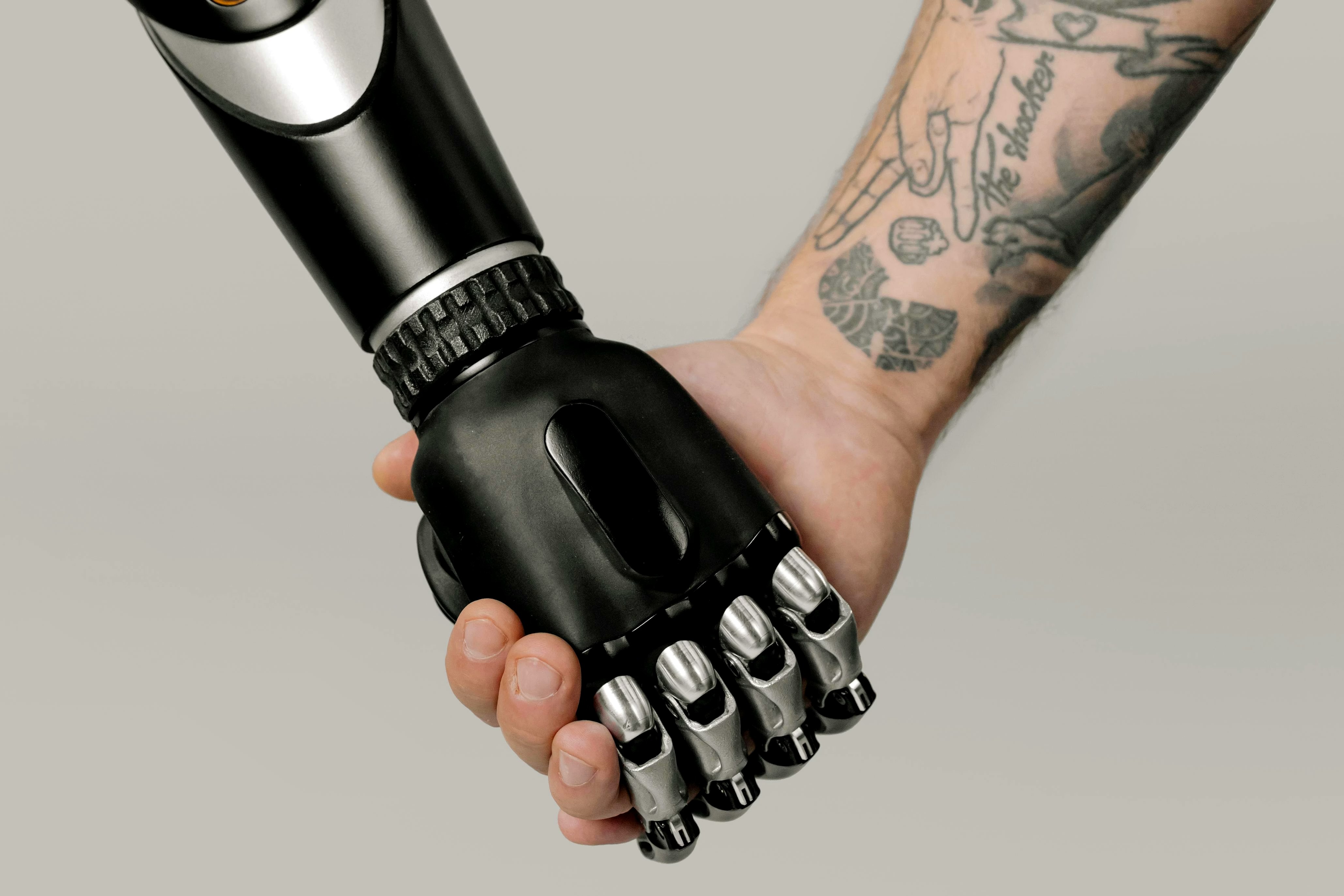
Indian Stalwart Global Sourcing Company offers advanced Prosthetics, designed to replace missing or non-functional body parts such as limbs with precision-engineered artificial devices. These prosthetics include upper-limb prostheses like myoelectric hands that use muscle-signal control and lower-limb prostheses, encompassing below-knee and above-knee prosthetic limbs with jointed knees and specialized feet. Made from lightweight, durable materials such as carbon fiber and titanium, these prosthetics incorporate cutting-edge microprocessor-controlled joints for improved mobility and natural movement. Our offerings extend to smart prosthetics that adapt to environmental changes, neural prosthetics enabled for brain-computer interface (BCI) control, and peripheral-nerve driven limbs providing intuitive, real-time control and sensory feedback. Custom-fitted by clinical prosthetists, our prosthetic devices ensure optimal comfort and functionality appropriate for each user's lifestyle and rehabilitation needs. Latest innovations like targeted muscle reinnervation (TMR) and osseointegrated limbs enhance signal clarity and natural sensation, empowering users with improved grasp, gait, and embodiment. With Indian Stalwart Global Sourcing Company, procure durable, high-performance prosthetics ideal for healthcare providers, rehabilitation centers, medical distributors, and orthotic specialists looking for factory direct pricing and export-ready products with MOQ 1 unit.
Key Features
| Features | Description |
|---|---|
| Product Type | Advanced Prosthetic Devices |
| Limb Types | Upper-limb (hands, arms), Lower-limb (feet, BK, AK) |
| Control Technology | Myoelectric, Microprocessor-controlled, Neural Interfaces |
| Materials | Carbon fiber, Titanium, Lightweight composites |
| Customization | Fitted by clinical prosthetists for personalized comfort and function |
| Smart Technology | Sensors and adaptive algorithms for terrain and movement |
| Neural Prosthetics | Brain-computer interfaces and peripheral nerve integration |
| Sensory Feedback | Artificial touch and proprioception via nerve stimulation |
| Rehabilitation Support | Designed to integrate with physical and occupational therapy |
| MOQ & Availability | Minimum Order Quantity - 1 unit, export-ready |
| Attributes | Description |
|---|---|
| Prosthetic Types | Upper-limb and lower-limb prosthetics |
| Materials Used | Carbon fiber, Titanium |
| Control Methods | Myoelectric signals, microprocessor control, neural interfaces |
| Integration Techniques | Targeted muscle reinnervation, osseointegration |
| Customization Process | Clinical prosthetist fitting with measurements and casting |
| Adaptability Features | Terrain adaptive sensors and microprocessors |
| Sensory Restoration | Neural feedback providing artificial touch and position sense |
| Applications | Rehabilitation centers, hospitals, orthotic providers |
| MOQ | 1 unit |
| Unit of Measure | UNT |
*Disclaimer: The above description has been AI-generated and has not been audited or verified for accuracy. It is recommended to verify product details independently before making any purchasing decisions.
These prosthetics feature myoelectric control utilizing muscle signals, microprocessor-controlled joints for enhanced movement, and neural interfaces including brain-computer interfaces and peripheral nerve integration for natural limb function.
Each prosthetic device is custom fitted by clinical prosthetists through precise measurements and casting of the residual limb, ensuring optimal comfort and alignment tailored to the user’s anatomy and lifestyle.
Yes, advanced models include neural prosthetics capable of delivering artificial touch and proprioception by stimulating nerves, allowing enhanced sensation and more natural movement control.
The prosthetics are made from lightweight, durable materials such as carbon fiber and titanium to offer strength, comfort, and longevity.
The minimum order quantity for these prosthetic devices is 1 unit, making it convenient for healthcare providers and distributors to procure as needed.
Country Of Origin: India
Looking for Prosthetics? Indian Stalwart Global Sourcing Company is the perfect hub for procurement requirements.
Prosthetics (or prostheses) are artificial devices that replace missing or non‑functional body parts, most commonly limbs, to restore mobility, function, or appearance.
What prosthetics are
A prosthesis can be an external device you wear, like a prosthetic arm or leg, or an internal implant such as a hip or knee replacement, artificial heart valve, or cochlear implant. They are used after injury, disease (diabetes or cancer), or congenital conditions where a limb or body part is missing or does not work properly.
Main types of limb prosthetics
Upper‑limb prostheses: artificial hands, arms, or fingers, ranging from simple cosmetic shells to advanced myoelectric (muscle‑signal‑controlled) hands.
Lower‑limb prostheses: devices for feet, below‑the‑knee (transtibial/BK), above‑the‑knee (transfemoral/AK), and higher levels, often incorporating jointed knees and specialized feet.
How modern prosthetics work :
Modern prosthetic limbs combine lightweight materials (like carbon fiber and titanium) with mechanical or microprocessor‑controlled joints for smoother walking or gripping. Some “smart” prostheses use sensors and microprocessors to adapt to terrain or movement, while myoelectric arms use tiny electrical signals from remaining muscles to control hand or wrist motion.
Getting and using a prosthesis :
Prostheses are designed and fitted by a clinical prosthetist, who takes measurements or casts and customizes the device to the person’s residual limb and lifestyle. After fitting, physical or rehabilitation therapy helps the user learn to walk or use the limb safely and efficiently, especially for leg prostheses.
If you tell me what specifically you want to know about prosthetics (e.g., how they’re made, costs in India, types for arms vs legs, or “smart” prosthetics), I can go into more detail tailored to you.
Neural prosthetics are now moving beyond simple “robotic” limbs toward devices that directly communicate with nerves, muscles, and even the brain, enabling far more natural movement, sensation, and even speech. Recent advances focus on better interfaces, smarter control, and improved integration with the body’s own control systems.
Brain–computer interfaces and cortical implants
Implanted cortical neuroprosthetics (ICNs) now allow people with paralysis or ALS to control cursors, tablets, or communication software directly from brain signals, using arrays such as Utah‑style intracortical electrodes and subdural “Utrecht”‑type grids.
New minimally invasive options like the Stentrode (a stent‑based electrode deployed in a brain blood vessel) and other intracortical microelectrode arrays from companies such as Paradromics and Precision Neuroscience are being tested in humans, aiming for high‑bandwidth, stable, long‑term communication.
Neural‑driven and “mind‑controlled” limbs
Several labs and companies are developing prosthetic limbs that decode brain or peripheral‑nerve signals to allow users to move arms or legs more intuitively, often using EEG or fNIRS combined with machine learning to classify movement intents.
Neural‑driven lower‑limb prostheses that interpret neural or muscle signals are showing improved walking patterns, smoother transitions (e.g., stairs, ramps), and more natural gait compared with conventional “microprocessor” legs.
Peripheral‑nerve and muscle‑based interfaces
New surgical techniques—such as targeted muscle reinnervation (TMR), regenerative peripheral nerve interfaces, and osseointegrated (bone‑anchored) limbs—allow amputees to send clearer signals to their prosthetic and receive more natural feedback.
Muscle‑implanted sensors and magnet‑based systems (tiny magnets in residual‑limb muscles) enable fine‑grained, real‑time hand or ankle control without full brain surgery, improving grasp function and comfort.
Restoring sensation and “embodiment”
Emerging neural prosthetics can deliver artificial touch or proprioception (sense of limb position) by stimulating nerves or spinal targets, which helps users feel where their prosthetic limb is and what it is touching.
Combined neural feedback and adaptive control algorithms make prostheses feel more like natural extensions of the body, reducing cognitive load and improving users’ sense of “ownership” over the device.
Inclusive of all taxes
You Save: 0
Chennai , India
Service Provider , Service Center, Manufacturer, Professional Services, Contractor, Retailer, Brand Owner, Distributor, Exporter, Importer, Wholesaler, Startup
GST- 33bbjpt6176p1zr