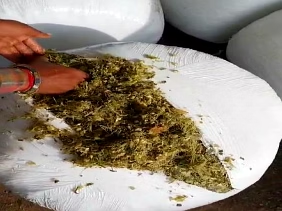
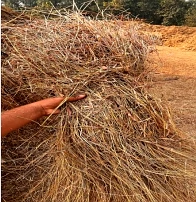
Paddy Straw, also known as Rice Straw, consists of the dried stalks of rice plants that remain after the grains have been harvested. Characterized by its golden to light brown color and long, fibrous texture, this agricultural byproduct has multiple industry applications primarily in the livestock and agricultural sectors. It is widely utilized as animal feed, particularly as a high-fiber roughage that aids in ruminant digestion but requires supplementation due to its low protein and energy content. Additionally, Paddy Straw serves as an efficient mulch and compost material, improving soil health by enhancing organic matter content and moisture retention. Its fibrous structure also finds usage in crafting biodegradable products and biofuel production. Given its limited nutritional profile, Paddy Straw is most beneficial when combined with nutrient-rich feeds to ensure balanced livestock diets. This product is sourced from rice farming regions with quality drying and processing methods to preserve its fibrous integrity and prevent mold or contaminants.
Key Features
| Features | Description |
|---|---|
| Material Type | Dried stalks of rice plants post-harvest |
| Color | Golden to light brown |
| Texture | Long, fibrous |
| Primary Uses | Animal feed, mulch, compost |
| Fiber Content | High, aids digestion in livestock |
| Protein Content | Low, requires supplementation |
| Energy Content | Low |
| Mineral Content | Trace amounts, insufficient as primary nutrient |
| Sourcing | Rice farming regions with quality processing |
| Suitability | Ideal for livestock roughage, soil conditioning, and bio-products |
| Attributes | Description |
|---|---|
| Dimensions | Variable length, typically several feet long stalks |
| Moisture Content | Below 15% (dry form) |
| Storage | Keep dry, protected from moisture and mold |
| Shelf Life | 6-12 months under proper storage conditions |
| Packaging | Bulk bales or loose bundles |
| Nutritional Profile | High fiber (~30-40%), Low protein (<5%), Low energy |
| Application Method | Direct feeding (with supplements), soil layering for mulch or composting |
| Transport | Bulk transport compliant with agricultural produce standards |
*Disclaimer: The above description has been AI-generated and has not been audited or verified for accuracy. It is recommended to verify product details independently before making any purchasing decisions.
Paddy Straw should be supplemented with higher protein feed sources such as legumes or commercial feed concentrates to provide complete nutrition for livestock.
Store Paddy Straw in a dry, well-ventilated area protected from moisture to prevent mold growth and ensure a shelf life of up to 12 months.
Yes, due to its high fiber content and carbon composition, Paddy Straw is an excellent composting material when combined with nitrogen-rich inputs for balanced decomposition.
Absolutely, it helps retain soil moisture, suppress weeds, and improve organic matter content which enhances overall soil fertility.
Paddy Straw is typically available in bulk as compressed bales or loose bundles suitable for transport and storage optimized for agricultural supply chains.
Paddy Straw / Rice Straw is the dried stalks of rice plants left after harvesting. It is typically golden to light brown, long, and fibrous. Commonly used as animal feed, mulch, compost material
Paddy Straw / Rice Straw has limited nutritional value but can be useful in certain applications:
Fiber Content: High in fiber, which aids in digestion for livestock.
Energy: Low energy content compared to other feed sources.
Protein: Low in protein, making it necessary to supplement with other feed to meet livestock nutritional needs.
Minerals: Contains trace amounts of minerals, but not sufficient to serve as a primary nutrient source.