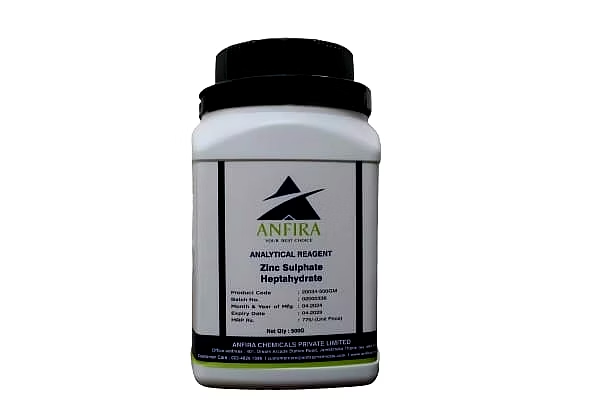
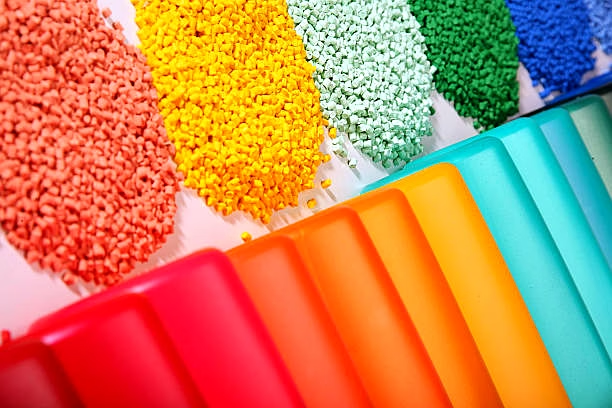
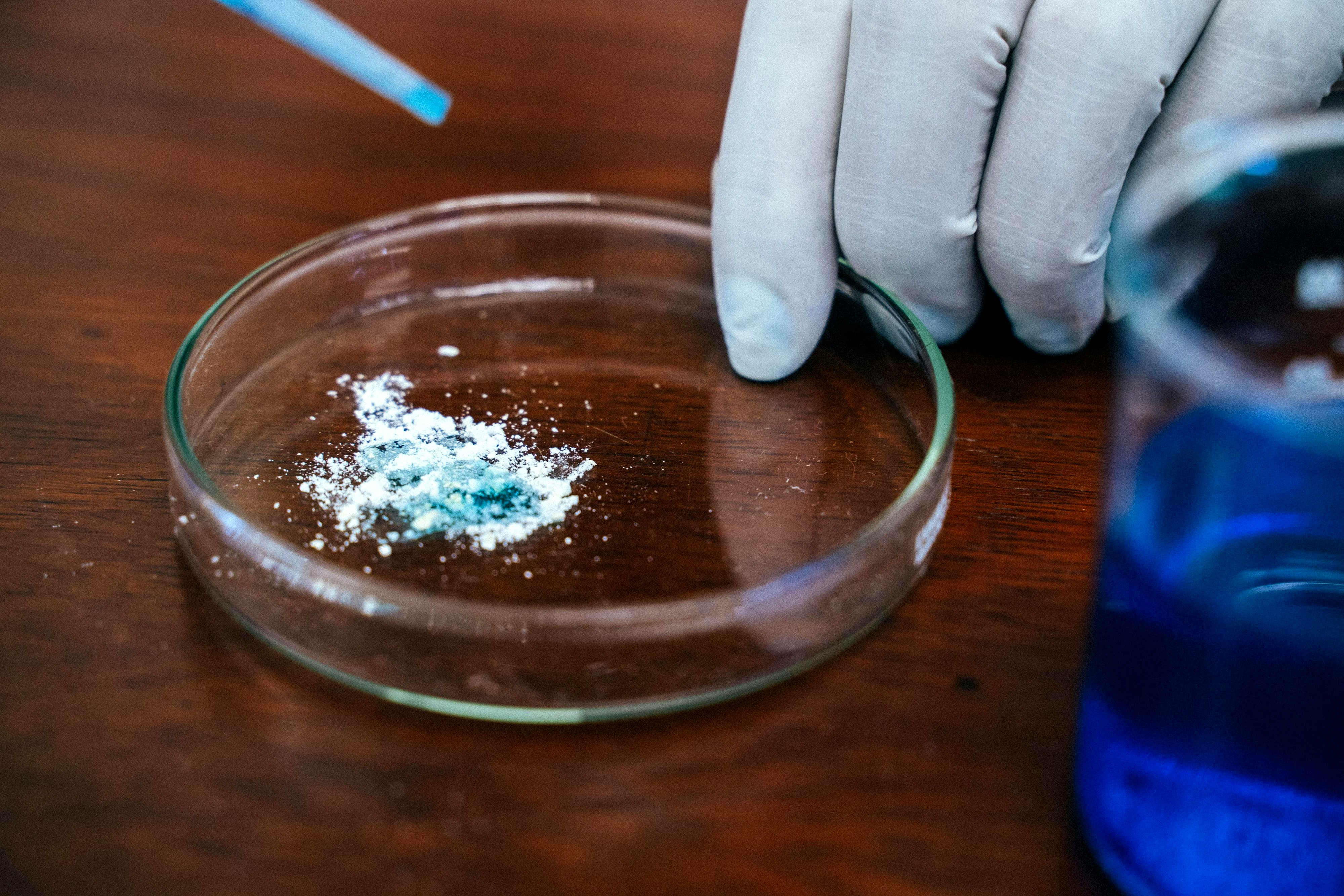
Organic Chemicals from Indian Stalwart Global Sourcing Company comprise a diverse range of carbon-based compounds essential to numerous industries. These compounds showcase immense structural variety with stable carbon chains and rings, functional groups influencing reactivity, and isomers providing different molecular arrangements. Known for their low melting and boiling points, limited water solubility, and distinct physical characteristics, these organic chemicals range from gases like methane to solid polymers. Their chemical properties include high reactivity vital for manufacturing pharmaceuticals, plastics, and fuels. Sourced both naturally and synthetically, these organic chemicals contribute to health benefits by minimizing synthetic pesticide use and enhancing nutrient profiles, along with promoting environmental sustainability by enriching soil health, reducing emissions, and supporting biodiversity. Ideal for agricultural, pharmaceutical, and industrial applications, these organic chemicals enable sustainable growth and innovative product development.
Key Features
| Features | Description |
|---|---|
| Structural Diversity | Stable carbon chains, rings, and multiple bonds enabling acyclic and cyclic formations |
| Functional Groups | Includes alcohols (-OH), aldehydes (-CHO), amines (-NH2) defining reactivity and properties |
| Physical State Variety | Range from gases (methane) to solids (polymers) with distinct melting/boiling points |
| Chemical Reactivity | Supports addition, substitution, and oxidation reactions essential for industrial synthesis |
| Health Benefits | Reduces synthetic pesticide exposure; enhances antioxidant and nutrient levels |
| Environmental Sustainability | Promotes soil health, lowers greenhouse gases, avoids GMOs and herbicides |
| Industrial Versatility | Applicable in pharmaceuticals, plastics, fertilizers, and sustainable agriculture |
| Source | Derived from natural sources like plants and fossil fuels or industrial synthesis |
| Attributes | Description |
|---|---|
| Chemical Composition | Carbon-based compounds covalently bonded with H, O, N, and others |
| Quantity Measurement Unit | Metric Ton (MT) |
| Minimum Order Quantity (MOQ) | 1 MT |
| Physical State | Varies - Gases, Liquids, and Solids depending on compound |
| Reactivity | High, due to presence of diverse functional groups |
| Source Origin | Natural (plants, fossil fuels) and synthetic industrial production |
| Industrial Applications | Pharmaceuticals, plastics, fuels, food, fertilizers, packaging |
| Environmental Benefits | Supports organic farming, reduces emissions, preserves biodiversity |
*Disclaimer: The above description has been AI-generated and has not been audited or verified for accuracy. It is recommended to verify product details independently before making any purchasing decisions.
These organic chemicals are mainly used in pharmaceuticals, plastics manufacturing, agriculture for fertilizers, and food production.
They are sourced both naturally from plants and fossil fuels, as well as synthesized industrially to meet diverse industrial needs.
They promote soil health, reduce greenhouse gas emissions, avoid chemical runoff, and support biodiversity by facilitating organic farming practices.
MOQ is 1 Metric Ton (MT), suitable for bulk industrial procurement.
Country Of Origin: India
Organic chemicals are compounds primarily composed of carbon atoms covalently bonded to hydrogen, oxygen, nitrogen, or other elements. They are the foundation of life and essential to modern materials, ranging from plastics and pharmaceuticals to fuels and food. With over 19 million known compounds, they are incredibly diverse.
Key Structural Features :
Carbon's ability to form stable chains, rings, and multiple bonds (C-C, C-H, C-O) enables immense structural diversity, including acyclic (straight or branched chains) and cyclic (alicyclic or heterocyclic) forms.
Functional groups, such as alcohols (-OH), aldehydes (-CHO), or amines (-NH2), dictate reactivity and properties across molecules.
Isomers share molecular formulas but differ in arrangement, leading to varied behaviors.
Physical Properties
These compounds often show low melting/boiling points, poor water solubility (due to covalent bonding), and qualitative traits like odor, color, or consistency.
They range from gases (e.g., methane) to solids (e.g., polymers), influenced by molecular weight and polarity.
Chemical Properties
High reactivity stems from functional groups, enabling reactions like addition, substitution, or oxidation essential for synthesis in pharmaceuticals, plastics, and fuels.
Most are flammable and derived from natural sources (plants, fossil fuels) or synthesized industrially.
Health Advantages :
Organic chemicals in food production avoid synthetic pesticides, reducing risks of hormone disruption, allergies, and cancer. They often contain higher nutrient levels like antioxidants (up to 68% more in crops) and beneficial fats in dairy.
Environmental Gains :
These compounds promote soil health through natural processes, lowering greenhouse gas emissions and chemical runoff compared to synthetic alternatives. Organic farming enhances biodiversity, microbial activity, and nutrient cycling without GMOs or herbicides.
Industrial Uses :
In manufacturing, organic chemicals provide versatility for plastics, pharmaceuticals, and fertilizers, boosting economic growth and product innovation. They improve crop yields sustainably in agriculture while enhancing everyday products like packaging.
Inclusive of all taxes
You Save: 0
Chennai , India
Service Provider , Service Center, Manufacturer, Professional Services, Contractor, Retailer, Brand Owner, Distributor, Exporter, Importer, Wholesaler, Startup
GST- 33bbjpt6176p1zr
Stay informed with the latest market trends, quality guides, and industry analysis