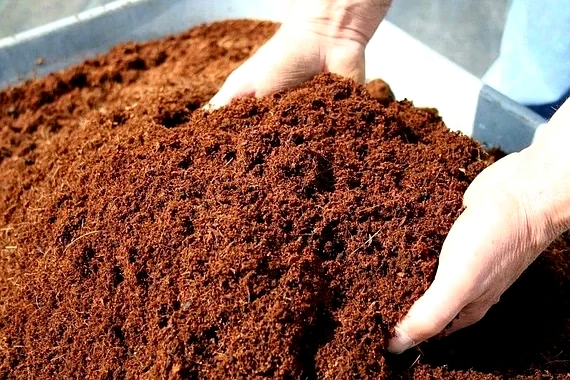
Organic Fertilizers are derived from natural sources such as compost, manure, seaweed, and plant residues. They enrich the soil with essential nutrients, improve soil structure, enhance microbial activity, and promote sustainable farming practices. Being eco-friendly and slow-releasing, they ensure long-term soil fertility and healthier crop growth.
Chemical Fertilizers, on the other hand, are scientifically formulated with specific ratios of nutrients like nitrogen (N), phosphorus (P), and potassium (K). They provide quick and targeted nutrition to plants, leading to faster growth, higher yields, and improved crop quality.
Together, organic and chemical fertilizers play a vital role in modern agriculture—balancing sustainability with productivity to meet growing food demands.
Organic Fertilizers are derived from natural sources such as compost, manure, seaweed, and plant residues. They enrich the soil with essential nutrients, improve soil structure, enhance microbial activity, and promote sustainable farming practices. Being eco-friendly and slow-releasing, they ensure long-term soil fertility and healthier crop growth.
Chemical Fertilizers, on the other hand, are scientifically formulated with specific ratios of nutrients like nitrogen (N), phosphorus (P), and potassium (K). They provide quick and targeted nutrition to plants, leading to faster growth, higher yields, and improved crop quality.
Together, organic and chemical fertilizers play a vital role in modern agriculture—balancing sustainability with productivity to meet growing food demands.