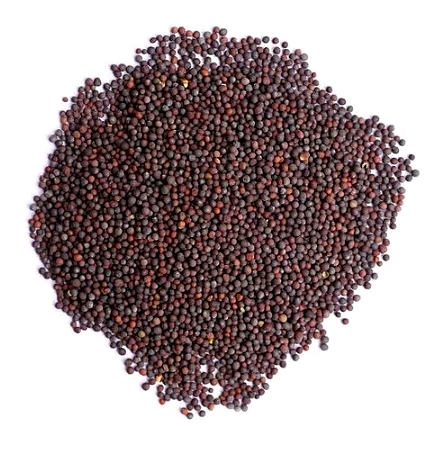
Mustard seeds, derived from the versatile oilseed crop, are prized for a multitude of culinary and industrial applications. Known for their distinct flavor profiles, mustard seeds are available in yellow, brown, and black varieties, each offering unique tastes that enhance a wide range of dishes. Rich in essential oils and proteins, these seeds are meticulously harvested from local farmers and undergo a rigorous grading process based on size, color, oil content, and purity. Our mustard seeds are packed in high-quality, moisture-resistant bags, adhering to strict hygiene protocols to preserve their integrity and ensure they meet international standards. The use of mustard oil is prevalent in Indian cooking, renowned for its pungent aroma and numerous health benefits, including promoting heart health and offering anti-inflammatory properties. Beyond culinary uses, mustard seeds serve as a natural bio-fertilizer and pest repellent, showcasing their multifaceted value. With a significant demand in both domestic and international markets, our premium mustard seeds remain a vital cash crop for farmers worldwide, ensuring quality and sustainability in every batch offered.
Key Features
| Features | Description |
|---|---|
| Variety | Yellow, Brown, and Black Mustard Seeds |
| Culinary Uses | Enhances dishes as a spice and is a key ingredient in mustard oil. |
| Health Benefits | Promotes heart health and exhibits anti-inflammatory properties. |
| Quality Assurance | Graded based on size, color, oil content, and purity. |
| Storage and Packaging | Packed in food-grade, moisture-resistant bags under strict hygiene protocols. |
| Agricultural Use | Serves as a bio-fertilizer and pest repellent. |
| Market Demand | High demand in domestic and export markets. |
| Attributes | Description |
|---|---|
| Grade | High-quality, graded for international standards |
| Oil Content | varies by variety, typically ranging from 30% to 40% |
| Packaging Type | Food-grade, moisture-resistant bags |
| Storage Conditions | Stored under regulated temperature and pest control protocols |
| Origin | Sourced directly from local farmers |
| Use Cases | Culinary, medicinal, industrial, agricultural |
| Shelf Life | Typically 1-2 years if stored properly |
*Disclaimer: The above description has been AI-generated and has not been audited or verified for accuracy. It is recommended to verify product details independently before making any purchasing decisions.
Mustard seeds are ideal for enhancing flavors in various dishes, and they are commonly ground into a spice or pressed for mustard oil, widely used in Indian cooking.
After harvesting, mustard seeds are graded based on size, color, oil content, and purity, ensuring compliance with international quality standards.
Mustard seeds are stored in food-grade, moisture-resistant bags and are subject to strict hygiene protocols, including pest control and temperature regulation.
Each variety has a distinct flavor profile: yellow seeds are mild, brown seeds are sharper, and black seeds provide a pungent taste, suitable for diverse culinary uses.
Yes, mustard seeds serve as a natural bio-fertilizer and pest repellent, making them valuable in sustainable agriculture.
HARVESTING
Mustard seeds are collected directly from local farmers following harvest.
GRADING
They are then graded based on size, color, oil content, and purity to meet international standards.
STORAGE
The mustard is carefully slotted into quality-based categories and packed in food-grade, moisture-resistant bags.
All handling and storage processes follow strict hygiene protocols, including pest control and temperature regulation, to maintain product integrity. Each batch is tested for quality parameters like moisture content, purity, and absence of contaminants.
This systematic approach ensures premium-quality mustard ready for global export markets.
Stay informed with the latest market trends, quality guides, and industry analysis