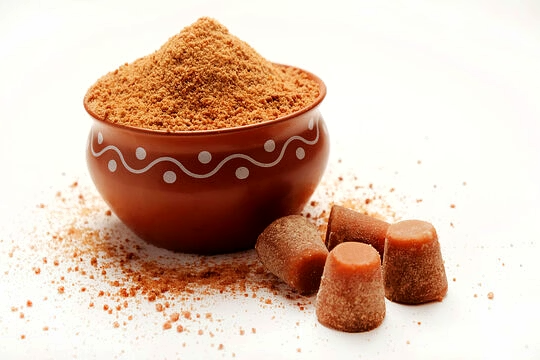
Molasses is a thick, dark brown syrup derived primarily from the sugar-making process and is known for its rich, robust flavor. It comes from the juice of crushed sugar cane or sugar beets, which is boiled down during the sugar production process to form sugar crystals, leaving behind the rich syrup known as molasses. Although molasses is less sweet than regular sugar, its rich flavor profile makes it an excellent ingredient in a variety of recipes. Additionally, molasses finds applications in various industrial sectors, including the distillation of rum, as an additive in building materials, and as a nutrient-rich soil amendment. It is also notable for its nutritional content, boasting vitamins and minerals such as vitamin B6, iron, calcium, magnesium, and potassium. There are three primary categories of molasses based on the boiling process: Light Molasses, Dark Molasses, and Blackstrap Molasses, each varying in sweetness, viscosity, and nutritional density, making this ingredient versatile for culinary and industrial uses.
Key Features
| Features | Description |
|---|---|
| Origin | Derived from crushed sugar cane or sugar beets. |
| Production Process | Formed during sugar-making by boiling down sugar syrup. |
| Nutritional Benefits | Rich in vitamins B6, iron, calcium, magnesium, and potassium. |
| Types | Includes Light, Dark, and Blackstrap molasses with varying flavors and nutrients. |
| Uses | Culinary, industrial applications, and as a soil amendment. |
| Attributes | Description |
|---|---|
| Product Type | Thick brown syrup |
| Flavor Profile | Rich and less sweet than sugar |
| Variability | Available in Light, Dark, and Blackstrap versions |
| Consistency | Viscous liquid |
| Primary Uses | Baking, brewing, animal feed, soil amendment, and construction materials |
*Disclaimer: The above description has been AI-generated and has not been audited or verified for accuracy. It is recommended to verify product details independently before making any purchasing decisions.
Molasses comes primarily in three varieties: Light Molasses, Dark Molasses, and Blackstrap Molasses, each differing in sweetness, color, and nutrient density.
Molasses is produced during the sugar-making process when sugar syrup is boiled down, resulting in sugar crystals that separate from the dark syrup.
Molasses is utilized in various industrial applications including rum distillation, as an additive in construction mortar, and as a nutrient-rich soil amendment.
Molasses is a nutritious option that provides vital vitamins and minerals, such as vitamin B6, iron, calcium, magnesium, and potassium.
Blackstrap molasses is seen as a healthy option due to its high content of essential nutrients and minerals, making it a popular choice among those looking to boost their nutritional intake.
Country Of Origin: India
Light Molasses:
This is the syrup produced from the first boiling of sugar syrup and is the lightest in color and flavor. It's also the least viscous and has the highest sugar content.
Dark Molasses:
This molasses is the result of a second boiling and is darker, thicker, and less sweet than light molasses. It has a deeper, richer flavor that hints at bitterness.
Blackstrap Molasses:
This is the syrup from the third boiling, making it the darkest and most viscous of the three. It has a distinct bitter flavor and is packed with nutrients like iron, calcium, and magnesium.