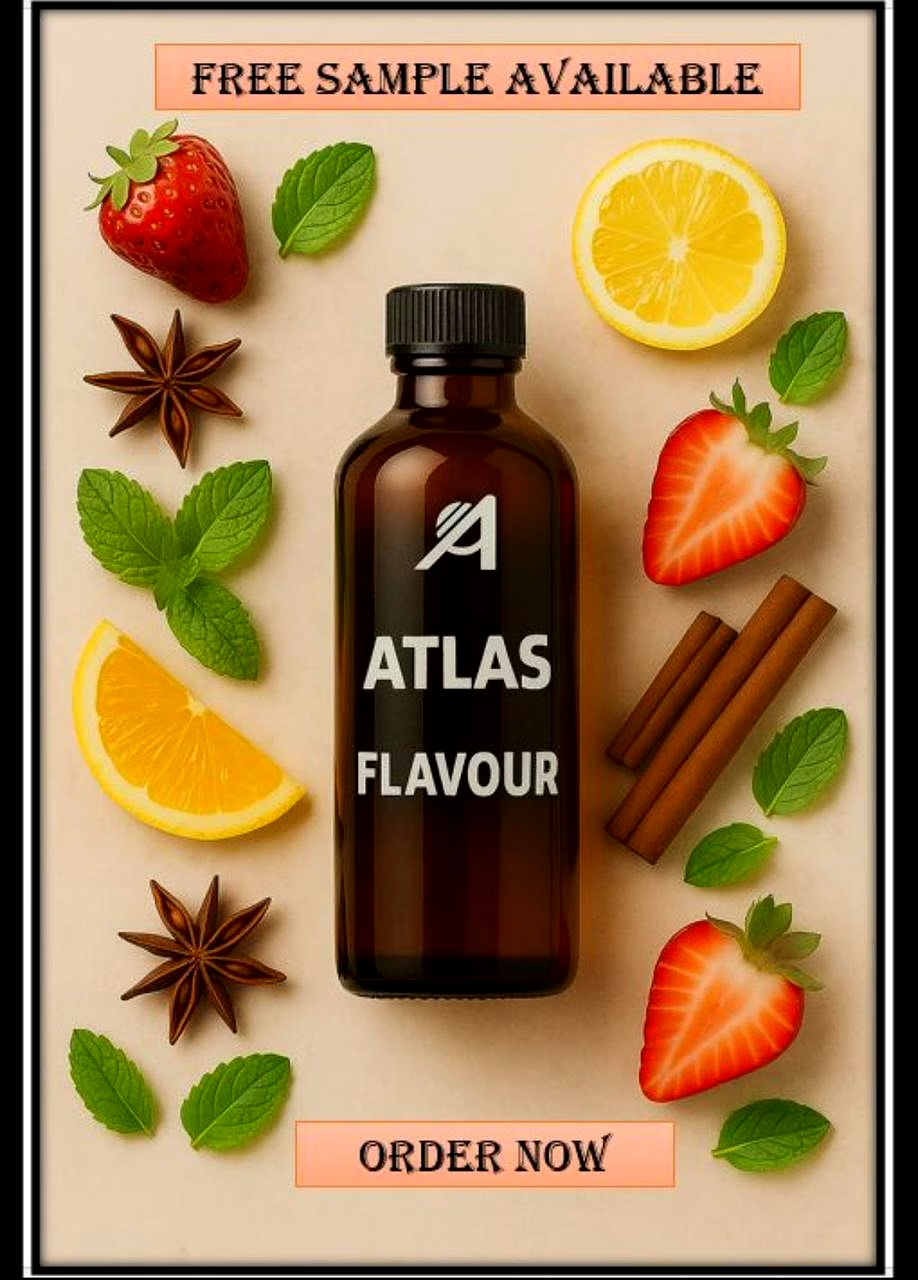
Liquid Flavours are expertly crafted artificial flavoring agents designed to replicate the taste and aroma of natural flavors in food and beverage products. These liquid concentrates are composed of synthetic chemical mixtures that mimic the sensory attributes of natural substances, providing consistent and enhanced flavor profiles. Ideal for food manufacturers, beverage companies, and product developers, these liquid flavours significantly enhance the sensory appeal of a wide range of consumables including bakery items, confectionery, dairy products, beverages, and snacks. Engineered with precision, liquid artificial flavours enable uniform flavor dispersion, improving taste experience while maintaining product stability and shelf life. These flavouring solutions offer versatility in application, ease of mixing, and cost-effectiveness compared to natural extracts, supporting scalable industrial food production with reliable flavor outcomes.
Key Features
| Features | Description |
|---|---|
| Form | Liquid Concentrate |
| Flavor Type | Artificial Synthetic Flavor |
| Usage | Food and Beverage Flavoring |
| Applications | Bakery, Confectionery, Dairy, Snacks, Beverages |
| Consistency | Uniform Flavor Distribution |
| Shelf Life | Extended Stability |
| Cost | Economical Alternative to Natural Flavours |
| Sensory Profile | Mimics Natural Taste and Aroma |
| Compliance | Manufactured under Food Safety Standards |
| Shelf Storage | Room Temperature or Refrigeration |
| Attributes | Description |
|---|---|
| Physical State | Liquid |
| Color | Varies based on flavor type |
| Packaging | Bottles or Bulk Containers |
| Dosage | Depends on formulation and product requirements |
| Solubility | Soluble in water and alcohol-based systems |
| Shelf Life Duration | Typically 12-24 months |
| Storage Conditions | Keep in cool, dry place away from direct sunlight |
| Flavor Intensity | Customizable per client needs |
| Origin | Synthetic / Laboratory-made |
| Compliance Standards | FSSAI, ISO Food Safety Standards (as applicable) |
*Disclaimer: The above description has been AI-generated and has not been audited or verified for accuracy. It is recommended to verify product details independently before making any purchasing decisions.
Liquid artificial flavours are designed to mimic the molecular structure of natural flavours closely, resulting in similar taste and aroma profiles. They generally do not add nutritional value but provide consistent and stable flavoring to products.
These liquid artificial flavours are ideally suited for food and beverage industries such as bakeries, confectionery, dairy products, snack manufacturers, and beverage production, where consistent flavor is critical.
Liquid artificial flavours should be stored in a cool, dry place away from direct sunlight. Depending on the formulation, refrigeration may be recommended to maintain flavor integrity over time.
Yes, the flavor intensity in liquid artificial flavours can be tailored to the specific requirements of the client and the food or beverage formulation.
Yes, these liquid artificial flavours comply with Indian food safety standards such as FSSAI guidelines and are produced following recognized quality protocols.
Country Of Origin: India
Artificial flavours are simply chemical mixtures synthetic flavours that taste and smell like natural flavours. The significant role of both the natural flavour and artificial flavour is to add flavouring to the food rather than nutrition.
The perception of flavor comes with our sense of taste and smell. The choice of food depends on the flavor that our taste buds demand. Our taste bud consists of sensations such as salty, sweet, bitter, sour, and umami. There are generally three types of flavors such as artificial flavor, natural flavor, and herb and spices. Through this blog, we will learn what are artificial flavours and their related components and benefits.
Creating a flavor for a food from scratch is a process of art. Flavors are usually a combination of chemicals. Although it is said that natural flavors are better but nowadays artificial flavors are made with such advanced techniques that both types of flavors have similar chemical structures. The difference between natural and artificial flavors lies in the source of raw materials. Both types of flavors have a similar molecular level and nutritional value.