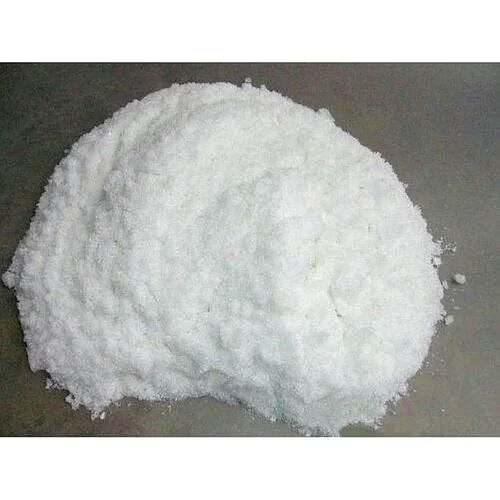
Lamotrigine USP is a high-quality pharmaceutical-grade active pharmaceutical ingredient specifically formulated for the treatment of various neurological and psychiatric disorders. It is primarily indicated for managing partial seizures, primary generalized tonic-clonic seizures, maintenance therapy in bipolar I disorder, and Lennox-Gastaut syndrome. Additionally, Lamotrigine USP is recognized for off-label applications including treatment of acute bipolar depression, fibromyalgia, schizophrenia, and unipolar depression. The compound works by stabilizing neuronal membranes and modulating glutamate release through inhibition of voltage-sensitive sodium channels, thereby reducing excessive neuronal firing associated with seizures and mood instability. This API meets stringent USP standards ensuring purity, potency, and consistent pharmacological effects. It is suitable for pharmaceutical manufacturers and research institutions focused on developing antiepileptic and mood-stabilizing therapies. Its detailed activity profile covers mechanism of action, pharmacokinetics, safety considerations such as adverse event profiles, contraindications, and necessary patient monitoring protocols. Lamotrigine USP supports advanced interprofessional healthcare management by enabling effective control of seizure disorders and mood stabilization with a favorable tolerability profile.
Key Features
| Features | Description |
|---|---|
| Chemical Standard | USP (United States Pharmacopeia) Certified |
| Primary Indications | Partial Seizures, Primary Generalized Tonic-Clonic Seizures, Bipolar I Disorder Maintenance, Lennox-Gastaut Syndrome |
| Off-label Uses | Acute Bipolar Depression, Fibromyalgia, Schizophrenia, Unipolar Depression |
| Mechanism of Action | Inhibition of Voltage-Sensitive Sodium Channels, Reduction of Glutamate Release |
| Pharmacological Class | Antiepileptic and Mood Stabilizer |
| Compliance Standard | USP Certified for Purity and Quality |
| Suitability | Formulation by Pharmaceutical Companies and Research Use |
| Adverse Effects Profile | Includes Risk of Skin Rash, CNS Effects, Requires Monitoring |
| Form | Active Pharmaceutical Ingredient (API) Powder |
| Packing Options | Customizable Packaging per Manufacturer Requirements |
| Attributes | Description |
|---|---|
| Chemical Name | Lamotrigine |
| Molecular Formula | C9H7Cl2N5 |
| Molecular Weight | 256.09 g/mol |
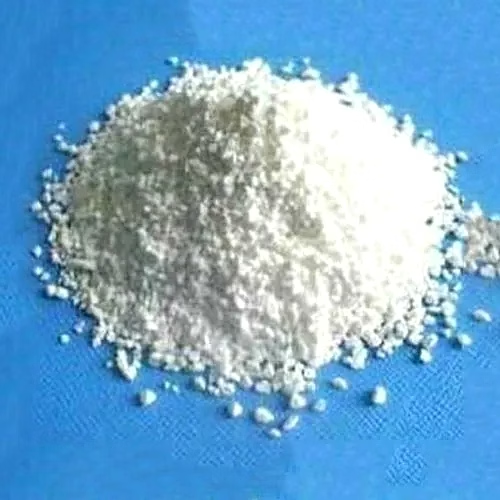
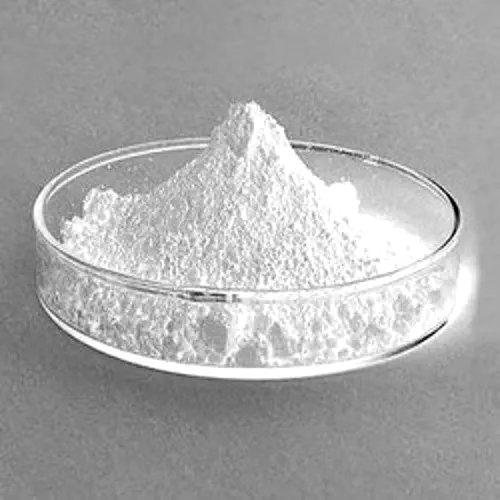
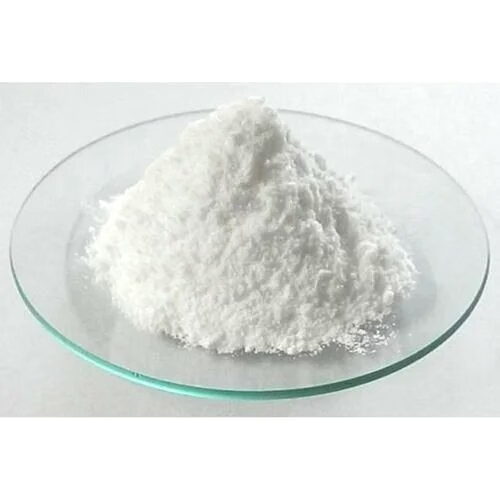
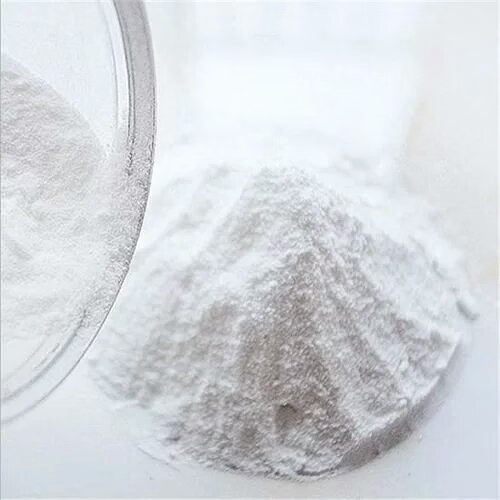
| Appearance | White to Off-White Crystalline Powder |
| Purity | ≥ 99% USP Standard |
| Assay Method | HPLC (High Performance Liquid Chromatography) |
| Solubility | Sparingly soluble in Water, Soluble in Organic Solvents |
| Storage Conditions | Store in a Cool, Dry Place Away from Light |
| Shelf Life | Typically 24 Months from Manufacture Date |
| Pharmacopoeia Reference | United States Pharmacopeia (USP) |
*Disclaimer: The above description has been AI-generated and has not been audited or verified for accuracy. It is recommended to verify product details independently before making any purchasing decisions.
Lamotrigine USP is certified to meet or exceed 99% purity as per United States Pharmacopeia standards, ensuring it is suitable for pharmaceutical formulation.
Yes, besides its primary use for seizure control and bipolar I disorder maintenance, Lamotrigine USP is also used off-label for treating acute bipolar depression, fibromyalgia, schizophrenia, and unipolar depression.
Lamotrigine USP should be stored in a cool, dry place away from direct light to maintain stability and potency over its typical 24-month shelf life.
Lamotrigine USP is provided as an active pharmaceutical ingredient (API) and is intended for use by pharmaceutical manufacturers for formulation; it is not for direct consumption.
Patients should be monitored for potential adverse reactions including skin rash and CNS effects; the API supports formulation with monitoring guidelines as per interprofessional healthcare protocols.
Lamotrigine can be used to treat the following partial seizures, primary generalized tonic-clonic seizures, bipolar I disorder maintenance and Lennox-Gastaut syndrome. Off-label uses include treating acute bipolar depression, fibromyalgia, schizophrenia, and unipolar depression.
Lamotrigine can be used to treat the following partial seizures, primary generalized tonic-clonic seizures, bipolar I disorder maintenance and Lennox-Gastaut syndrome. Off-label uses include treating acute bipolar depression, fibromyalgia, schizophrenia, and unipolar depression. This activity covers lamotrigine, including mechanism of action, pharmacology, adverse event profiles, eligible patient populations, contraindications, monitoring, and highlights the interprofessional team's role in managing lamotrigine therapy