• Key Features & Attributes
  • Ratings & Reviews
  • Know your Supplier
  • Product description from supplier

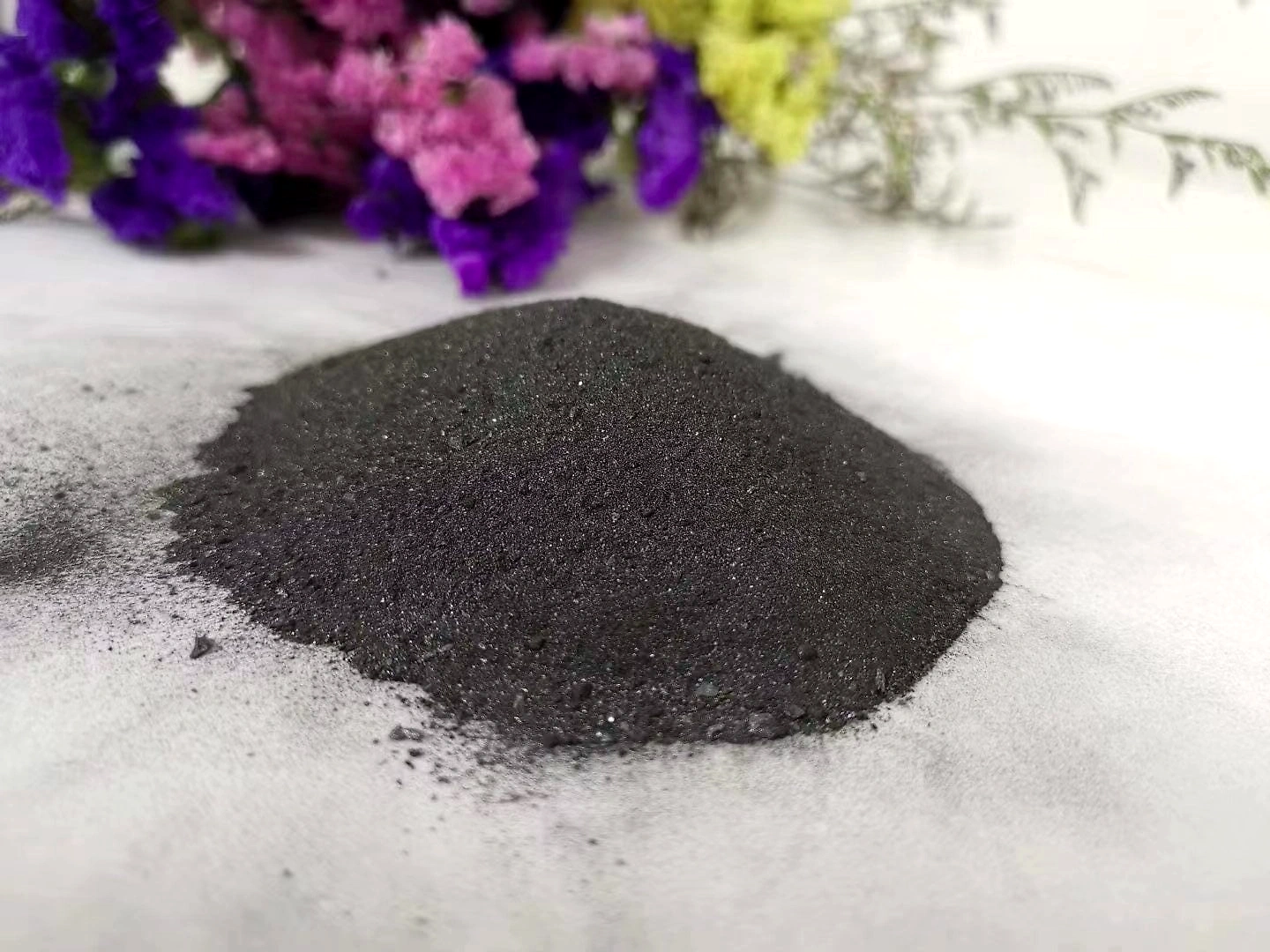
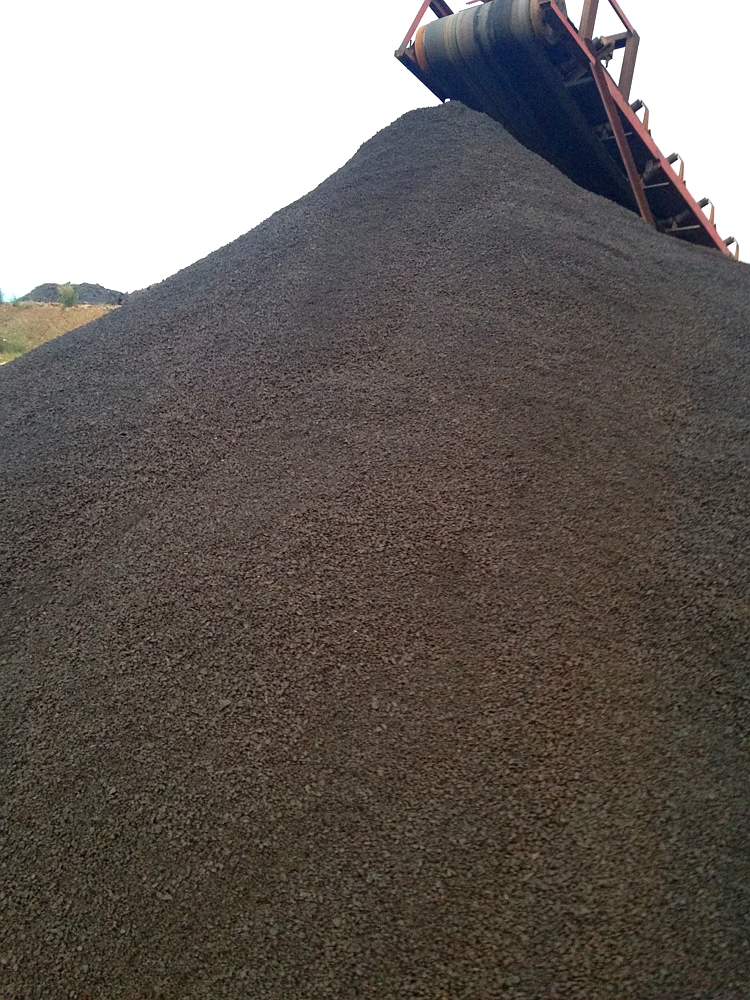
Iron Ore Fines

Inclusive of all taxes

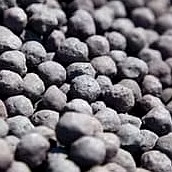
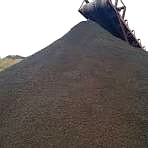
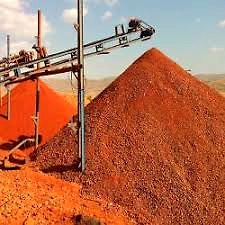
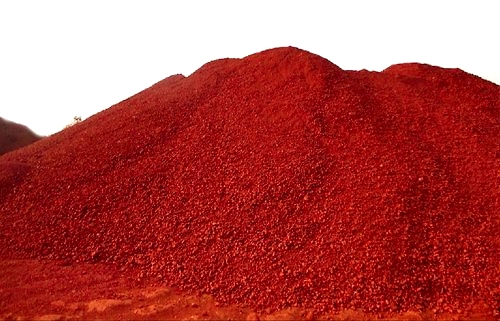
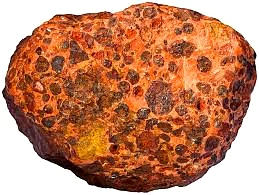
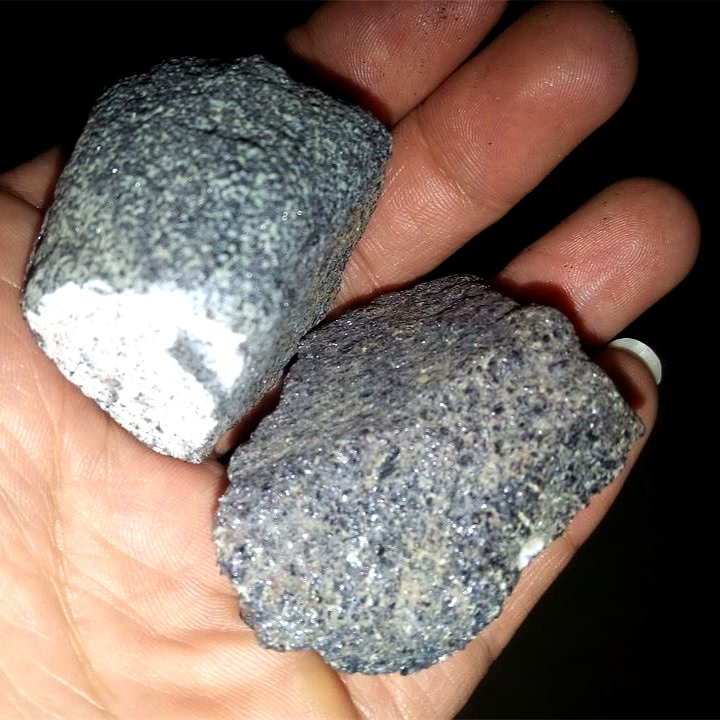
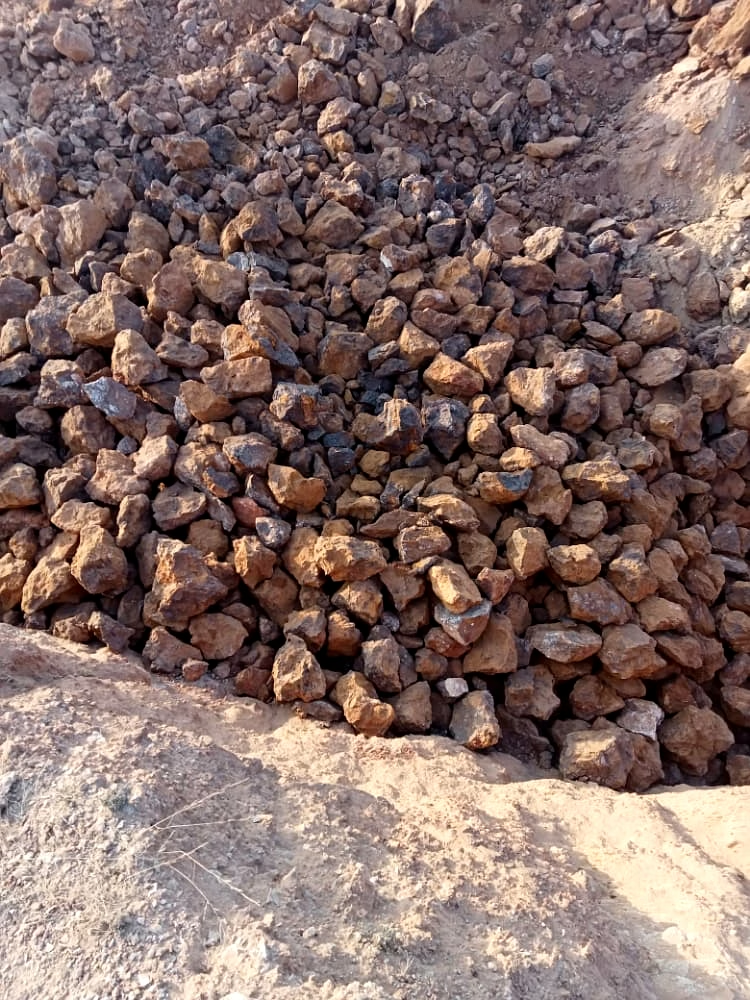
Iron Ore Fines are minute particles of iron ore less than 6mm in size, predominantly composed of iron oxides with iron content ranging between 58% and 65%. These fines are a significant raw material for the steel-making industry but require agglomeration, via sintering or pelletizing, to be suitable for use in blast furnaces due to their fine particle size. The quality of iron ore fines is determined by their iron content and levels of impurities such as silica, alumina, phosphorus, and sulfur, which affect both their performance in steel production and market value. Moisture content varies between 5% and 12%, influenced by the source and handling methods. Produced mainly through mining, crushing, and screening, iron ore fines from major producers like Australia, Brazil, and India play a vital role in the global steel supply chain by enabling efficient and cost-effective iron extraction after agglomeration. Proper handling and logistics mitigate dust generation and transport challenges associated with these fines.

Key Features

Features Description
Particle Size Less than 6 mm
Iron Content 58% - 65% Fe
Primary Composition Iron oxides (Fe2O3, Fe3O4)
Impurity Types Silica (SiO2), Alumina (Al2O3), Phosphorus (P), Sulfur (S)
Moisture Content 5% - 12% depending on source and handling
Agglomeration Requirement Sintering or Pelletizing before blast furnace use
Main Global Producers Australia, Brazil, India
Usability Raw material for steelmaking after agglomeration
Handling Considerations Dust generation and logistics challenges
Application Steel manufacturing and iron production
Attributes Description
Particle Size Range Less than 6 mm
Iron Content Range 58% - 65% Fe
Silica Content Variable, controlled impurity
Alumina Content Variable, affects furnace productivity
Phosphorus Content Minimal; controlled due to steel quality impact
Sulfur Content Low to prevent steel quality degradation
Moisture Content 5% - 12%
Agglomeration Methods Sintering and Pelletizing
Origin Mining, Crushing, Screening processes
Form Fine particles not directly usable
Suitability Suitable for sintering and pelletizing plants

*Disclaimer: The above description has been AI-generated and has not been audited or verified for accuracy. It is recommended to verify product details independently before making any purchasing decisions.

Be the first to write a review

The iron content in these iron ore fines typically ranges from 58% to 65% Fe.

Due to their fine particle size, iron ore fines lack the permeability required in blast furnaces and hence must undergo agglomeration via sintering or pelletizing before usage.

Silica, alumina, phosphorus, and sulfur are key impurities that impact the steel quality and sintering or pelletizing efficiency and must be carefully controlled.

The moisture content can range between 5% to 12%, affecting handling, transport, and the agglomeration process performance.

Sintering and pelletizing are the two standard agglomeration methods used to convert fines into usable feedstock for blast furnaces.

They are suitable for steel plants equipped with sintering or pelletizing facilities but not for direct feed into traditional blast furnaces.

  • Incorporation Type

  • GST

  • GST Registration Date

  • Number of Employees

  • Import Export Code (IEC)

  • Year of Establishment

  • Nature of Business

  • GlobalLinker Member Since

Country Of Origin: India

Iron ore fines are small particles of iron ore, typically less than 6 mm in size, produced during mining, crushing, and screening processes. They are rich in iron content, generally ranging between 58% to 62% Fe, and are a key raw material in the steel-making industry. Due to their fine size, they are not directly usable in blast furnaces and are usually agglomerated through sintering or pelletizing before use.

Iron ore fines are widely traded globally, especially by major producers like Australia, Brazil, and India. Their quality, determined by iron content and impurity levels (such as silica, alumina, and phosphorus), significantly affects their market value. Environmental and logistical considerations, such as dust generation and handling issues, also play a role in their transport and usage.

Overall, iron ore fines are a vital component in the global steel supply chain, contributing to efficient and cost-effective steel production.


Composition


Iron ore fines are primarily composed of iron oxides (Fe₂O₃, Fe₃O₄), with iron content typically ranging from 58% to 65% iron (Fe). The remaining composition consists of various impurities like:


Silica (SiO₂): Often present as quartz, silica lowers the iron ore's overall quality and is a major impurity to be controlled.


Alumina (Al₂O₃): Another impurity that can affect the quality of the sintered or pelletized product. Higher alumina content can impact the blast furnace process by reducing furnace productivity.


Phosphorus (P): Even small amounts of phosphorus can negatively impact steel quality, making it a critical impurity in iron ore fines.


Sulfur (S): Another undesirable impurity, which can lower the quality of steel produced.


Moisture content: This can range from 5-12% depending on the source and handling of the fines.


The presence of these impurities determines the overall quality and usability of the iron ore fines in steelmaking processes.


Role in Steelmaking


Iron ore fines cannot be directly used in blast furnaces due to their fine particle size. Instead, they must undergo an agglomeration process to form larger, more easily processed materials like sinter or pellets. These processes are essential for increasing the permeability of the material in the blast furnace and enhancing the efficiency of iron production.


Sintering: This is a thermal process that fuses the fines into larger particles, improving their size and mechanical properties. Sinter is produced in a sintering furnace by heating a mixture of fines, flux, and coke.


Pelletizing: Another method for agglomerating fines is pelletization, where the fines are mixed with water, binder, and sometimes additives to form pellets, which are then heated to form hardened balls that can be directly used in a blast furnace.


Metallic Minerals

Iron Ore

Iron Ore Fines

Iron Ore Particles

Steelmaking Raw Material

Sintering Iron Ore Fines

Pelletizing Iron Ore

Iron Ore Impurities

Industrial Iron Ore Fines

High Iron Content Ore Fines

Iron Ore Fines

Inclusive of all taxes

You Save: 0

Send Inquiry
anjaney exports

Ahmedabad , India

Exporter, Importer, Wholesaler

GST- 24abffa5182m2z8

Trust Mark

Trust Mark

  • Secure
    Transaction

  • Free
    Delivery

  • Day
    Dispatch

Report a problem with this product