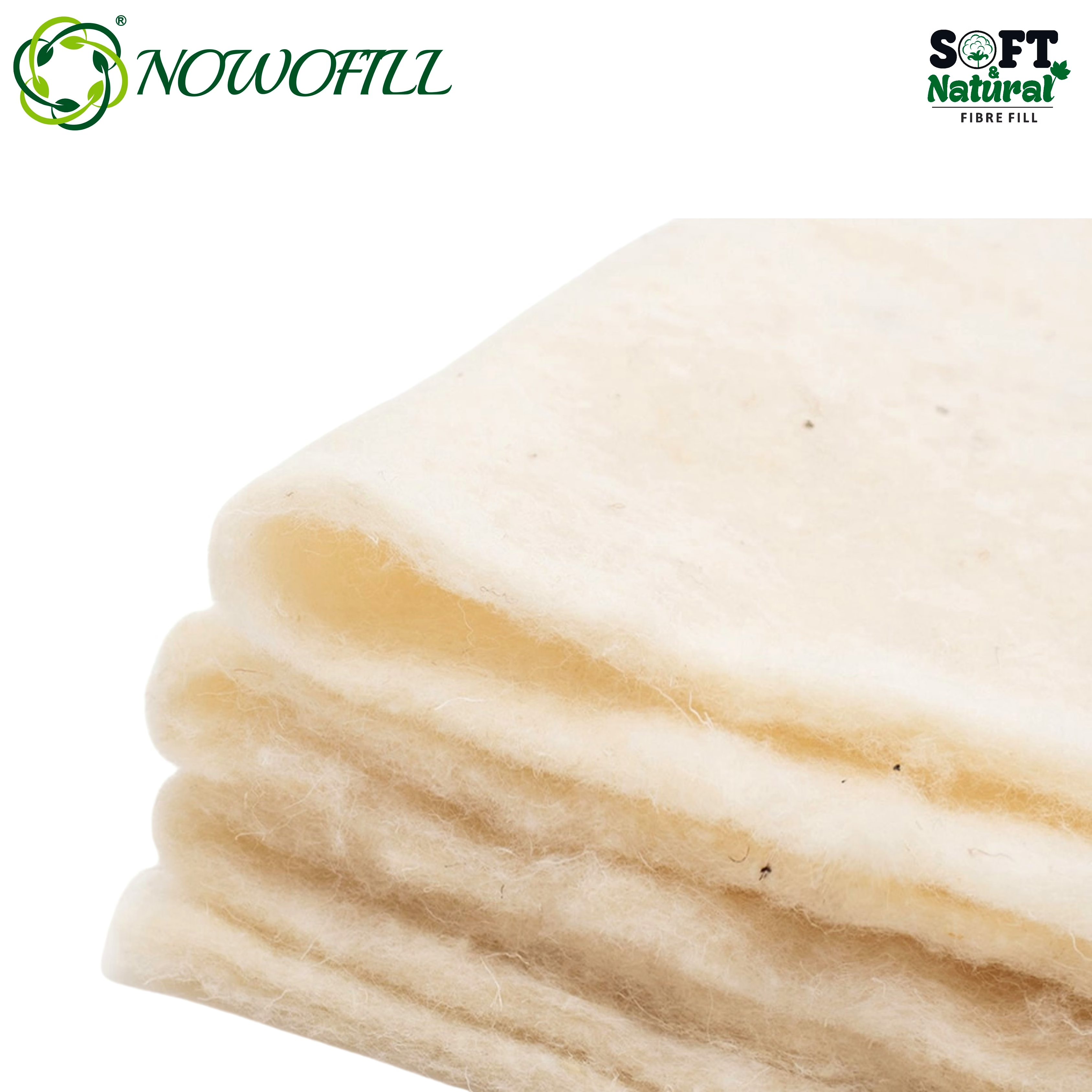
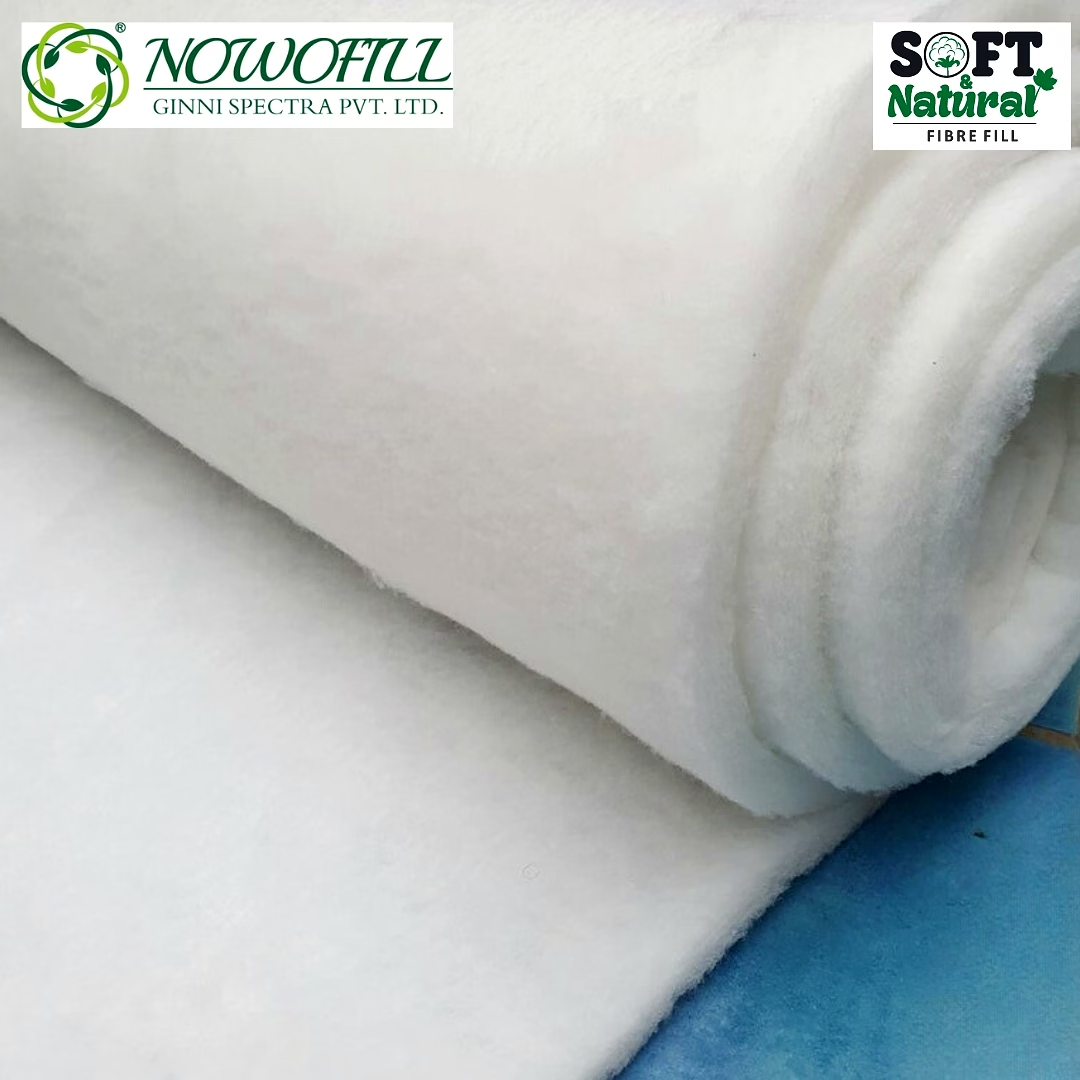
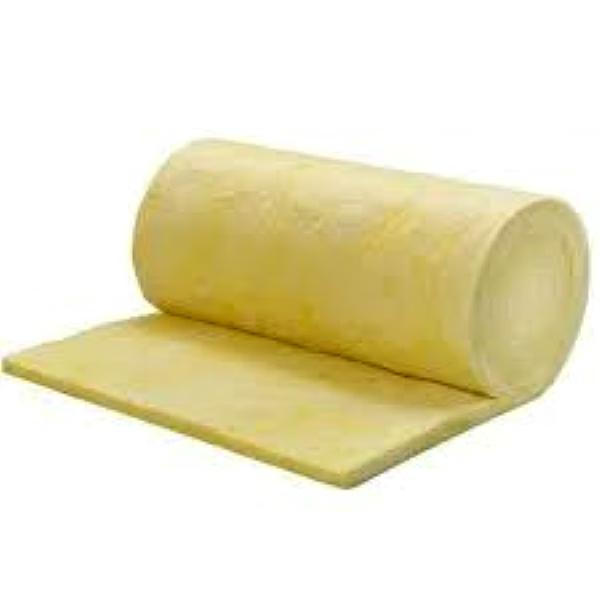
Glass Wool Insulation is a high-performance thermal insulating material made from fine glass fibers arranged with a binder to form a wool-like texture. Designed specifically for industrial and commercial applications, this insulation comes in convenient yellow rolls measuring 258 square feet, with thickness options ranging from 20 to 40 mm. Engineered to withstand temperature resistance from 0 up to 200 degrees Celsius, this glass wool effectively traps countless small air pockets within its fiber matrix to deliver exceptional thermal insulation. Its roll shape facilitates easy installation on walls, roofs, pipes, HVAC systems, and other industrial surfaces requiring thermal management. The product is ideal for reducing heat loss, improving energy efficiency, and providing sound attenuation in manufacturing plants, warehouses, and large-scale commercial buildings. Backed by a production heritage dating to the pioneering 1933 Owens-Illinois Glass Company patent, this modern glass wool insulation ensures durability, mechanical stability, and consistent insulating performance tailored to professional requirements in the B2B sector.
Key Features
| Features | Description |
|---|---|
| Material Composition | Fibers of glass arranged with binder into wool-like texture |
| Thickness Range | 20-40 mm |
| Size Coverage | 258 square feet per roll |
| Shape | Rolls |
| Color | Yellow |
| Maximum Temperature Resistance | 0 to 200 °C |
| Thermal Insulation | High thermal insulation due to trapped air pockets |
| Application | Suitable for walls, pipes, HVAC systems, industrial & commercial insulation |
| Origin of Production Method | Developed from Owens-Illinois Glass Co. patented process 1933 |
| Installation | Easy to handle and install in roll form |
| Attributes | Description |
|---|---|
| Thickness | 20-40 mm |
| Size per Roll | 258 sqft |
| Shape | Rolls |
| Color | Yellow |
| Temperature Resistance | 0-200 °C |
| Thermal Conductivity | Low, due to air pockets within fiber structure |
| Binder Type | Specialized binder for durability and fiber cohesion |
| Form | Flexible roll for easy installation |
*Disclaimer: The above description has been AI-generated and has not been audited or verified for accuracy. It is recommended to verify product details independently before making any purchasing decisions.
The Glass Wool Insulation rolls can resist temperatures ranging from 0 to 200 degrees Celsius, making them suitable for diverse industrial applications.
These glass wool insulation rolls are available in thicknesses ranging between 20 and 40 millimeters, offering flexibility according to insulation requirements.
The insulation is provided in roll form, each covering an area of 258 square feet, which facilitates efficient and easy installation on various surfaces.
The insulating capability arises from countless small air pockets trapped between glass fibers, significantly reducing heat transmission.
Yes, these yellow glass wool rolls are designed to meet industrial standards and are ideal for insulating HVAC systems, pipes, and commercial building structures.
Country Of Origin: India
Thickness : 20-40 mm
Size : 258 sqft
Shape : Rolls
Color : Yellow
Max Temperature Resistance : 0-200 degree Celsius
Glass wool is an insulating material made from fibres of glass arranged using a binder into a texture similar to wool. The process traps many small pockets of air between the glass, and these small air pockets result in high thermal insulation properties. Glass wool is produced in rolls or in slabs, with different thermal and mechanical properties. It may also be produced as a material that can be sprayed or applied in place, on the surface to be insulated. The modern method for producing glass wool was invented by Games Slayter while he was working at the Owens-Illinois Glass Co. (Toledo, Ohio). He first applied for a patent for a new process to make glass wool in 1933.[1]
Thickness : 20-40 mm
Size : 258 sqft
Shape : Rolls
Color : Yellow
Max Temperature Resistance : 0-200 degree Celsius
Glass wool is an insulating material made from fibres of glass arranged using a binder into a texture similar to wool. The process traps many small pockets of air between the glass, and these small air pockets result in high thermal insulation properties. Glass wool is produced in rolls or in slabs, with different thermal and mechanical properties. It may also be produced as a material that can be sprayed or applied in place, on the surface to be insulated. The modern method for producing glass wool was invented by Games Slayter while he was working at the Owens-Illinois Glass Co. (Toledo, Ohio). He first applied for a patent for a new process to make glass wool in 1933.[1]