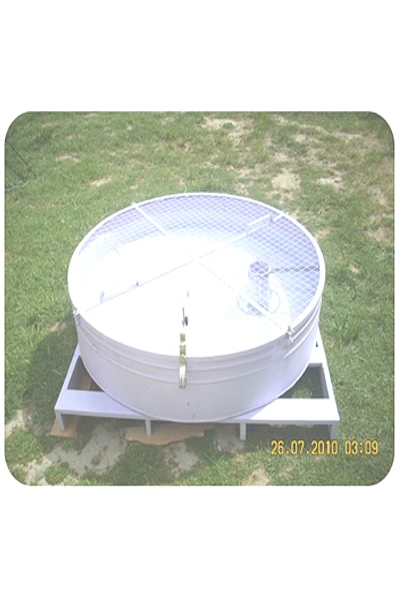
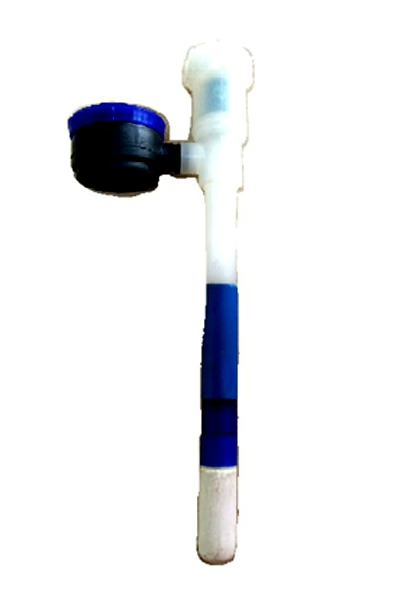
The Evaporation PAN (GI) is a galvanized iron pan designed specifically for precise measurement of water evaporation rates. This specialized instrument, commonly known as an evaporimeter or atmometer, helps agricultural professionals, hydrologists, and meteorologists determine the daily loss of water due to evaporation from a defined surface area. Built with durable galvanized iron, the pan offers resistance to corrosion and harsh environmental conditions, making it suitable for long-term field monitoring. Its design facilitates accurate collection of evaporation data, which is critical for irrigation planning, reservoir management, and hydrological research. The Evaporation PAN (GI) enables users to measure evaporation depth in millimeters per day, assisting in effective water resource management and optimizing agricultural water use. Despite some limitations in representing complex natural evaporation processes, this product remains a vital tool for assessing evaporative water loss under controlled surface area conditions.
Key Features
| Features | Description |
|---|---|
| Material | Galvanized Iron (GI) for corrosion resistance |
| Type | Evaporation Pan (Evaporimeter/Atmometer) |
| Application | Measures evaporation rate from water surface |
| Durability | Suitable for long-term outdoor use in various weather conditions |
| Measurement Unit | Evaporation depth in millimeters per day (mm/day) |
| Use Case | Agriculture, hydrology, reservoir and irrigation system management |
| Design | Open pan to collect water for evaporation rate analysis |
| Operational Principle | Direct measurement of water loss due to evaporation from a fixed surface area |
| Portability | Easy to install and transport for field measurements |
| Attributes | Description |
|---|---|
| Diameter | Typically 1200 mm (standard evaporation pan size) |
| Depth | Approximately 250 mm |
| Material Thickness | 1.6 mm GI sheet |
| Finish | Hot-dip galvanized coating for enhanced durability |
| Weight | Approximately 15-20 kg depending on size |
| Installation | Requires stable platform installation at ground level or raised platform |
| Maintenance | Regular cleaning recommended to remove debris and maintain accuracy |
| Calibration | Needs periodic verification with standard meteorological data |
| Operating Conditions | Outdoor environments with exposure to sun, wind, and rain |
*Disclaimer: The above description has been AI-generated and has not been audited or verified for accuracy. It is recommended to verify product details independently before making any purchasing decisions.
The GI construction provides corrosion resistance and durability, allowing the pan to withstand outdoor weather conditions over long periods without degrading, ensuring consistent evaporation data collection.
The standard size is typically 1200 mm diameter and 250 mm depth, which provides a standardized surface area to produce consistent and comparable evaporation rate measurements.
Yes, but it requires regular maintenance to remove excess rainwater to maintain accurate measurement of evaporation rates, as the pan only measures water lost due to evaporation.
The pan itself is a manual measurement device; however, it can be integrated with automated water level sensors and data loggers for real-time evaporation monitoring.
Regular cleaning of the pan to remove debris and algae, verifying water levels, and periodic calibration against reference meteorological data ensure accuracy.
Brand: virtual
Country Of Origin: India
Evaporimeter, instrument that measures the rate of evaporation of water into the atmosphere, sometimes called an atmometer. Evaporation rates are so sensitive to the water supply, and the nature of the evaporating surface, data collected by Evaporimeter often do not reflect true evaporation processes; hence, Evaporimeter have limited use. The measurement of water evaporation is important in agricultural, hydro-meteorological studies, in the design and operation of reservoirs, and in irrigation and drainage systems. The rate of evaporation is defined as the amount of water lost by evaporation from a unit area of surface in unit time. For a given area this is
proportional to the depth of liquid water lost in a day from the whole area and evaporation is usually expressed in this way.