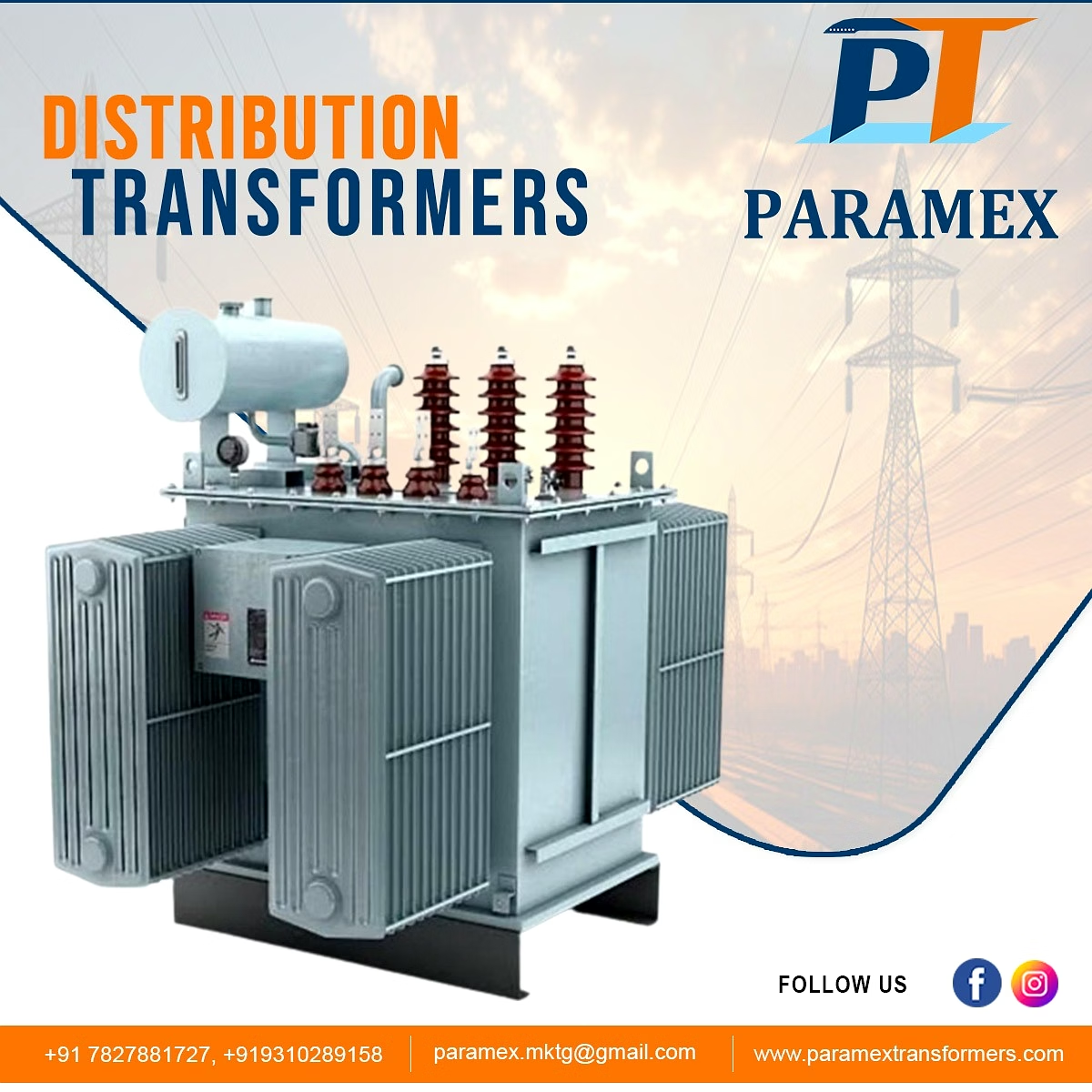
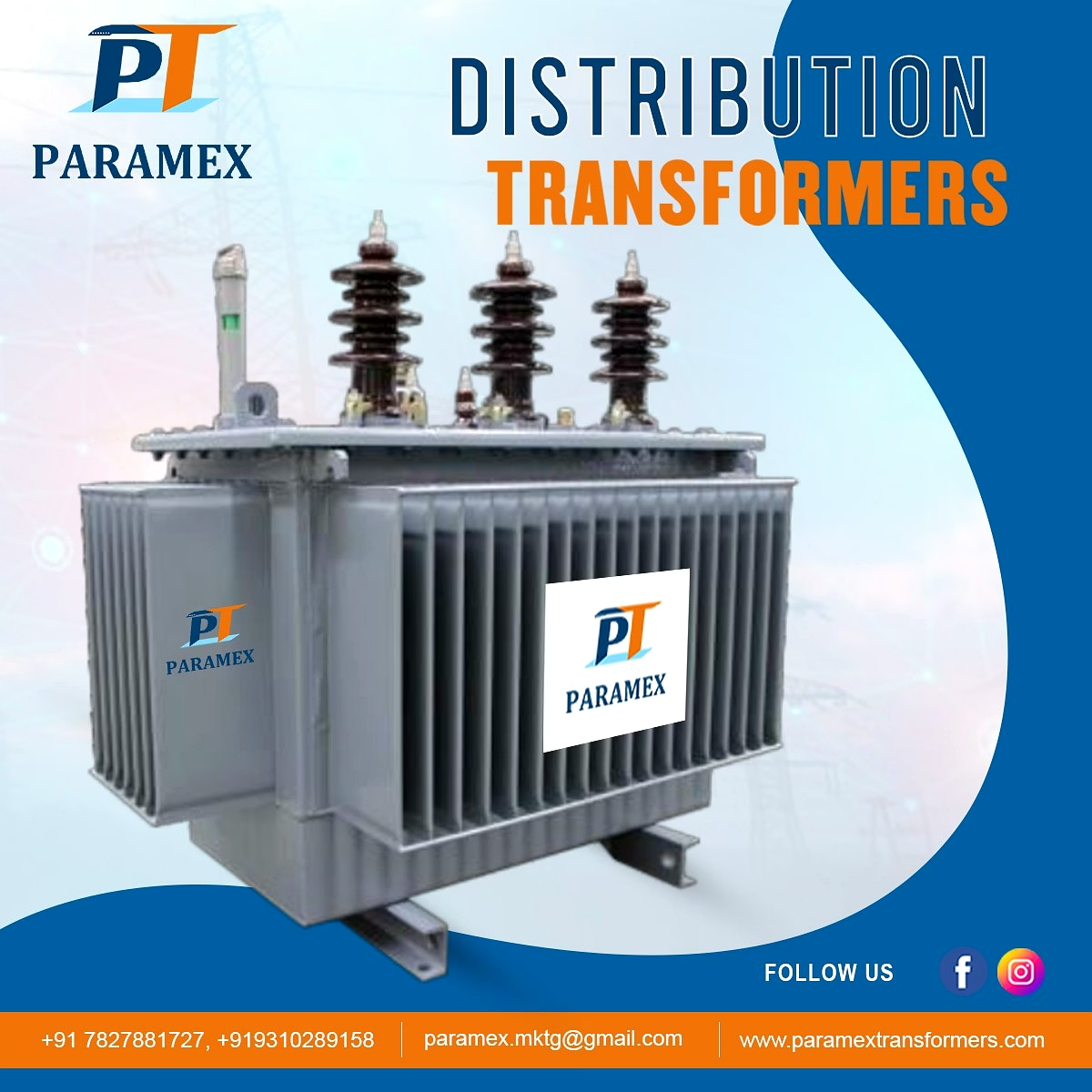
Distribution transformers are specialized electrical devices designed to step down high-voltage electricity received from transmission lines to a lower voltage suitable for local distribution. Essential in ensuring efficient power delivery to residential homes, commercial buildings, and industrial facilities, these transformers are smaller and more compact compared to power transformers. Key components of distribution transformers include robust oil tanks for insulation and cooling, conservators to maintain oil levels, Buchholz relays for fault detection, and advanced cooling mechanisms to ensure stable operation under varying load conditions. These features make distribution transformers vital for efficient and safe electrical power distribution in urban and rural electrical infrastructure.
Key Features
| Features | Description |
|---|---|
| Function | Steps down high-voltage electricity to low voltage for local distribution |
| Size | Smaller and more compact than power transformers |
| Oil Tank | Provides insulation and cooling |
| Conservator | Maintains proper oil level in the transformer |
| Buchholz Relay | Detects internal faults such as gas accumulation |
| Cooling Mechanism | Ensures optimal operating temperature under load |
| Application | Used in residential, commercial, and industrial local power distribution |
| Voltage Rating | High-voltage input stepped down to low-voltage output |
| Installation | Suitable for mounting on poles, pads, or in substations |
| Attributes | Description |
|---|---|
| Transformer Type | Oil-immersed Distribution Transformer |
| Cooling Type | ONAN (Oil Natural Air Natural) or ONAF (Oil Natural Air Forced) |
| Rated Power Capacity | Typically ranges from 10 kVA to 5000 kVA |
| Voltage Levels | Primary Voltage up to 33 kV; Secondary Voltage usually 230/400 V |
| Frequency | 50 Hz |
| Insulation Type | Oil insulation with conservator and breather unit |
| Fault Detection | Buchholz relay for prompt fault signaling |
| Mounting Options | Pole-mounted, pad-mounted, or substation installation |
| Standards Compliance | Designed as per IS/IEC standards for distribution transformers |
| Temperature Rise | Designed to withstand standard temperature rise limits to ensure durability and safety |
*Disclaimer: The above description has been AI-generated and has not been audited or verified for accuracy. It is recommended to verify product details independently before making any purchasing decisions.
The distribution transformers use oil-immersed cooling mechanisms such as ONAN (Oil Natural Air Natural) or ONAF (Oil Natural Air Forced) cooling systems to maintain an optimal temperature during operation.
The Buchholz relay acts as a gas actuated relay inside the transformer oil and triggers an alarm or trip in case of internal faults such as gas accumulation due to insulation failure, ensuring early fault detection and preventing major transformer damage.
These transformers typically step down from a primary voltage level up to 33 kV to a secondary voltage of 230/400 V, suitable for local distribution in residential and industrial setups.
Distribution transformers can be pole-mounted, pad-mounted, or installed in substations based on the site requirement and load conditions.
Yes, they are designed and manufactured to comply with Indian Standards (IS) and International Electrotechnical Commission (IEC) standards ensuring safety, reliability, and efficiency.
Distribution transformers are essential for stepping down high-voltage electricity from transmission lines to lower voltages suitable for local distribution to homes, businesses, and industrial facilities. They are typically smaller than power transformers and feature components like an oil tank, conservator, Buchholz relay, and cooling mechanisms.