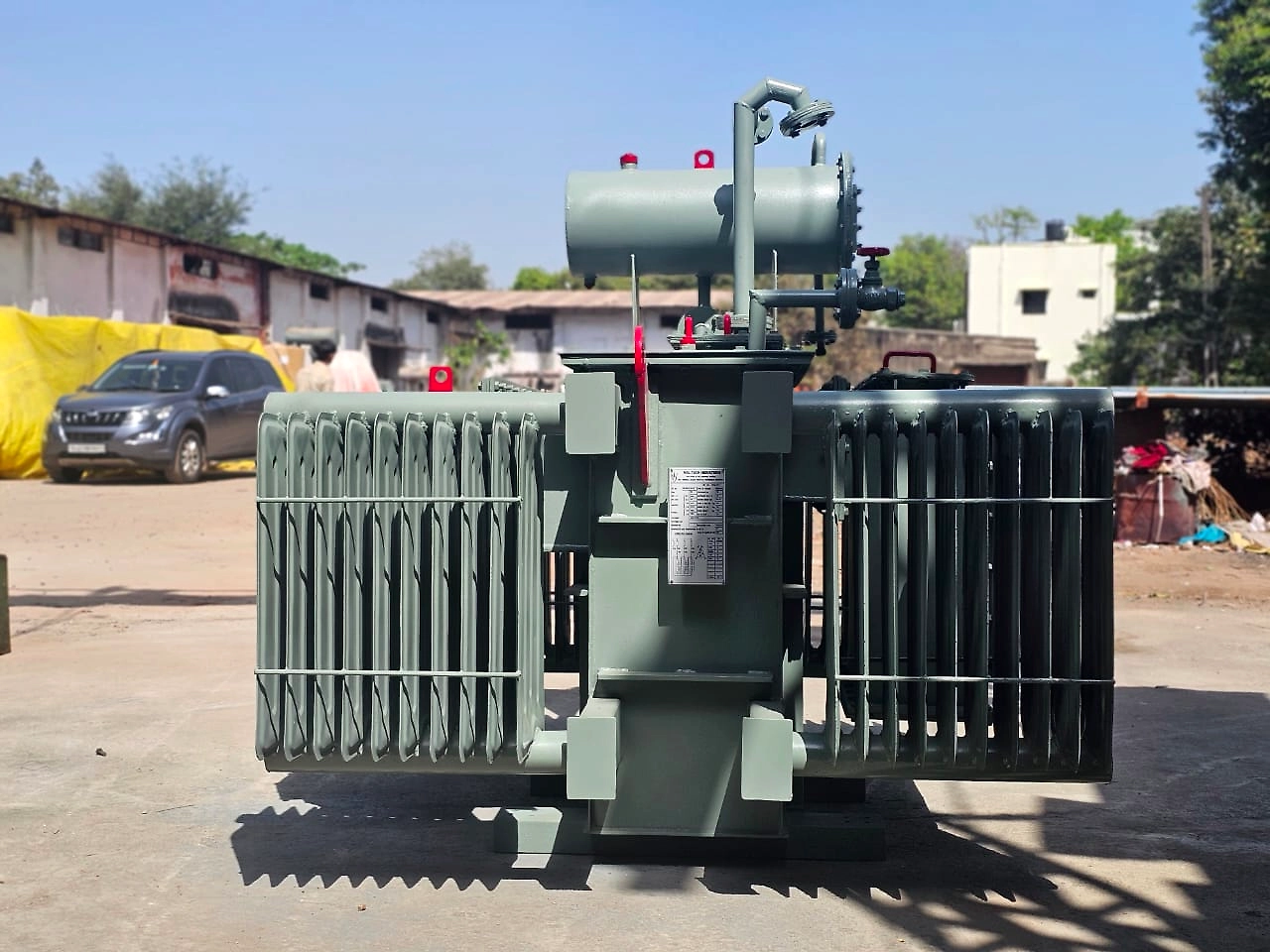
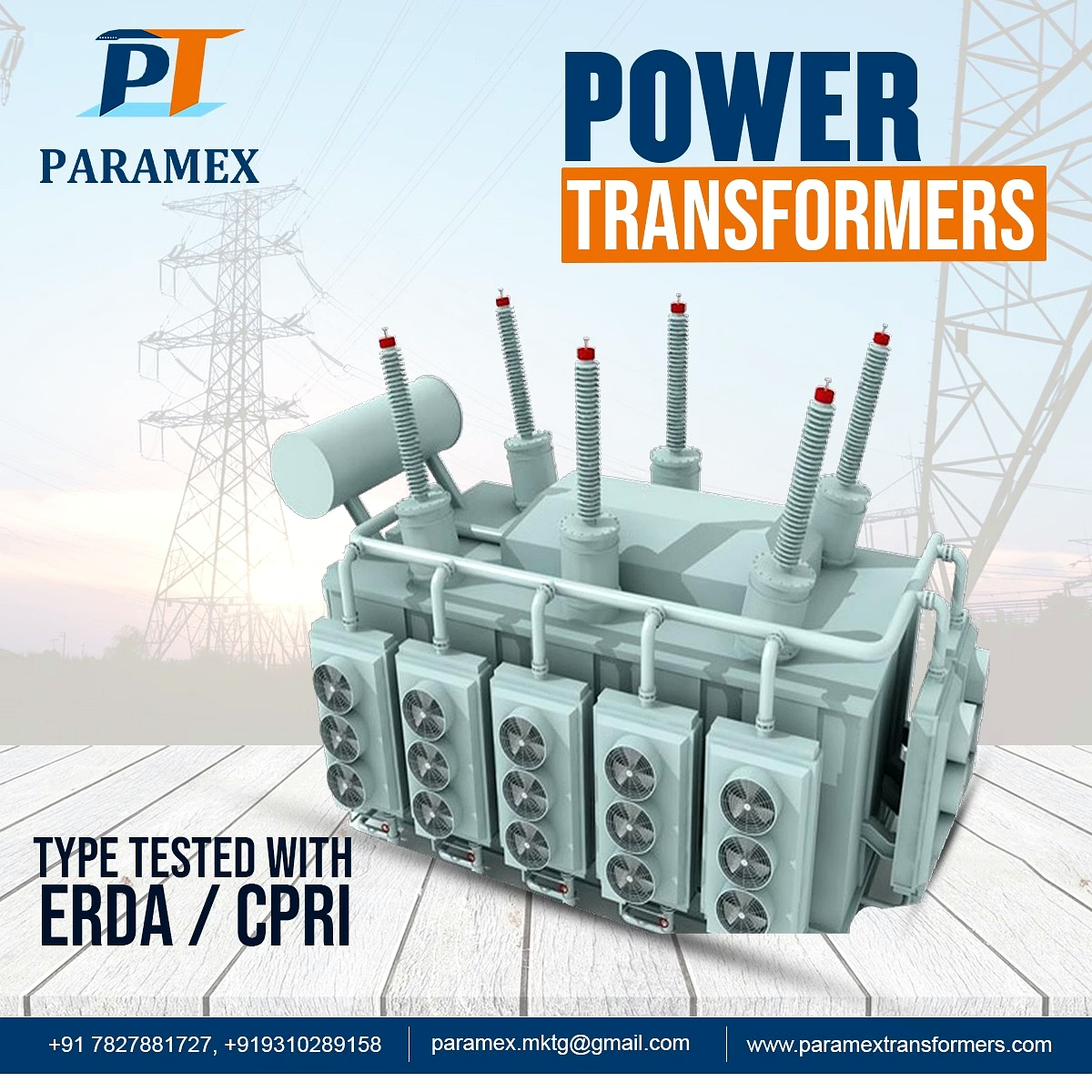
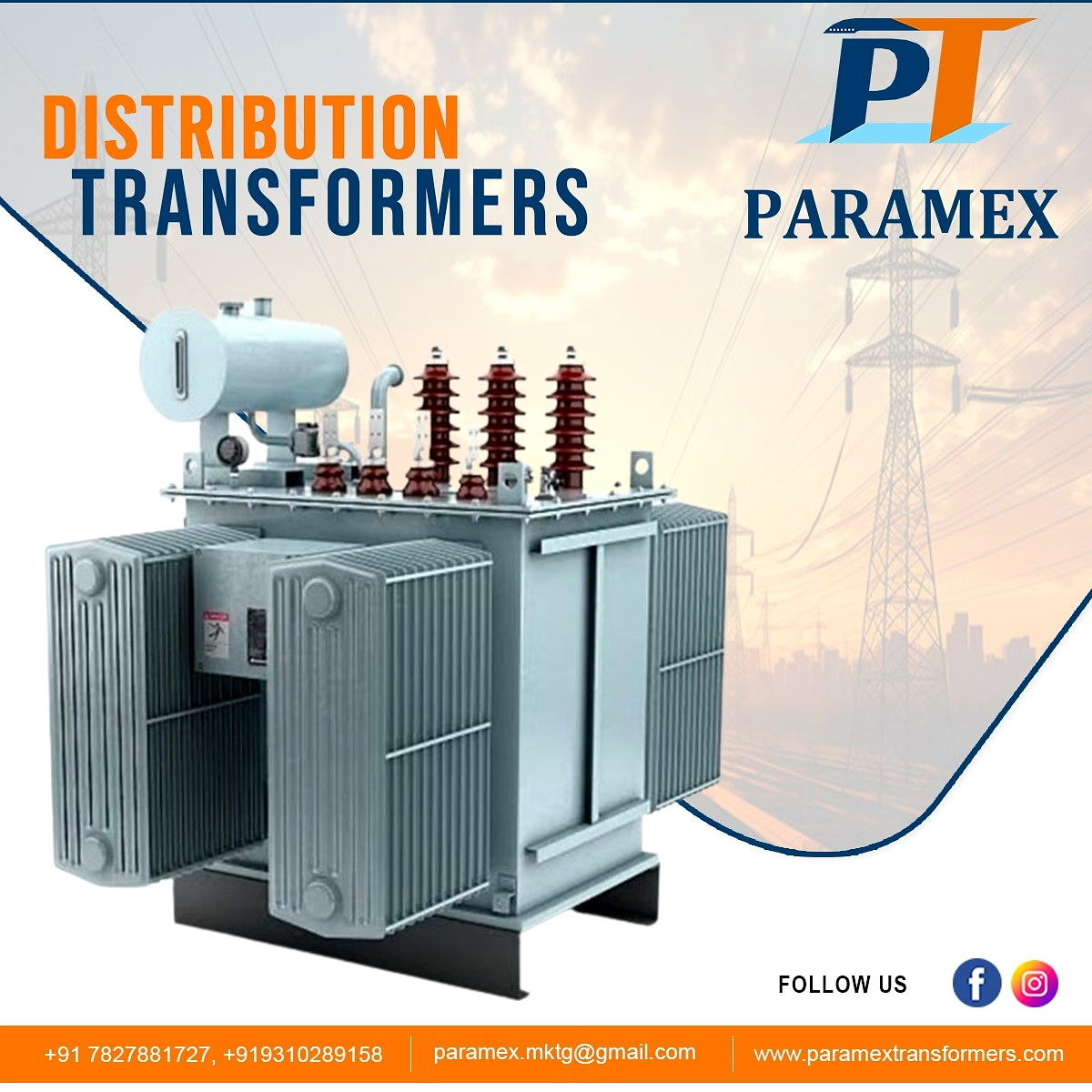
Distribution transformers are specialized electrical devices designed to step down high-voltage electricity from transmission networks to lower voltages for safe and efficient local distribution to residential, commercial, and industrial consumers. These transformers are pivotal in ensuring stable power supply by converting high transmission voltages into usable lower voltages while minimizing energy losses. They are generally compact compared to power transformers and integrate key components such as oil-filled tanks for insulation and cooling, conservators to accommodate oil expansion, Buchholz relays for fault detection, and efficient cooling systems to maintain operational integrity under load. Distribution transformers play a critical role in urban and rural electrical grids, ensuring reliable power delivery tailored to local demand and enhancing system safety through their built-in protective features.
Key Features
| Features | Description |
|---|---|
| Function | Steps down high-voltage electricity to lower voltages for local distribution |
| Size | Smaller and more compact than power transformers |
| Cooling Mechanism | Oil-immersed with conservator tanks for thermal regulation |
| Protective Components | Equipped with Buchholz relay for fault detection and prevention |
| Construction Material | Robust steel casing with oil insulation |
| Application | Used in distribution networks for residential, commercial, and industrial power supply |
| Installation | Suitable for pole-mounted or pad-mounted installations |
| Efficiency | Designed for minimal energy loss during voltage conversion |
| Voltage Rating | Typical ranges include 11kV/415V, 33kV/440V depending on network requirements |
| Maintenance | Requires periodic oil checks and servicing of protective relays |
| Attributes | Description |
|---|---|
| Transformer Type | Oil-immersed distribution transformer |
| Voltage Levels | High voltage primary (typically 11kV or 33kV) to low voltage secondary (400V to 440V) |
| Cooling Type | Oil Natural Air Natural (ONAN) or Oil Natural Air Forced (ONAF) |
| Power Rating | Ranges from 10 kVA to several hundred kVA depending on customer requirements |
| Insulation Medium | Mineral oil with high dielectric strength |
| Protection Devices | Buchholz relay, pressure relief device, oil level indicator |
| Mounting | Pole-mounted or pad-mounted |
| Standard Compliance | Manufactured as per IS 1180, IS 2026, and IEC standards |
| Connection Type | Delta or Star connected primary and secondary windings |
| Noise Level | Typically below 50 dB for operational environments |
*Disclaimer: The above description has been AI-generated and has not been audited or verified for accuracy. It is recommended to verify product details independently before making any purchasing decisions.
Distribution transformers typically support high voltage input levels such as 11kV or 33kV and step these down to low voltage outputs ranging from 400V to 440V for safe local distribution.
The Buchholz relay detects gas accumulation caused by internal faults or oil leakage within the transformer and triggers an alarm or disconnects the transformer, thereby preventing catastrophic failures.
These transformers use oil cooling methods such as Oil Natural Air Natural (ONAN) or Oil Natural Air Forced (ONAF) to dissipate heat generated during operation and maintain safe temperature levels.
Yes, distribution transformers are designed to be versatile and can be installed either as pole-mounted or pad-mounted units depending on the site requirements and ease of access.
These distribution transformers are manufactured in compliance with Indian Standards IS 1180, IS 2026, and relevant IEC standards ensuring safety, reliability, and performance.
Country Of Origin: India
Distribution transformers are essential for stepping down high-voltage electricity from transmission lines to lower voltages suitable for local distribution to homes, businesses, and industrial facilities. They are typically smaller than power transformers and feature components like an oil tank, conservator, Buchholz relay, and cooling mechanisms.