• Key Features & Attributes
  • Ratings & Reviews
  • Know your Supplier
  • Product description from supplier

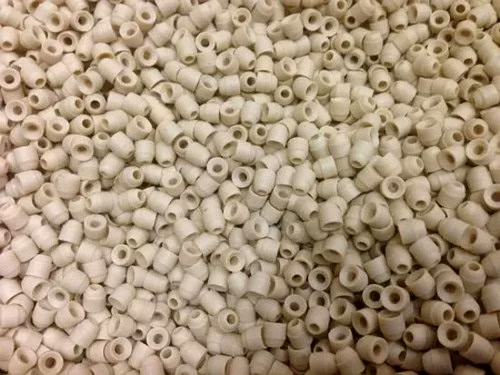
Ceramic Tube

Inclusive of all taxes

Ceramic tubes designed specifically for furnace applications are engineered to withstand extreme temperatures while providing superior thermal insulation and mechanical protection. Crafted from advanced ceramic materials like alumina, mullite, or zirconia, these tubes offer exceptional resistance to high temperatures ranging from 1000°C to over 1800°C. Ideal for insulating and shielding sensitive components such as thermocouples, heating elements, and gases, they maintain structural integrity under prolonged thermal stress without deformation. Their excellent chemical inertness makes them resistant to corrosive environments, prolonging service life in demanding industrial conditions. Moreover, the tubes feature low thermal conductivity to preserve temperature uniformity inside furnace chambers and provide electrical insulation critical for high-temperature electrical setups. These ceramic tubes are widely employed as protective sheaths for thermocouples, gas delivery conduits, vacuum line components, and housing for resistive heating elements in applications including laboratory furnaces, kilns, and industrial heat treatment systems.

Key Features

Features Description
High Temperature Resistance Withstands temperatures from 1000°C to over 1800°C depending on ceramic material
Thermal Stability Maintains structural integrity and resists deformation under prolonged heat exposure
Chemical Resistance Inert to corrosive gases and molten metals ensuring durable performance
Electrical Insulation Provides excellent insulation for electrical components like thermocouples in high-temperature settings
Low Thermal Conductivity Helps maintain uniform temperature distribution within furnace chambers
Material Variants Available in alumina, mullite, or zirconia depending on application requirements
Mechanical Support Offers robust mechanical protection for internal furnace components
Common Applications Used in kilns, laboratory furnaces, industrial heat-treatment, gas delivery, vacuum lines, and thermocouple sheathing
Attributes Description
Material Types Alumina, Mullite, Zirconia
Temperature Range 1000°C to >1800°C based on material
Thermal Conductivity Low, aiding temperature uniformity
Chemical Resistance Resistant to corrosive gases and molten metals
Electrical Insulation High dielectric strength suitable for thermocouple protection
Dimensions Customizable based on furnace and component requirements
Application Areas Protective thermocouple sheaths, gas delivery tubes, vacuum lines, heating element housings
Mechanical Properties High mechanical strength and thermal shock resistance

*Disclaimer: The above description has been AI-generated and has not been audited or verified for accuracy. It is recommended to verify product details independently before making any purchasing decisions.

Be the first to write a review

Zirconia ceramic tubes are best suited for furnace applications exceeding 1600°C due to their superior thermal stability and resistance at ultra-high temperatures.

Yes, ceramic tubes are highly customizable to meet the specific diameter and length requirements of various furnace designs and component sizes.

Ceramic tubes possess high dielectric strength, which electrically isolates heating elements and thermocouples, preventing short-circuiting in high-temperature environments.

Yes, ceramic materials like alumina and mullite are highly resistant to most corrosive gases encountered in furnace atmospheres, ensuring long durability.

Ceramic tubes provide robust mechanical support, safeguarding delicate thermocouples from mechanical impacts and thermal shock within the furnace chamber.

  • Incorporation Type

  • GST

  • GST Registration Date

  • Number of Employees

  • Import Export Code (IEC)

  • Year of Establishment

  • Nature of Business

  • GlobalLinker Member Since

Ceramic tubes used in furnaces are high-temperature-resistant components designed to provide thermal insulation, mechanical support, and protection for internal components such as thermocouples, heating elements, or gases. These tubes are typically made from advanced ceramic materials such as alumina, mullite, or zirconia, depending on the specific application and temperature requirements.


Key Features:

  • High Temperature Resistance: Can withstand temperatures ranging from 1000°C to over 1800°C depending on the ceramic material.
  • Thermal Stability: Maintains structural integrity and does not deform under prolonged high-heat exposure.
  • Chemical Resistance: Inert to most corrosive gases and molten metals, ensuring long service life.
  • Electrical Insulation: Ideal for insulating electrical elements or thermocouples in high-temperature environments.
  • Low Thermal Conductivity: Helps maintain temperature uniformity inside the furnace chamber.


Common Applications:

  • Protective sheaths for thermocouples.
  • Tubes for gas delivery or vacuum lines in controlled-atmosphere furnaces.
  • Housing for resistive heating elements.
  • Structural components in kilns, laboratory furnaces, and industrial heat-treatment equipment.

Chemicals

Inorganic Chemicals

Non-metallic Products

Ceramics

Ceramic Tubes

High Temperature Ceramic Tubes

Alumina Tubes

Mullite Tubes

Zirconia Tubes

Furnace Ceramic Tubes

Thermocouple Protective Tubes

Gas Delivery Tubes

Industrial Furnace Components

Thermal Insulation Tubes

Ceramic Tube

Inclusive of all taxes

You Save: 0

Send Inquiry
VOLTHERMIC ELECTRICALS

Mumbai , India

Manufacturer, Retailer, Brand Owner, Exporter, Importer, Wholesaler

  • Secure
    Transaction

  • Free
    Delivery

  • Day
    Dispatch

Report a problem with this product