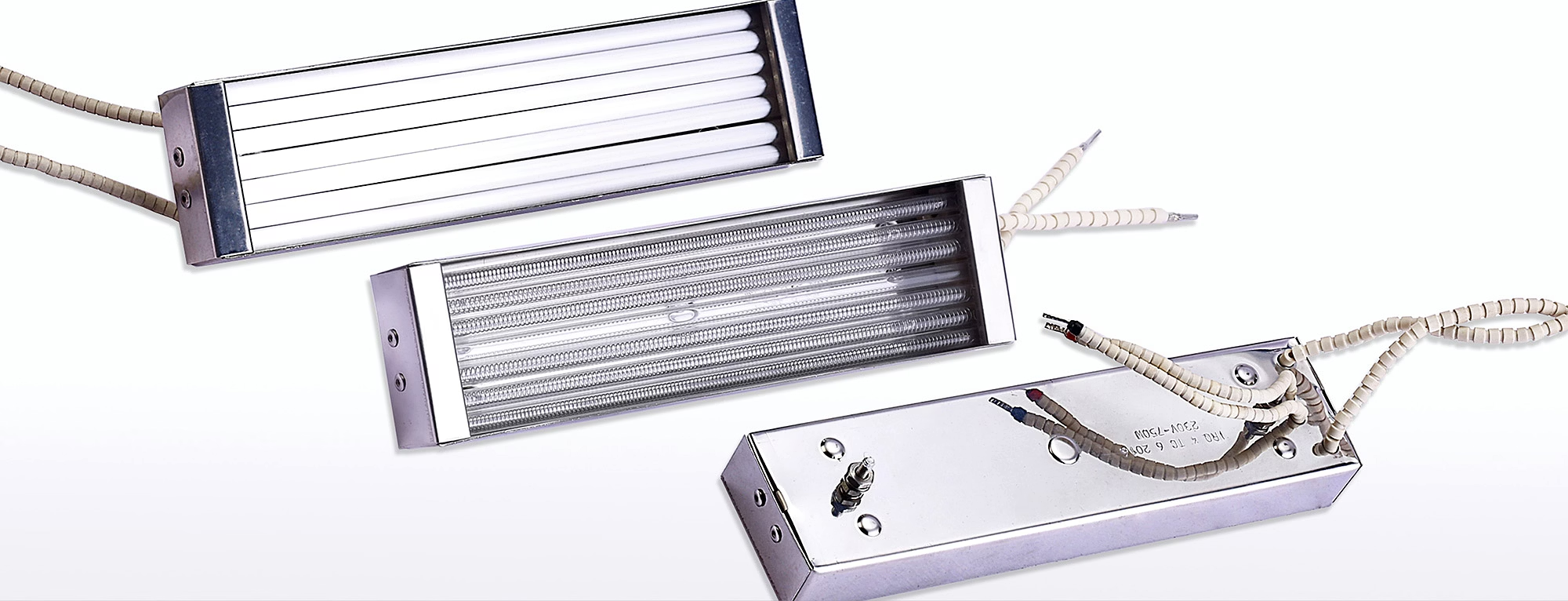
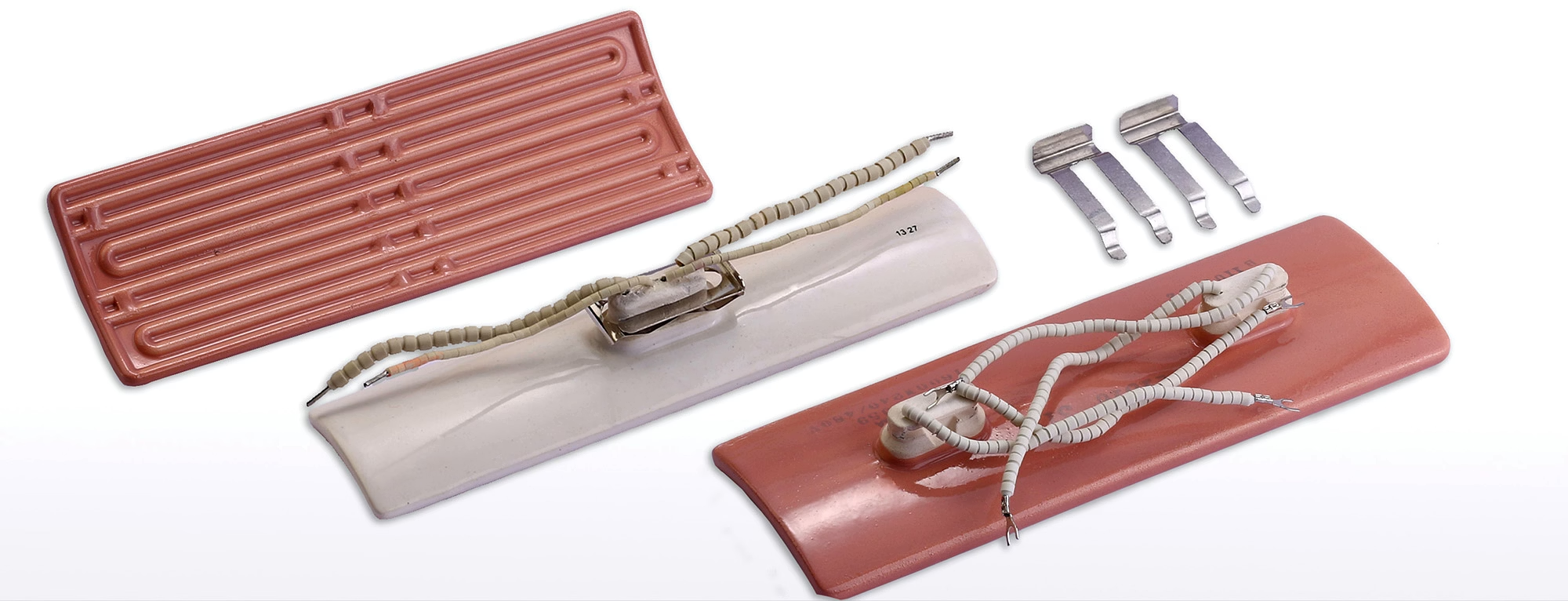
Ceramic Infrared Heaters are industrial-grade radiant heating elements designed to deliver long-wave infrared heat with uniform temperature distribution and high energy efficiency. Built using durable ceramic elements with embedded resistance coils, these heaters generate infrared radiation in the 2–10 micron range, making them highly effective for controlled heating applications where consistent surface temperature is essential. Unlike shortwave infrared heaters, ceramic IR heaters provide slower, more even heat transfer, which is ideal for processes that require precise thermal control across a larger area. Their robust construction supports reliable operation in demanding industrial environments, while their ability to reach high operating temperatures of up to 700–750°C makes them suitable for continuous or intensive heating applications. These heaters are widely used in industrial drying, curing, thermoforming, and other manufacturing processes where stable radiant heat improves product quality and process consistency. With minimal energy loss and efficient heat transfer, Ceramic Infrared Heaters are a practical choice for businesses seeking dependable, cost-effective industrial heating solutions.
Key Features
| Features | Description |
|---|---|
| Heating Type | Long-wave infrared radiant heating |
| Heating Range | 2–10 micron infrared radiation |
| Temperature Capability | Operates up to 700–750°C |
| Heat Distribution | Uniform and controlled surface heating |
| Energy Efficiency | High-efficiency heat transfer with minimal energy loss |
| Construction | Durable ceramic elements with embedded resistance coils |
| Application Suitability | Ideal for drying, curing, and thermoforming processes |
| Attributes | Description |
|---|---|
| Product Type | Ceramic infrared heater |
| Heating Technology | Radiant infrared heating |
| Infrared Wavelength Range | 2–10 micron |
| Maximum Operating Temperature | 700–750°C |
| Heating Pattern | Uniform, slow-even heat distribution |
| Element Material | Ceramic |
| Internal Heating Component | Resistance coils |
| Primary Use | Industrial heating applications |
| Common Applications | Drying, curing, thermoforming |
| Energy Performance | Efficient radiant heating with low heat loss |
*Disclaimer: The above description has been AI-generated and has not been audited or verified for accuracy. It is recommended to verify product details independently before making any purchasing decisions.
Ceramic infrared heaters provide long-wave radiant heat with uniform surface coverage, which helps deliver consistent temperature control across materials during drying and curing. This reduces uneven heating and supports quality-sensitive industrial processes.
Ceramic infrared heaters produce slower, more even heat distribution, while shortwave heaters deliver faster, more intense heat. Ceramic IR heaters are better suited for processes requiring controlled heating over a larger surface area rather than rapid surface heating.
The 2–10 micron range is effective for transferring radiant heat to many industrial materials, supporting efficient absorption and controlled heating in applications such as thermoforming, drying, and curing.
Yes, these heaters are designed to operate at temperatures up to approximately 700–750°C, making them suitable for demanding industrial heating environments that require reliable thermal performance.
Processes that require steady, uniform radiant heating such as industrial drying, curing, and thermoforming benefit most from ceramic infrared heaters because they provide controlled heat transfer with minimal energy loss.
Country Of Origin: India
Ceramic IR Heaters are robust and energy-efficient radiant heating systems designed to deliver uniform, long-wave infrared heat for industrial applications. These heaters use high-quality ceramic elements embedded with resistance coils to generate infrared radiation in the 2–10 micron range, making them ideal for applications requiring steady and consistent heating.
Unlike shortwave heaters, ceramic IR heaters provide slower but more even heat distribution, which is beneficial for processes that require controlled heating over a larger surface area. They can operate at high temperatures, typically up to around 700–750°C, ensuring reliable performance in demanding environments.