• Key Features & Attributes
  • Ratings & Reviews
  • Know your Supplier
  • Product description from supplier

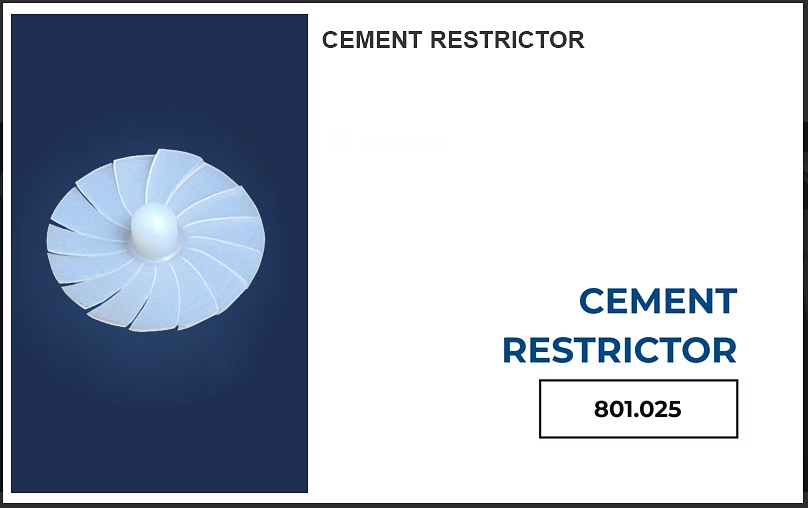
CEMENT RESTRICTOR

Inclusive of all taxes

The Cement Restrictor Implant is a specialized medical device designed for joint replacement surgeries such as total hip and total knee arthroplasty. Constructed from biocompatible materials including polyethylene and other medical-grade polymers, this device fits precisely within the bone canal to regulate the flow of bone cement during implantation. Its primary function is to act as an effective barrier within the bone cavity, ensuring that bone cement is confined to targeted regions. This controlled cementation significantly improves implant fixation by promoting uniform cement distribution and optimal pressurization between the bone and the prosthesis. The restrictor also minimizes the risk of cement leakage into adjacent tissues, thereby reducing potential surgical complications. Available in various sizes and anatomical configurations to suit both primary and revision joint surgeries, the Cement Restrictor enhances implant stability, facilitates surgeon precision, and contributes to the longevity and success of joint replacement procedures.

Key Features

Features Description
Material Biocompatible polyethylene or medical-grade polymers
Design Anatomically shaped to fit bone canals with size variations
Function Controls bone cement flow, acting as a barrier within the bone cavity
Primary Use Hip and knee joint replacement surgeries
Surgical Benefit Improves implant fixation and reduces cement leakage
Application Scope Suitable for primary and revision arthroplasty
Biocompatibility Ensures safety and compatibility within the human body
Longevity Enhancement Contributes to longer-lasting implants by optimizing cement-bone interface
Ease of Use Simplifies surgical procedures by providing better cement control
Attributes Description
Product Type Cement Restrictor Implant
Material Composition Medical-grade polyethylene or polymers
Intended Surgery Types Total hip arthroplasty, total knee arthroplasty
Sizes Available Multiple sizes to fit different bone canal dimensions
Sterilization Sterile, ready for surgical implantation
Compatibility Compatible with standard bone cement formulations
Packaging Packaged under sterile conditions with individual packaging
Shelf Life As specified by manufacturer, typically several years if unopened
Regulatory Compliance Manufactured according to medical device standards for implantables

*Disclaimer: The above description has been AI-generated and has not been audited or verified for accuracy. It is recommended to verify product details independently before making any purchasing decisions.

Be the first to write a review

The implant is made from biocompatible medical-grade polyethylene or polymers which ensure safety within the body and durability for long-term use in joint replacement surgeries.

By controlling and confining the flow of bone cement within the bone cavity, it promotes uniform cement distribution and optimal pressurization, enhancing implant stability and longevity.

Yes, its design and available sizes make it appropriate for both primary and revision total hip and knee joint replacement surgeries.

The implant comes in multiple sizes to accommodate varying anatomical bone canal dimensions, allowing customization for individual patient needs.

Yes, by acting as a barrier, it minimizes the risk of cement leaking into surrounding tissues, thus reducing potential complications during and after surgery.

  • Incorporation Type

  • GST

  • GST Registration Date

  • Number of Employees

  • Import Export Code (IEC)

  • Year of Establishment

  • Nature of Business

  • GlobalLinker Member Since

Cement Restrictor Implant Summary:


A Cement Restrictor Implant is a medical device used in joint replacement surgeries, particularly for the hip or knee. It plays a crucial role in optimizing the fixation of prosthetic components by controlling the flow of bone cement into the bone cavity. The restrictor ensures that the bone cement is confined to the necessary areas, preventing it from escaping into unwanted spaces and improving the anchorage of the implant.


Key Features:

Material: Made from biocompatible materials like polyethylene or other medical-grade polymers.

Design: Typically shaped to fit the bone canal, with variations to suit different anatomical sizes and shapes.

Purpose: Provides a barrier in the bone cavity to limit the passage of bone cement during surgery, ensuring proper pressurization and optimal bonding between the bone and prosthesis.

Benefits:

Improved Implant Stability: Ensures uniform cement distribution, enhancing the fixation of the implant to the bone.

Prevents Cement Leakage: Reduces the risk of cement leakage into surrounding tissues, which can cause complications.

Simplifies Surgical Procedure: Provides the surgeon better control over the cementing process, making the surgery more efficient.

Applications:

Primarily used in total hip and total knee arthroplasty.

Suitable for both primary and revision joint replacement surgeries.

Cement restrictors play a vital role in increasing the longevity of joint implants by improving cement-bone fixation, contributing to successful long-term outcomes in patients undergoing joint replacement surgeries.

Machinery And Tools

Building Material Machinery

Cement Making Machinery

Cement Restrictor Implant

Joint Replacement Device

Hip Arthroplasty Restrictor

Knee Replacement Implant

Bone Cement Barrier

Orthopedic Cement Restrictor

Medical-grade Cement Control Device

CEMENT RESTRICTOR

Inclusive of all taxes

You Save: 0

Send Inquiry
ORTHOTECH INDIA PRIVATE LIMITED

Valsad , India

Manufacturer, Brand Owner, Exporter, Importer

  • Secure
    Transaction

  • Free
    Delivery

  • Day
    Dispatch

Report a problem with this product