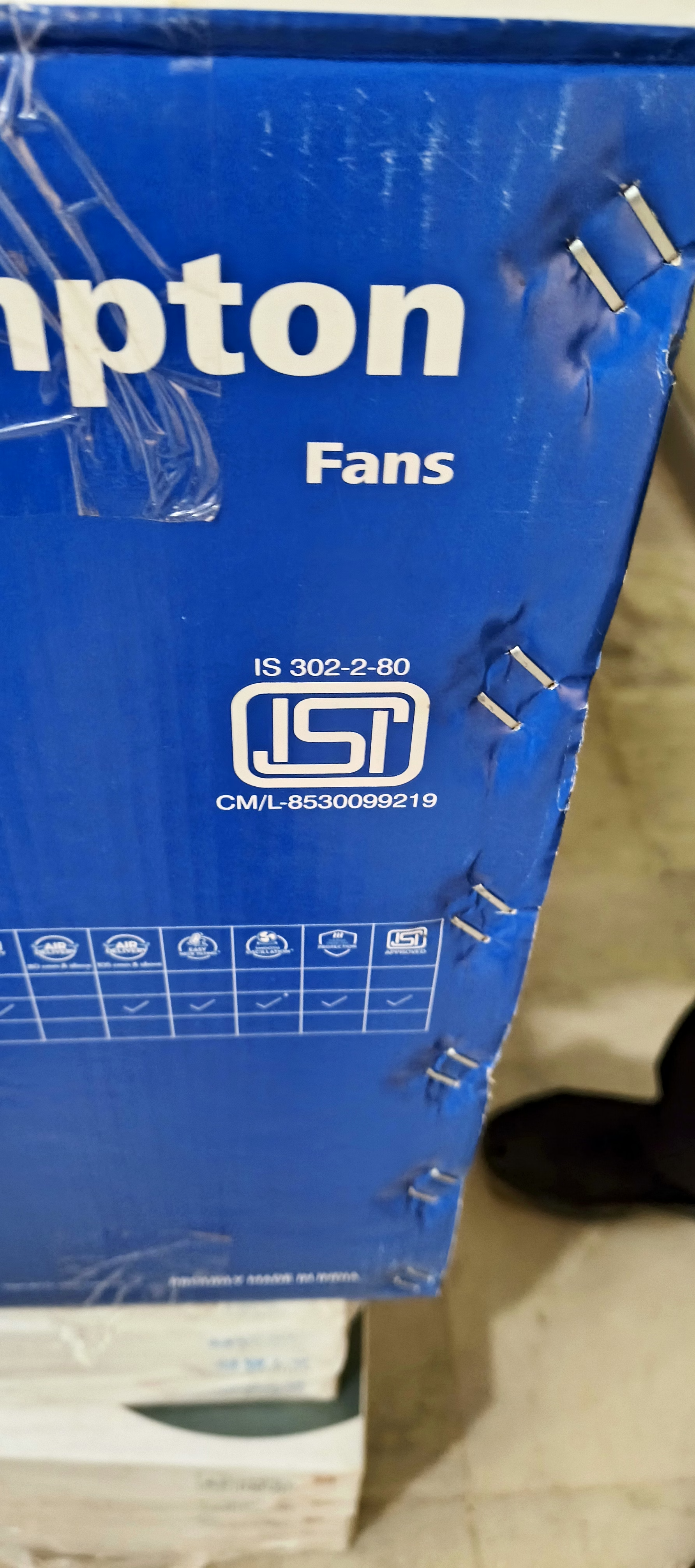
BIS Certification for Footwear is a mandatory quality assurance certification that verifies compliance with Indian Standards for all footwear products manufactured and sold within the Indian market. Instituted by the Bureau of Indian Standards (BIS) in accordance with the Department of Promotion of Industry and Internal Trade (DPIIT) directive dated October 27, 2020, this certification ensures that all types of footwear, including leather and other materials, comply with prescribed safety, durability, and quality standards. The rule became effective from July 1, 2023, making it compulsory for footwear manufacturers to obtain the BIS License and mark their products with the ISI (Indian Standards Institute) certification mark before marketing them in India. Non-compliance leads to severe penalties including prohibition on manufacturing and selling, criminal prosecution, and possible imprisonment or hefty fines. This certification serves as a critical compliance and quality assurance tool that enhances market credibility, consumer trust, and legal adherence for footwear manufacturers targeting the Indian B2B marketplace.
Key Features
| Features | Description |
|---|---|
| Mandatory Compliance | All footwear manufacturers must obtain BIS certification to legally manufacture and sell in India from July 1, 2023. |
| ISI Mark Requirement | Certified footwear products must bear the Indian Standards Mark (ISI) to indicate compliance. |
| Applicable to All Footwear | Includes leather footwear and those made from other materials. |
| Legal Enforcement | Non-compliance can lead to criminal prosecution, fines, and imprisonment. |
| Quality Assurance | Ensures footwear meets Indian safety, durability, and quality standards. |
| Issued by | Bureau of Indian Standards (BIS) under DPIIT directives. |
| Effective Date | Rules enforced from July 1, 2023. |
| Attributes | Description |
|---|---|
| Certification Type | Quality Assurance License |
| Governing Authority | Bureau of Indian Standards (BIS) |
| Applicable Products | All types of footwear including leather and non-leather materials |
| Mandatory Mark | ISI Mark (Indian Standards Mark) |
| Implementation Date | July 1, 2023 |
| Legal Consequences | Bans on production/sale, criminal prosecution, fines, imprisonment |
| Regulatory Reference | DPIIT notification dated October 27, 2020 |
*Disclaimer: The above description has been AI-generated and has not been audited or verified for accuracy. It is recommended to verify product details independently before making any purchasing decisions.
Yes, as per DPIIT directive effective July 1, 2023, all footwear manufacturers in India must obtain BIS certification for all types of footwear, including leather and other materials.
Selling unmarked footwear is illegal, leading to production and sales ban, criminal prosecution, heavy fines, and potential imprisonment for manufacturers.
No, post July 1, 2023, production and sale of footwear without BIS certification and ISI marking is prohibited by law.
BIS certification is applicable to all types of footwear regardless of the material used, including leather and synthetic materials.
The Bureau of Indian Standards (BIS) issues the certification license as per DPIIT regulations.
Brand: max solution
Country Of Origin: India
BIS certification for footwear is a quality assurance mark that indicates that a footwear product meets certain standards. On October 27, 2020, the Department of Promotion of Industry and Internal Trade (DPIIT) announced that all footwear manufacturers will be required to obtain a BIS License for footwear to sell them in the Indian market.
It was emphasized that all footwear must comply with applicable Indian standards and bear the Indian Standards Mark (ISI Mark). The rules will come into force on July 1, 2023. After this period, manufacturers can start producing and selling footwear with the mandatory certification. Without the ISI mark, it will be illegal to produce and sell shoes made from leather and other materials.
Failure to comply with this directive will not only result in a ban on footwear production, but manufacturers will also be subject to criminal prosecution, which could result in prison time and/or heavy fines.
Inclusive of all taxes
You Save: 0